Hypofractionated radiotherapy was noninferior to conventional radiotherapy for urinary and bowel symptoms after prostatectomy
Noninferiority of Hypofractionated vs Conventional Postprostatectomy Radiotherapy for Genitourinary and Gastrointestinal Symptoms: The NRG-GU003 Phase 3 Randomized Clinical Trial
Phase 3 randomized clinical trialBenefit found
Is hypofractionated postprostatectomy radiotherapy noninferior to conventional radiotherapy for genitourinary and gastrointestinal symptoms?
Who
296
Patients with detectable or undetectable prostate-specific antigen postprostatectomy · 93 sites in the US and Canada
Compared
Hypofractionated radiotherapy: mean GU score -5.01 [15.10]; mean GI score -4.17 [10.97]
Conventional radiotherapy: mean GU score -4.07 [14.67]; mean GI score -1.41 [8.32]
Main outcome
2-year change in Expanded Prostate Cancer Composite Index scores
Result: noninferior to COPORT using noninferiority margins of -5 and -6
Bottom line: Hypofractionated radiotherapy is noninferior to conventional radiotherapy for genitourinary and gastrointestinal symptoms at 2 years.
JAMA Oncol · 2024-03-14Download image
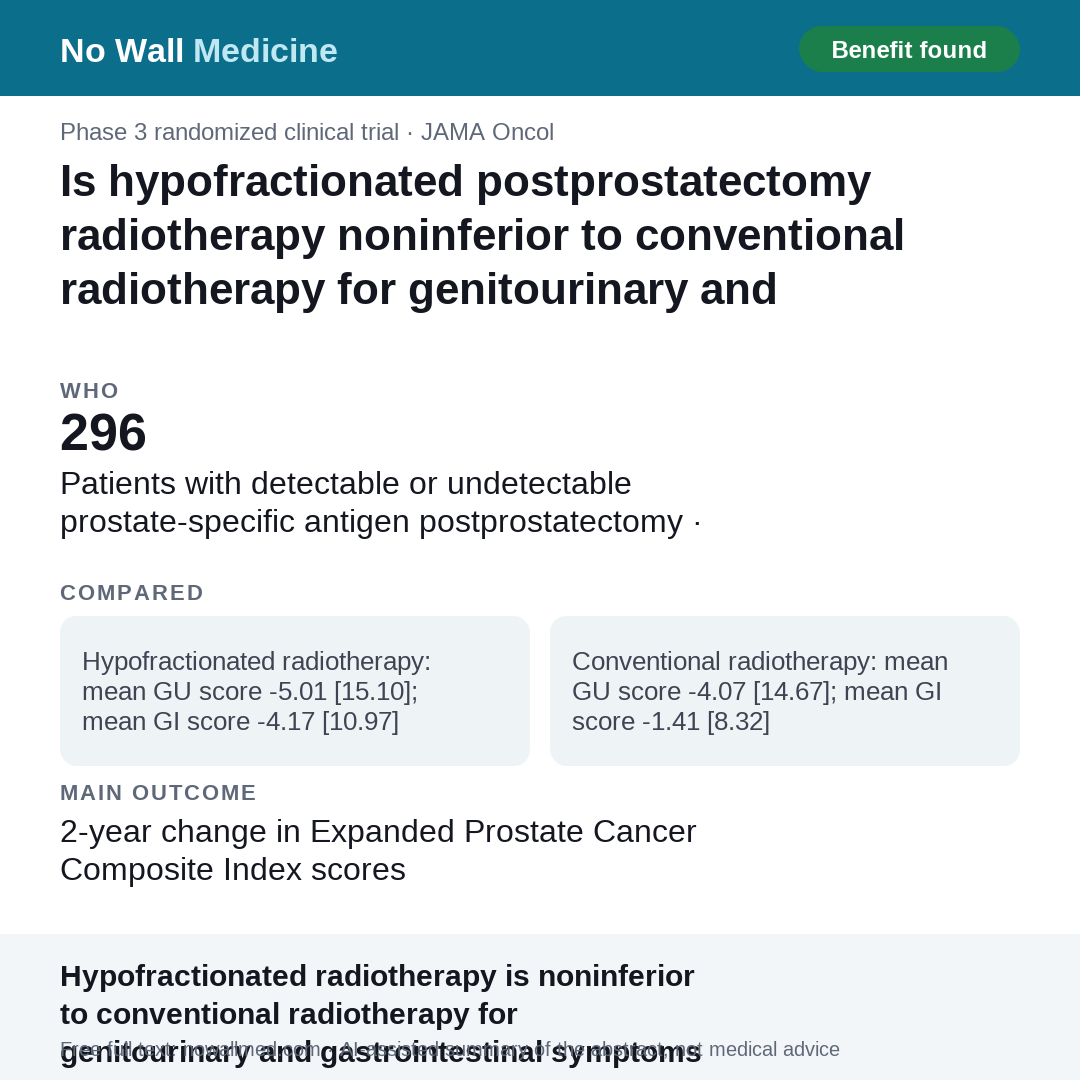
Clinical question: Is hypofractionated postprostatectomy radiotherapy noninferior to conventional radiotherapy for genitourinary and gastrointestinal symptoms?
Why it matters: It was unknown if hypofractionated radiotherapy, which uses fewer but larger doses, would cause more urinary or bowel symptoms than conventional radiotherapy in patients after prostate surgery.
Key points
- Researchers randomized 296 men to receive either hypofractionated radiotherapy (62.5 Gy in 25 fractions) or conventional radiotherapy (66.6 Gy in 37 fractions) after prostate surgery.
- At 2 years, hypofractionated radiotherapy was noninferior to conventional radiotherapy for urinary and bowel symptom changes using noninferiority margins of -5 and -6.
- While hypofractionated radiotherapy was associated with greater gastrointestinal symptom changes at the end of treatment, these differences resolved by 6 and 12 months.
Headline and key points written with AI from the paper’s abstract, with every number checked against it. Read the paper before relying on them.
Was this summary helpful?
Subject terms
Cite this article
Buyyounouski MK, Pugh SL, Chen RC, Mann MJ, Kudchadker RJ, Konski AA. Noninferiority of Hypofractionated vs Conventional Postprostatectomy Radiotherapy for Genitourinary and Gastrointestinal Symptoms: The NRG-GU003 Phase 3 Randomized Clinical Trial. JAMA Oncol. 2024. doi:10.1001/jamaoncol.2023.7291
Spotted a mistake? Suggest a correction
Top studies every Monday
The week’s key trials and guidelines in your specialties, plus any topics you follow. By email, free.
Get the weekly digest