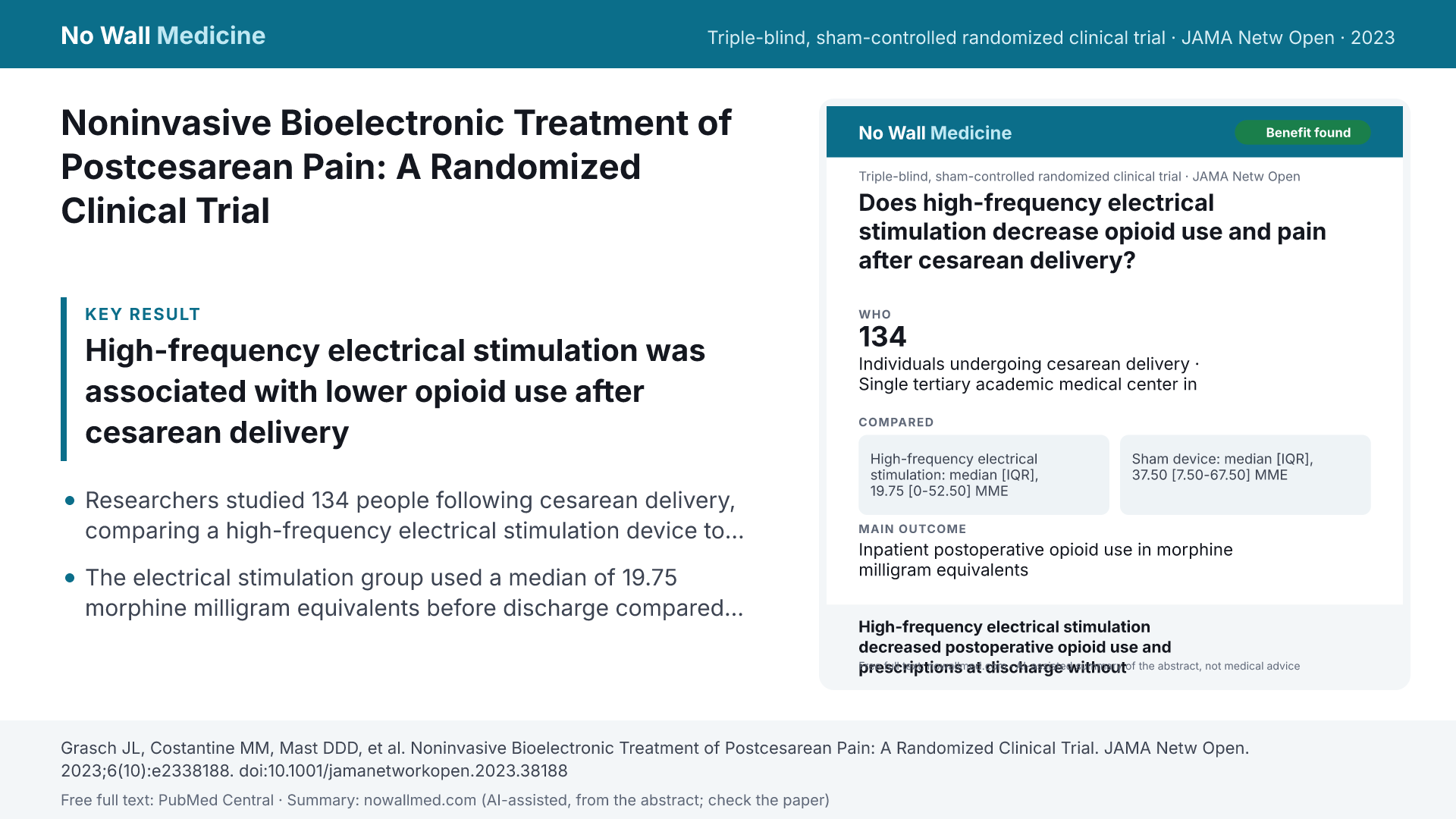
High-frequency electrical stimulation was associated with lower opioid use after cesarean delivery
Noninvasive Bioelectronic Treatment of Postcesarean Pain: A Randomized Clinical Trial
Obstetrics & GynecologyAdult and pediatric
Triple-blind, sham-controlled randomized clinical trialBenefit found
Does high-frequency electrical stimulation decrease opioid use and pain after cesarean delivery?
Who
134
Individuals undergoing cesarean delivery · Single tertiary academic medical center in Ohio
Compared
High-frequency electrical stimulation: median [IQR], 19.75 [0-52.50] MME
Sham device: median [IQR], 37.50 [7.50-67.50] MME
Main outcome
Inpatient postoperative opioid use in morphine milligram equivalents
Result: RR 1.58 (95% CI 1.08 to 2.13) for discharge without prescription
Bottom line: High-frequency electrical stimulation decreased postoperative opioid use and prescriptions at discharge without compromising pain control.
JAMA Netw Open · 2023-10-02 · Save PNG
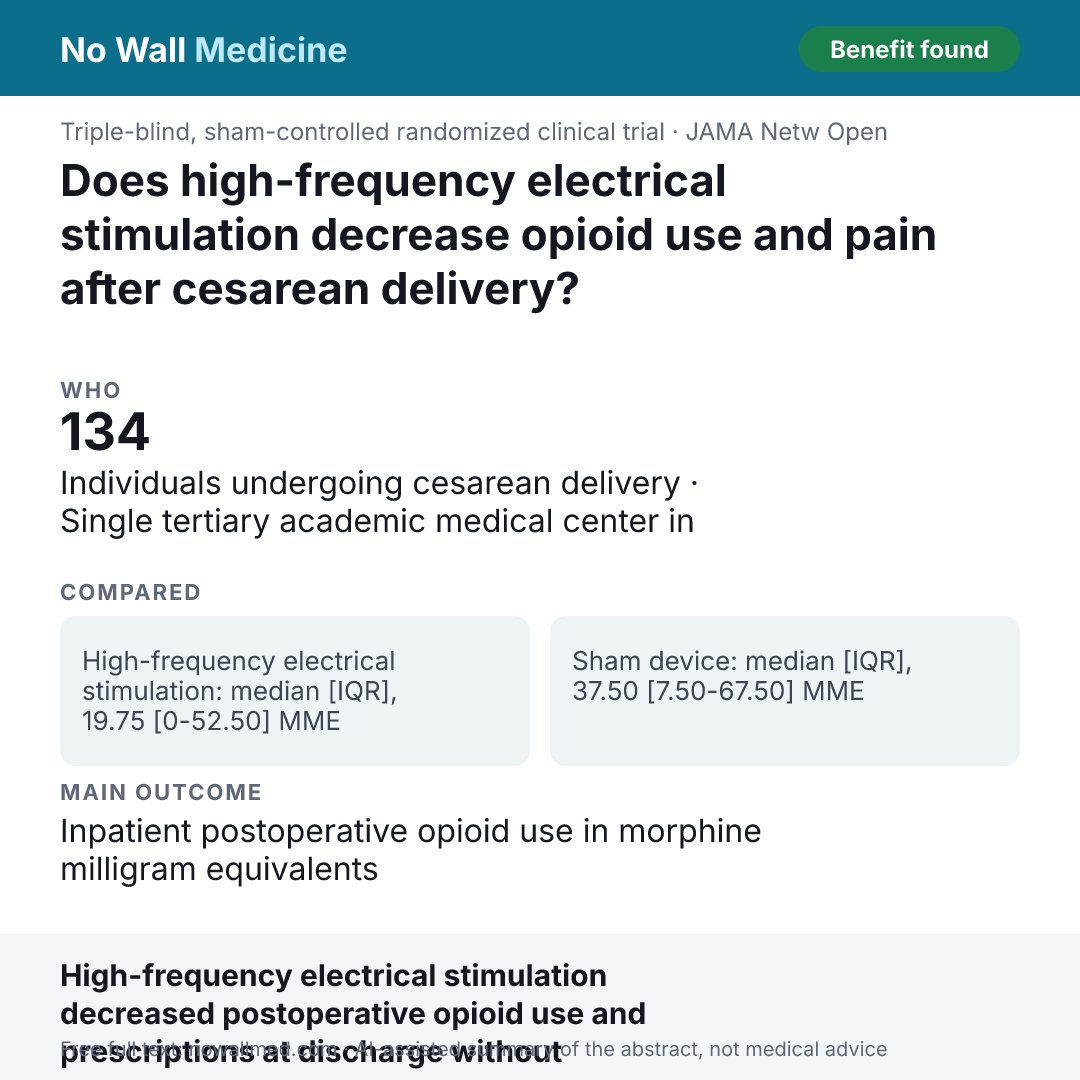
Clinical question: Does high-frequency electrical stimulation decrease opioid use and pain after cesarean delivery?
Key points
- Researchers studied 134 people following cesarean delivery, comparing a high-frequency electrical stimulation device to a sham device.
- The electrical stimulation group used a median of 19.75 morphine milligram equivalents before discharge compared to 37.50 in the sham group.
- Participants using the functional device were more likely to be discharged without an opioid prescription at 25% versus 10% in the sham group.
Headline and key points written with AI from the paper’s abstract, with every number checked against it. Read the paper before relying on them.
Was this summary helpful?
Subject terms
Headline, design, result, key points, caveat and citation as plain text.
Cite this article
Grasch JL, Costantine MM, Mast DDD, et al. Noninvasive Bioelectronic Treatment of Postcesarean Pain: A Randomized Clinical Trial. JAMA Netw Open. 2023;6(10):e2338188. doi:10.1001/jamanetworkopen.2023.38188
Spotted a mistake? Suggest a correction