High-frequency ultrasound showed higher sensitivity for diagnosing skin squamous cell carcinoma than other noninvasive technologies
Noninvasive Technologies for the Diagnosis of Squamous Cell Carcinoma: A Systematic Review and Meta-Analysis
Systematic review and meta-analysisMixed results
What is the performance of noninvasive technologies for cutaneous squamous cell carcinoma diagnosis?
Who
1144
Patients with cutaneous squamous cell carcinoma lesions
Compared
High-frequency ultrasound: sensitivity 92% (95% CI 86.6-96.4%)
Optical coherence tomography: sensitivity 75% (95% CI 65.7-86.2%)
Reflectance confocal microscopy: sensitivity 63% (95% CI 51.3-69.1%)
Main outcome
Diagnostic sensitivity and specificity
Bottom line: Noninvasive technologies show varying diagnostic performance, with high-frequency ultrasound demonstrating the highest sensitivity and specificity.
JID Innov · 2024-07-20 · Save PNG
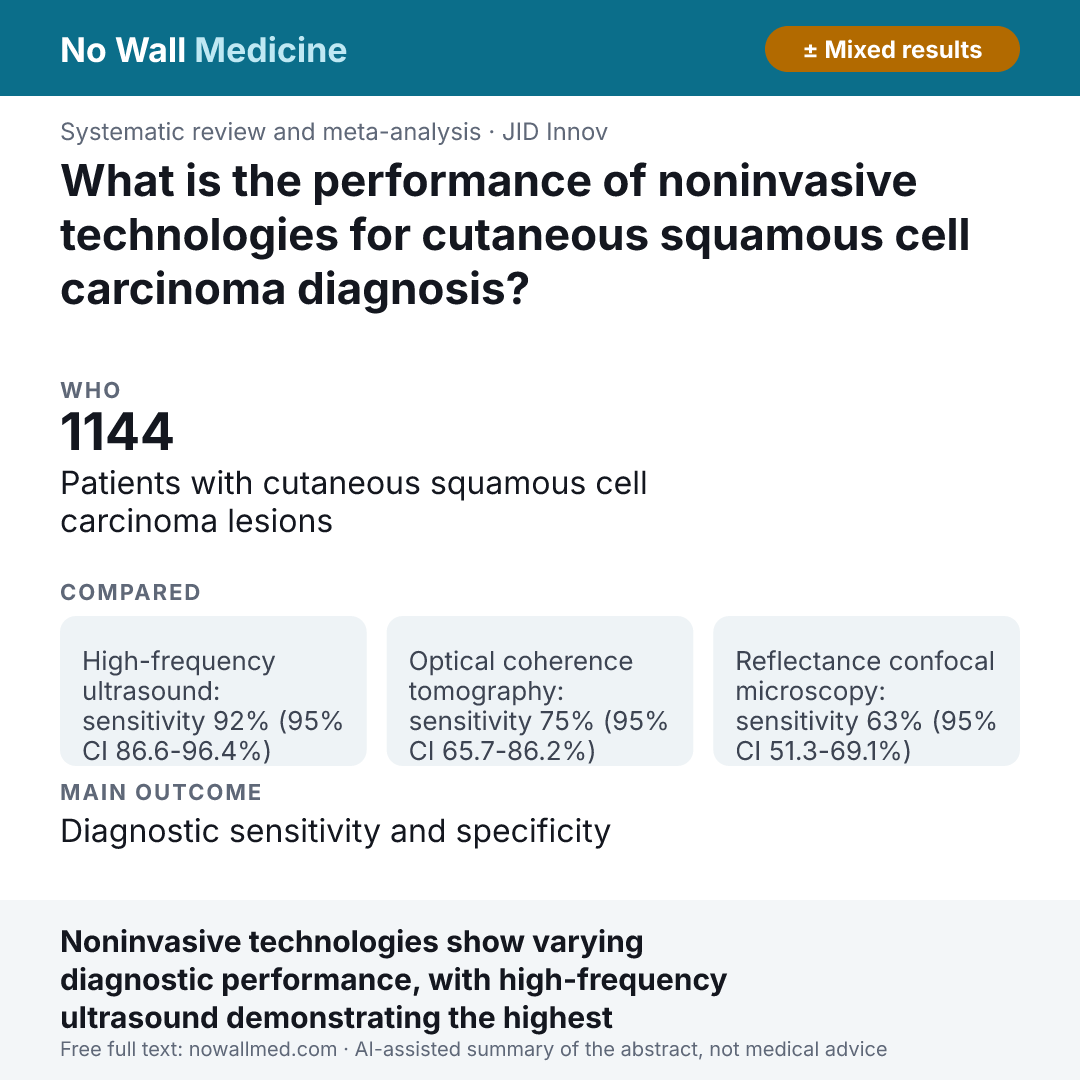
Clinical question: What is the performance of noninvasive technologies for cutaneous squamous cell carcinoma diagnosis?
Key points
- Researchers analyzed 15 studies involving 1144 patients, 224 skin squamous cell carcinoma lesions, and 1729 clinical diagnoses to evaluate noninvasive diagnostic tools.
- High-frequency ultrasound had a sensitivity of 92% and specificity of 88%, while optical coherence tomography had 75% sensitivity and 95% specificity.
- Reflectance confocal microscopy, a method using light to image skin layers, showed 63% sensitivity and 96% specificity.
Headline and key points written with AI from the paper’s abstract, with every number checked against it. Read the paper before relying on them.
Was this summary helpful?
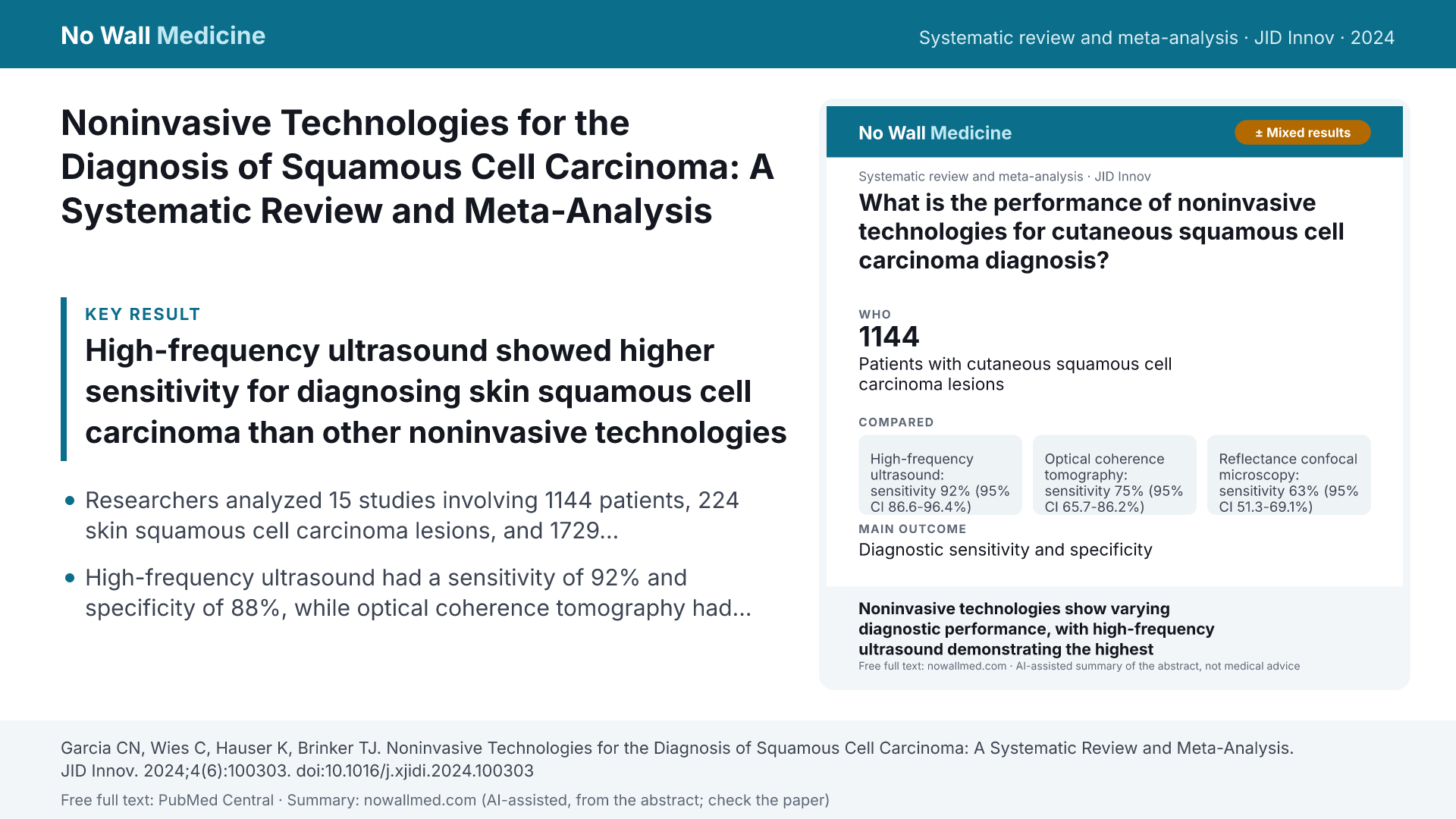
Headline, design, result, key points, caveat and citation as plain text.
Cite this article
Garcia CN, Wies C, Hauser K, Brinker TJ. Noninvasive Technologies for the Diagnosis of Squamous Cell Carcinoma: A Systematic Review and Meta-Analysis. JID Innov. 2024;4(6):100303. doi:10.1016/j.xjidi.2024.100303
Spotted a mistake? Suggest a correction