High oxygen levels during stroke treatment were associated with lower inflammatory markers at 24 hours
Normobaric Hyperoxia in Patients With Acute Stroke: Enhancing Neuroprotection Through Inhibition of Inflammation
Secondary analysis of a randomized trialBenefit found
Does normobaric hyperoxia affect the inflammatory response in acute ischemic stroke patients?
Who
86
Acute ischemic stroke patients with anterior circulation large vessel occlusion
Compared
Normobaric hyperoxia with endovascular thrombectomy: significantly lower levels of inflammatory markers at 24 hours
Endovascular thrombectomy alone
Main outcome
Serum C-reactive protein, leukocyte count, neutrophil count, and neutrophil-to-lymphocyte ratio
Bottom line: Normobaric hyperoxia attenuates early postthrombectomy inflammation, which is associated with stroke severity and infarct volume.
J Am Heart Assoc · 2025-10-09Download image
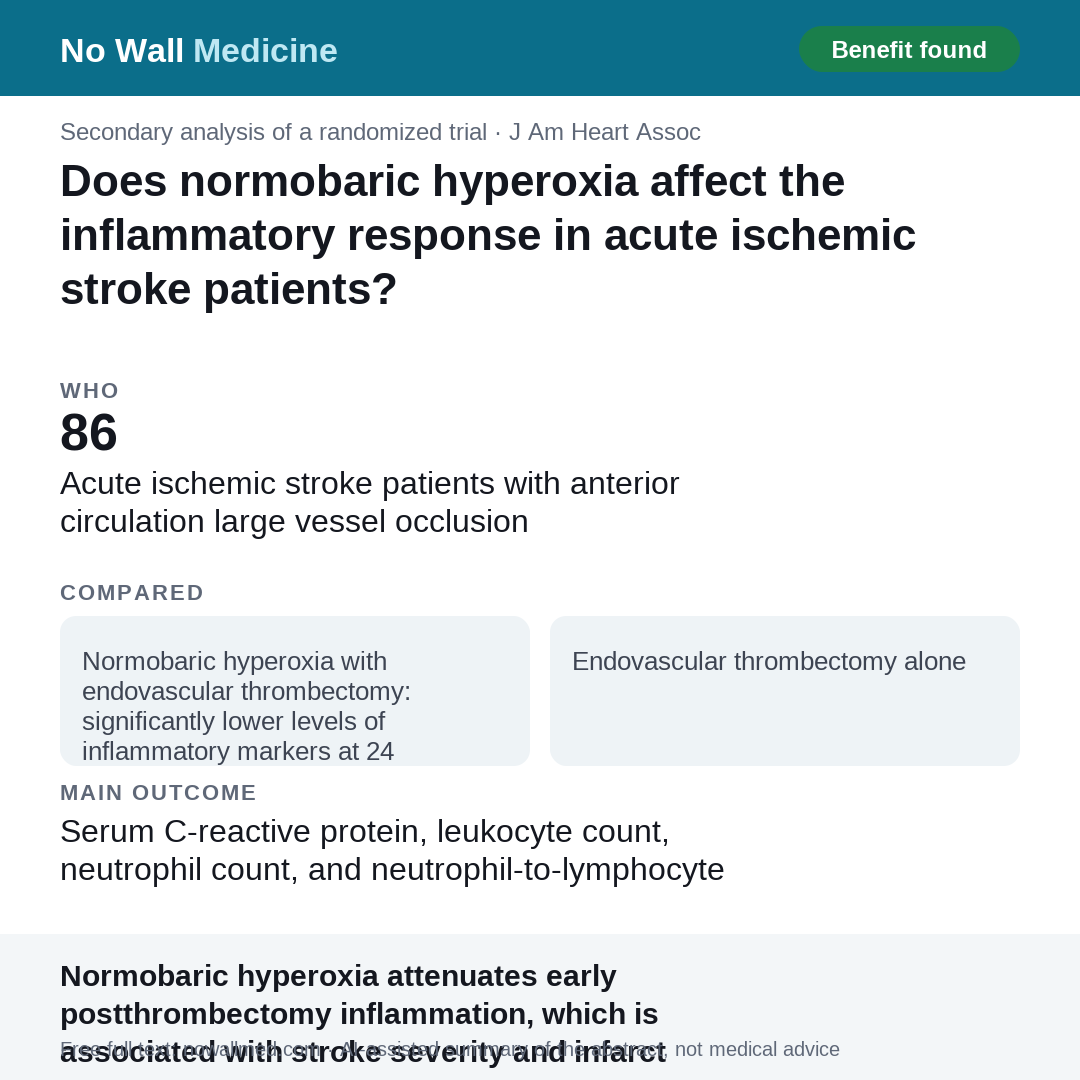
Clinical question: Does normobaric hyperoxia affect the inflammatory response in acute ischemic stroke patients?
Why it matters: The role of the inflammatory response in the development of acute ischemic stroke and how oxygen therapy affects it remains to be understood.
Key points
- Researchers analyzed 86 acute ischemic stroke patients who received either endovascular thrombectomy alone or endovascular thrombectomy combined with 4 hours of 100% oxygen.
- The group receiving oxygen had significantly lower levels of C-reactive protein, neutrophil counts, and neutrophil-to-lymphocyte ratio at 24 hours compared to the control group.
- Inflammatory marker levels within 24 hours were significantly associated with early neurological function scores and early brain tissue death volume.
Headline and key points written with AI from the paper’s abstract, with every number checked against it. Read the paper before relying on them.
Topics
Cite this article
Niu H, Ding J, Chen Z, Yuan S, Qi Z, Ji X. Normobaric Hyperoxia in Patients With Acute Stroke: Enhancing Neuroprotection Through Inhibition of Inflammation. J Am Heart Assoc. 2025. doi:10.1161/JAHA.125.041825
Spotted a mistake? Suggest a correction