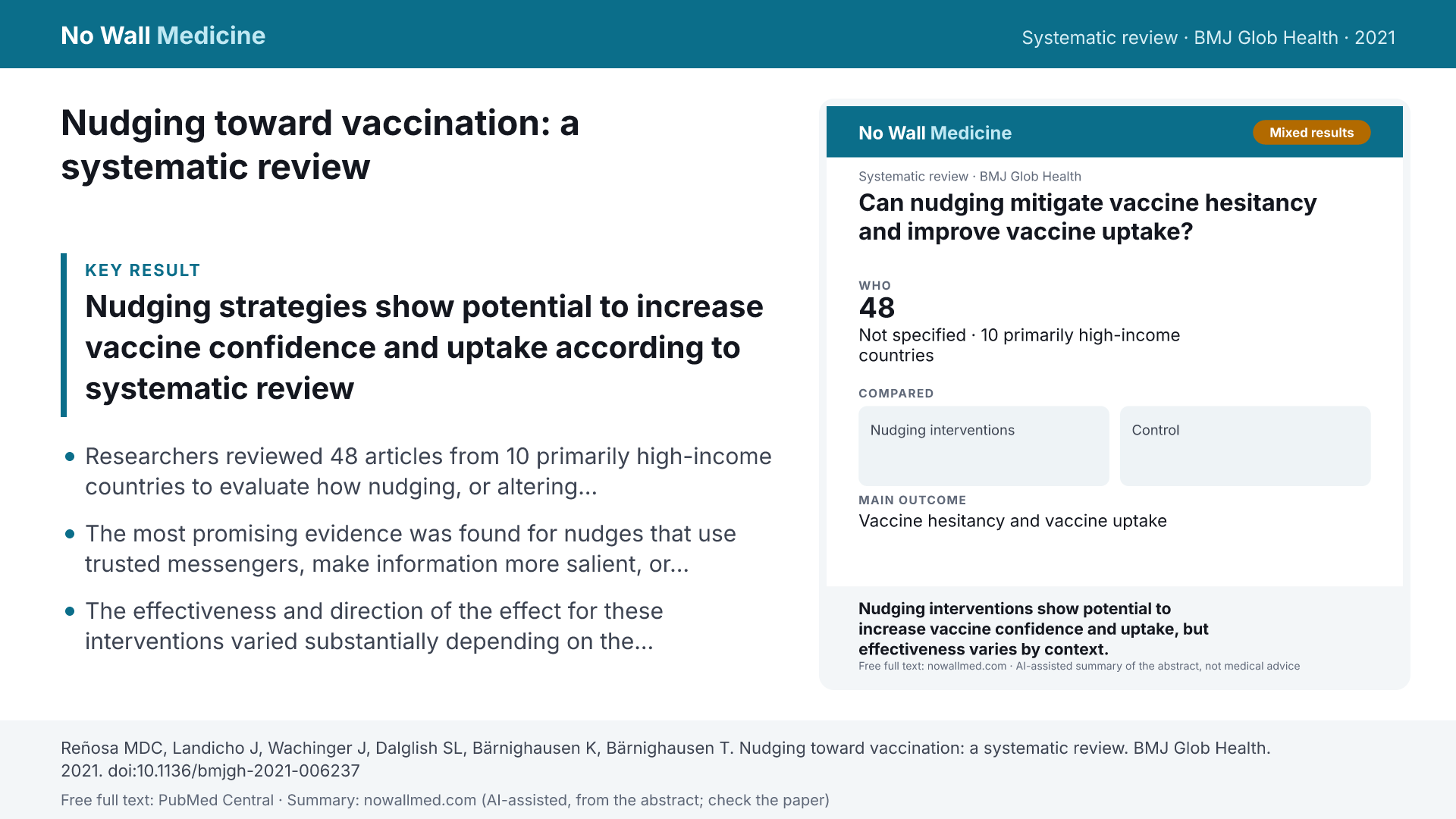
Nudging strategies show potential to increase vaccine confidence and uptake according to systematic review
Nudging toward vaccination: a systematic review
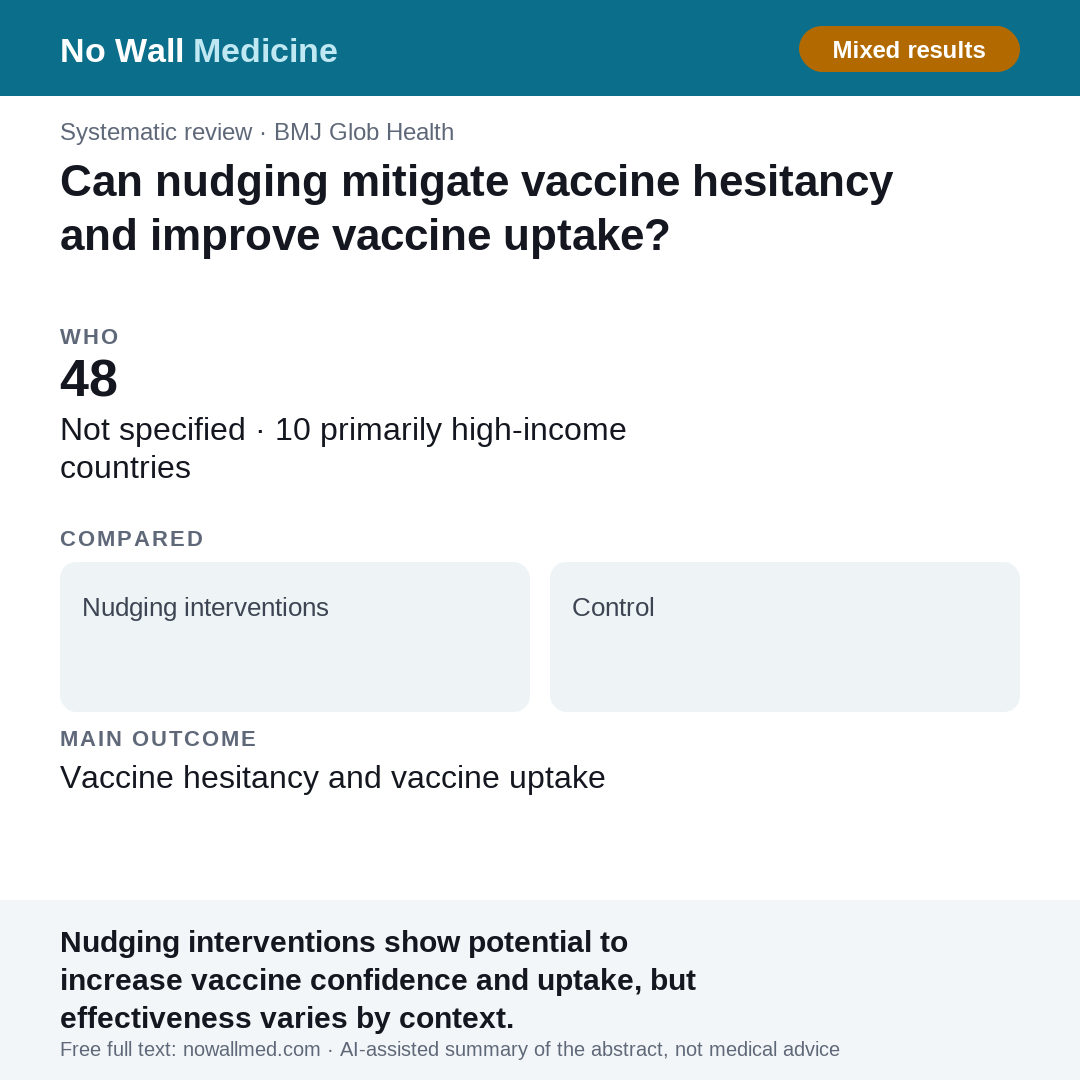
Systematic reviewMixed results
Can nudging mitigate vaccine hesitancy and improve vaccine uptake?
Who
48
Not specified · 10 primarily high-income countries
Compared
Nudging interventions
Control
Main outcome
Vaccine hesitancy and vaccine uptake
Bottom line: Nudging interventions show potential to increase vaccine confidence and uptake, but effectiveness varies by context.
BMJ Glob Health · 2021-10-01Download image
Clinical question: Can nudging mitigate vaccine hesitancy and improve vaccine uptake?
Why it matters: It is unknown which specific nudging strategies are most effective at mitigating vaccine hesitancy and increasing vaccine uptake across different settings.
Key points
- Researchers reviewed 48 articles from 10 primarily high-income countries to evaluate how nudging, or altering decision contexts, affects vaccine hesitancy and uptake.
- The most promising evidence was found for nudges that use trusted messengers, make information more salient, or offer incentives to parents and healthcare workers.
- The effectiveness and direction of the effect for these interventions varied substantially depending on the specific context.
Headline and key points written with AI from the paper’s abstract, with every number checked against it. Read the paper before relying on them.
Was this summary helpful?
Abstract
Background
Vaccine hesitancy (VH) and the global decline of vaccine coverage are a major global health threat, and novel approaches for increasing vaccine confidence and uptake are urgently needed. 'Nudging', defined as altering the environmental context in which a decision is made or a certain behaviour is enacted, has shown promising results in several health promotion strategies. We present a comprehensive synthesis of evidence regarding the value and impact of nudges to address VH. Methods
We conducted a systematic review to determine if nudging can mitigate VH and improve vaccine uptake. Our search strategy used Medical Subject Headings (MeSH) and non-MeSH terms to identify articles related to nudging and vaccination in nine research databases. 15 177 titles were extracted and assessed following Preferred Reporting Items for Systematic Reviews and Meta-Analyses guidelines. The final list of included articles was evaluated using the Mixed Methods Appraisal Tool and the Grading of Recommendations, Assessment, Development and Evaluations framework. Findings
Identified interventions are presented according to a framework for behaviour change, MINDSPACE. Articles (n=48) from 10 primarily high-income countries were included in the review. Nudging-based interventions identified include using reminders and recall, changing the way information is framed and delivered to an intended audience, changing the messenger delivering information, invoking social norms and emotional affect (eg, through storytelling, dramatic narratives and graphical presentations), and offering incentives or changing defaults. The most promising evidence exists for nudges that offer incentives to parents and healthcare workers, that make information more salient or that use trusted messengers to deliver information. The effectiveness of nudging interventions and the direction of the effect varies substantially by context. Evidence for some approaches is mixed, highlighting a need for further research, including how successful interventions can be adapted across settings. Conclusion
Nudging-based interventions show potential to increase vaccine confidence and uptake, but further evidence is needed for the development of clear recommendations. The ongoing COVID-19 pandemic increases the urgency of undertaking nudging-focused research. Prospero registration number
CRD42020185817.
Abstract reproduced under the article’s CC BY licence.
Subject terms
Cite this article
Reñosa MDC, Landicho J, Wachinger J, Dalglish SL, Bärnighausen K, Bärnighausen T. Nudging toward vaccination: a systematic review. BMJ Glob Health. 2021. doi:10.1136/bmjgh-2021-006237
Spotted a mistake? Suggest a correction
Top studies every Monday
The week’s key trials and guidelines in your specialties, plus any topics you follow. By email, free.
Get the weekly digest