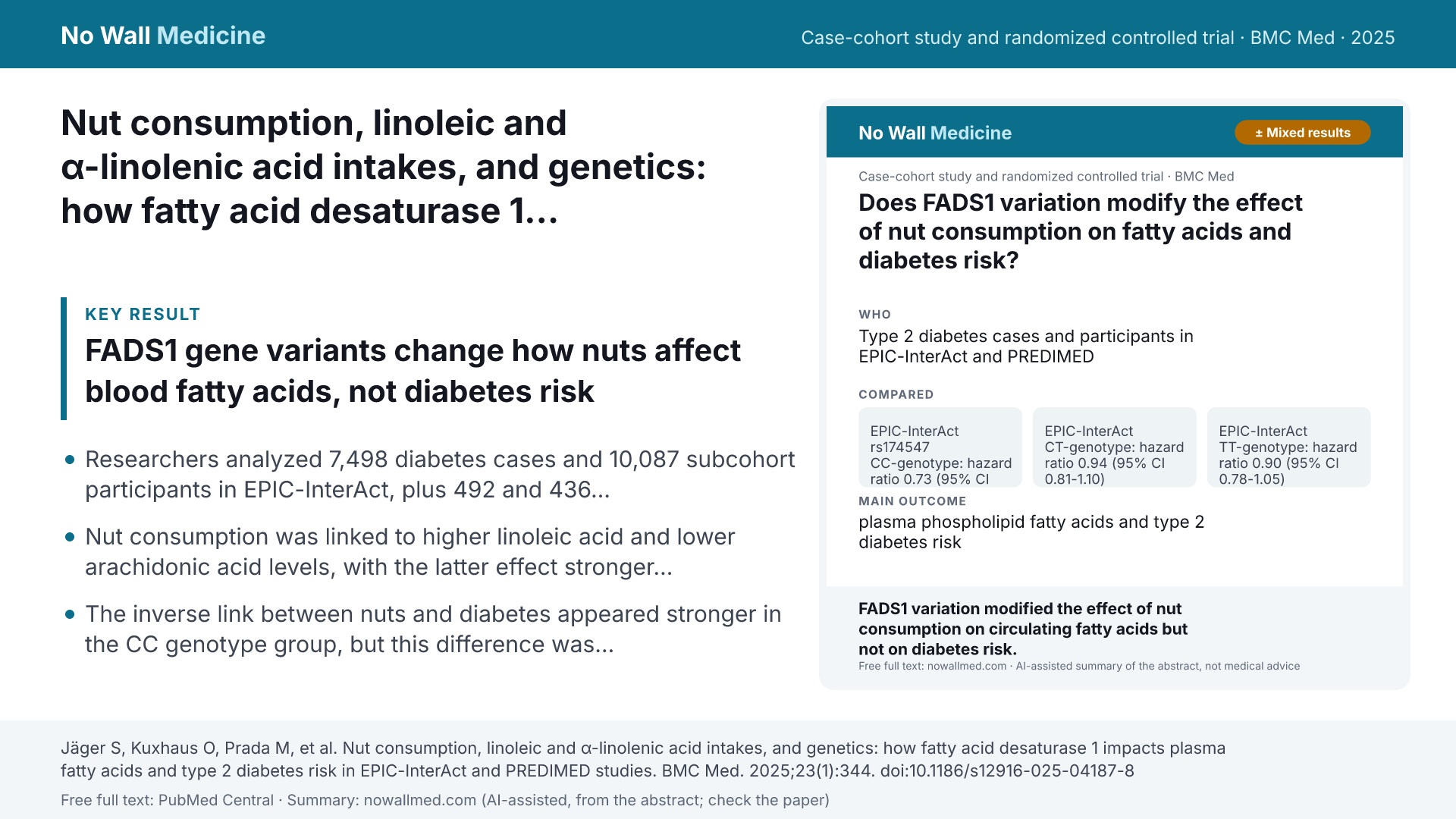
Nut consumption, linoleic and α-linolenic acid intakes, and genetics: how fatty acid desaturase 1 impacts plasma fatty acids and type 2 diabetes risk in EPIC-InterAct and PREDIMED studies
Case-cohort study and randomized controlled trialMixed results
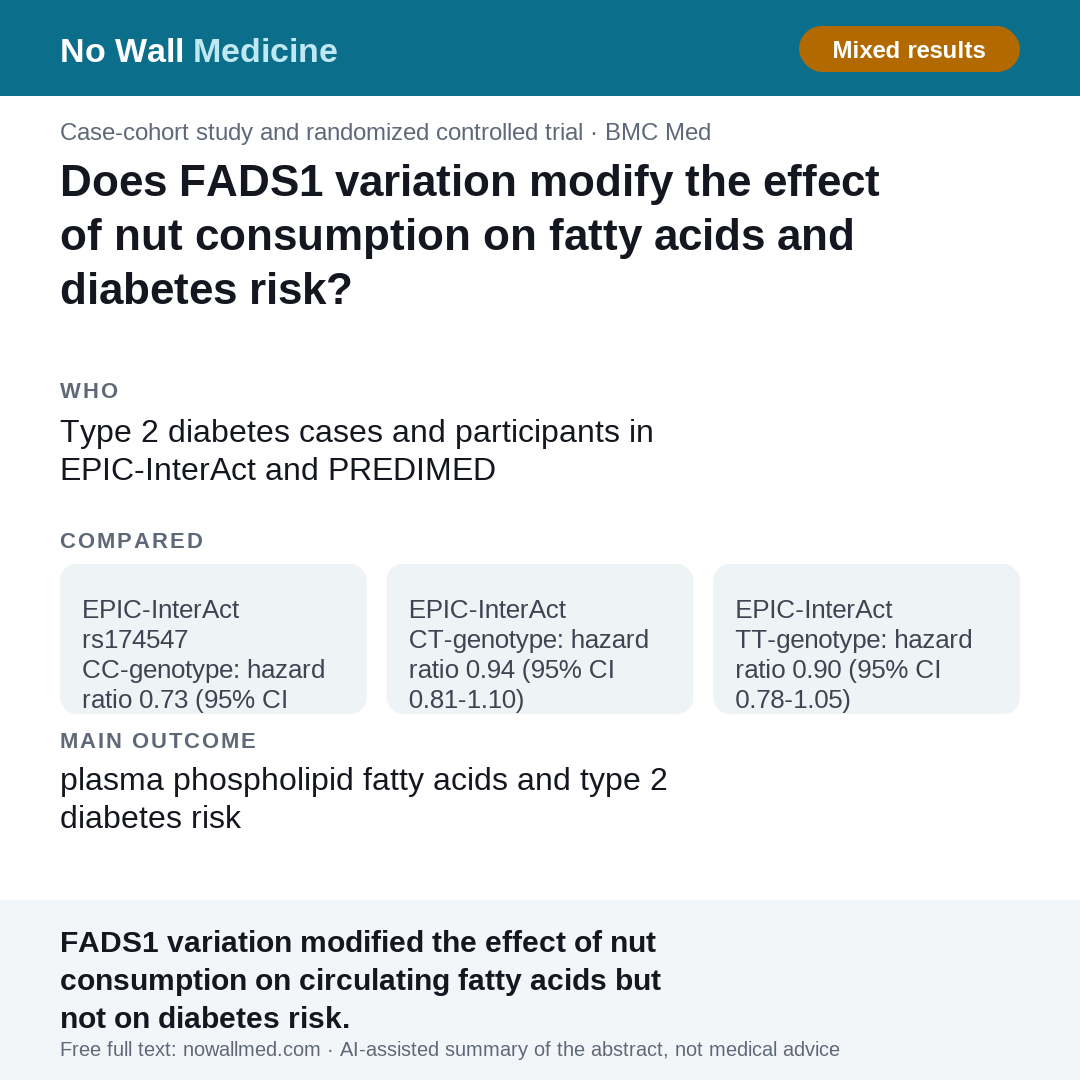
Does FADS1 variation modify the effect of nut consumption on fatty acids and diabetes risk?
Who
Type 2 diabetes cases and participants in EPIC-InterAct and PREDIMED
Compared
EPIC-InterAct rs174547 CC-genotype: hazard ratio 0.73 (95% CI 0.54-1.00)
EPIC-InterAct CT-genotype: hazard ratio 0.94 (95% CI 0.81-1.10)
EPIC-InterAct TT-genotype: hazard ratio 0.90 (95% CI 0.78-1.05)
Main outcome
plasma phospholipid fatty acids and type 2 diabetes risk
Bottom line: FADS1 variation modified the effect of nut consumption on circulating fatty acids but not on diabetes risk.
Limitation: The interaction between FADS1 and nut consumption for diabetes risk was not statistically significant.
BMC Med · 2025-06-09Download image
Clinical question: Does FADS1 variation modify the effect of nut consumption on fatty acids and diabetes risk?
Abstract
Background
Dietary guidelines recommend replacing saturated fatty acid with unsaturated fats, particularly polyunsaturated fatty acids. Cohort studies do not suggest a clear benefit of higher intake of polyunsaturated fatty acids but, in contrast, higher circulating linoleic acid (LA) levels-reflective of dietary LA intake, are associated with a reduced risk of type 2 diabetes. However, genetic variants in the fatty acid desaturase 1 gene (FADS1) may influence individual responses to plant-based fats. We explored whether FADS1 variants influence the relationships of LA and α-linolenic acid (ALA) intakes and nut consumption with plasma phospholipid fatty acid profiles and type 2 diabetes risk in a large-scale cohort study and a randomized controlled trial. Methods
In the EPIC-InterAct case-cohort (7,498 type 2 diabetes cases, 10,087 subcohort participants), we investigated interactions of dietary and plasma phospholipid fatty acids and nut consumption with FADS1 rs174547 in relation to incident type 2 diabetes using weighted Cox regression. In PREDIMED (492 participants in the Mediterranean Diet + Nuts intervention group, 436 participants in the control group), we compared changes in plasma phospholipid FAs from baseline to year 1. Results
In EPIC-InterAct and PREDIMED, nut consumption was positively associated with LA plasma levels and inversely with arachidonic acid, the latter becoming stronger with increasing number of the minor rs174547 C allele (p interaction EPIC-InterAct: 0.030, PREDIMED: 0.003). Although the inverse association of nut consumption with diabetes seemed stronger in participants with rs174547 CC-genotype (HR: 0.73, 95% CI: 0.54-1.00) compared with CT (0.94, 0.81-1.10) or TT (0.90, 0.78-1.05) in EPIC-InterAct, this interaction was not statistically significant. Conclusions
FADS1 variation modified the effect of nut consumption on circulating FAs. We did not observe clear evidence that it modified the association between nut consumption and type 2 diabetes risk.
Subject terms
Cite this article
Jäger S, Kuxhaus O, Prada M, et al. Nut consumption, linoleic and α-linolenic acid intakes, and genetics: how fatty acid desaturase 1 impacts plasma fatty acids and type 2 diabetes risk in EPIC-InterAct and PREDIMED studies. BMC Med. 2025. doi:10.1186/s12916-025-04187-8
Spotted a mistake? Suggest a correction