Higher saturated fat intake relates to increased gut inflammation and permeability in infants
Nutrient intake, gut inflammation markers, and intestinal permeability in infants aged 6-12 months
Secondary analysis of a randomized controlled trialMixed results
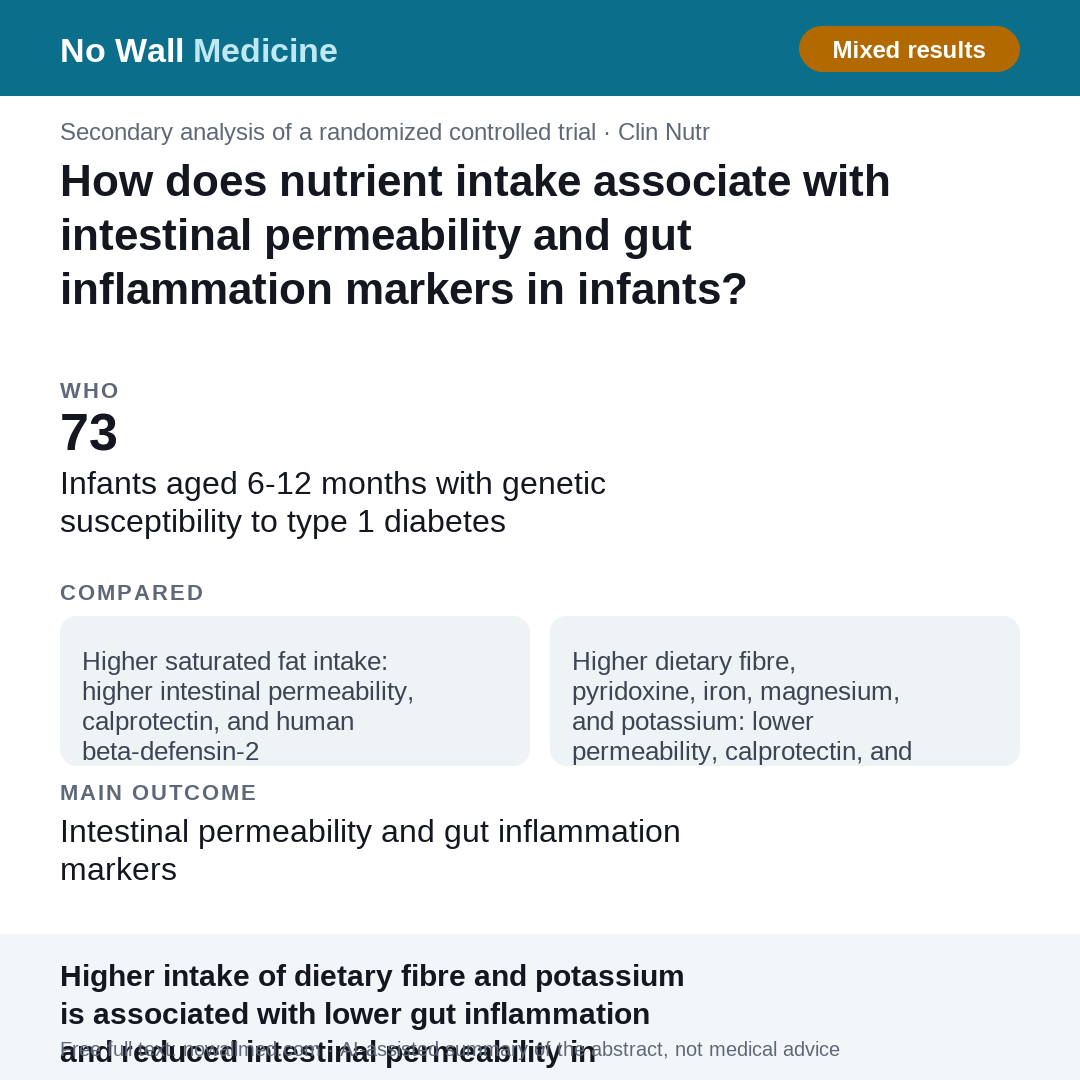
How does nutrient intake associate with intestinal permeability and gut inflammation markers in infants?
Who
73
Infants aged 6-12 months with genetic susceptibility to type 1 diabetes
Compared
Higher saturated fat intake: higher intestinal permeability, calprotectin, and human beta-defensin-2
Higher dietary fibre, pyridoxine, iron, magnesium, and potassium: lower permeability, calprotectin, and human beta-defensin-2
Main outcome
Intestinal permeability and gut inflammation markers
Bottom line: Higher intake of dietary fibre and potassium is associated with lower gut inflammation and reduced intestinal permeability in infants.
Limitation: Adjusting for breast milk energy proportion attenuated many nutrient associations.
Clin Nutr · 2026-07-22Download image
Clinical question: How does nutrient intake associate with intestinal permeability and gut inflammation markers in infants?
Why it matters: The contribution of dietary composition to gut maturation in infants consuming complementary foods remains unclear.
Key points
- Researchers analyzed 73 infants aged 6 to 12 months to see how nutrient intake relates to intestinal permeability and gut inflammation markers.
- Higher saturated fat intake was associated with higher intestinal permeability, calprotectin, and human beta-defensin-2, while higher fiber, vitamin B6, iron, magnesium, and potassium were associated with lower levels.
- Adjusting for breast milk intake weakened many associations, though dietary fiber remained linked to lower inflammation markers and potassium remained linked to lower permeability and calprotectin.
Headline and key points written with AI from the paper’s abstract, with every number checked against it. Read the paper before relying on them.
Topics
Spotted a mistake? Suggest a correction