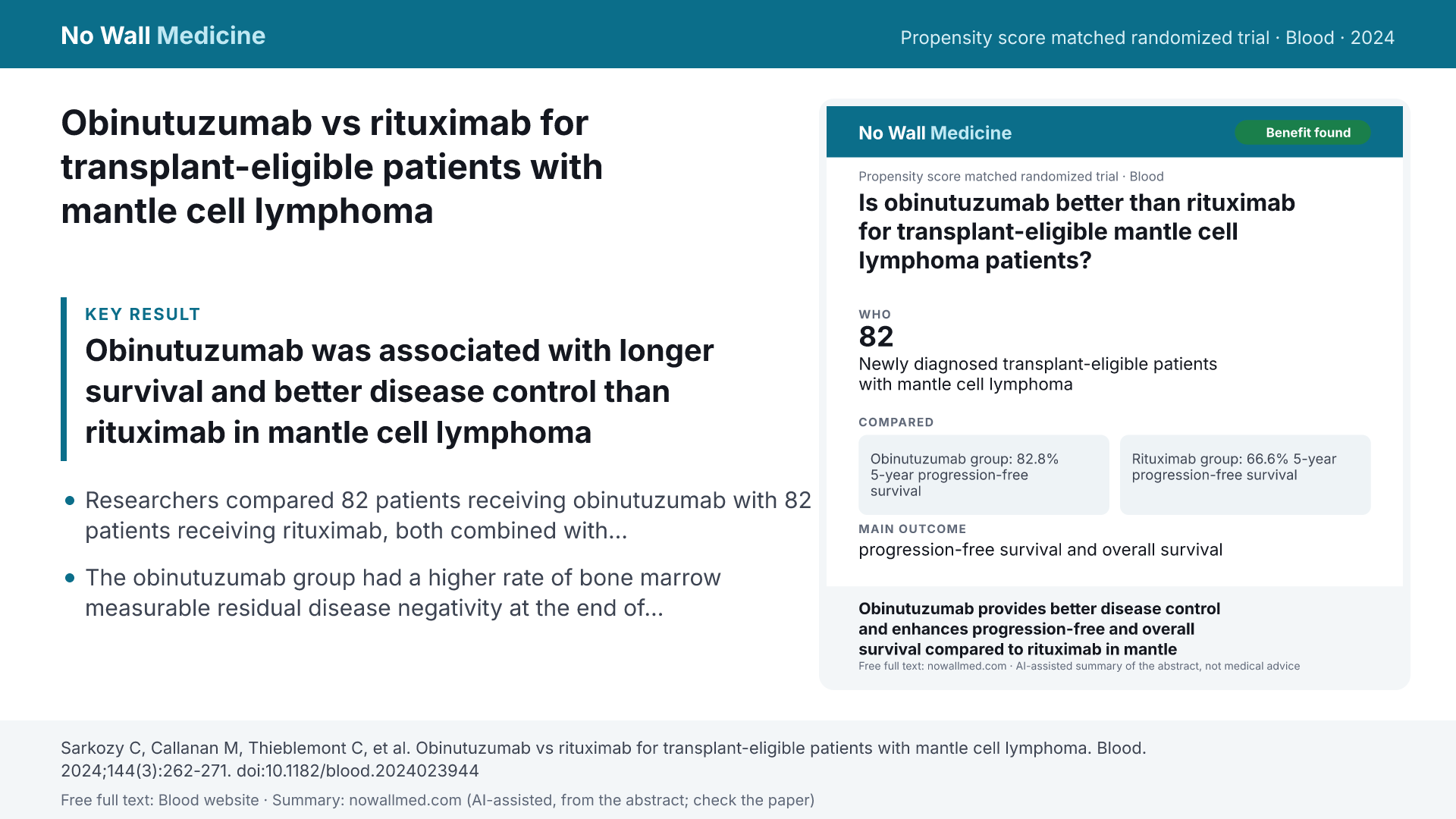
Obinutuzumab was associated with longer survival and better disease control than rituximab in mantle cell lymphoma
Obinutuzumab vs rituximab for transplant-eligible patients with mantle cell lymphoma
Propensity score matched randomized trialBenefit found
Is obinutuzumab better than rituximab for transplant-eligible mantle cell lymphoma patients?
Who
82
Newly diagnosed transplant-eligible patients with mantle cell lymphoma
Compared
Obinutuzumab group: 82.8% 5-year progression-free survival
Rituximab group: 66.6% 5-year progression-free survival
Main outcome
progression-free survival and overall survival
Result: hazard ratio 1.99 (95% CI 1.05-3.76) for progression-free survival
Bottom line: Obinutuzumab provides better disease control and enhances progression-free and overall survival compared to rituximab in mantle cell lymphoma.
Blood · 2024-04-26Download image
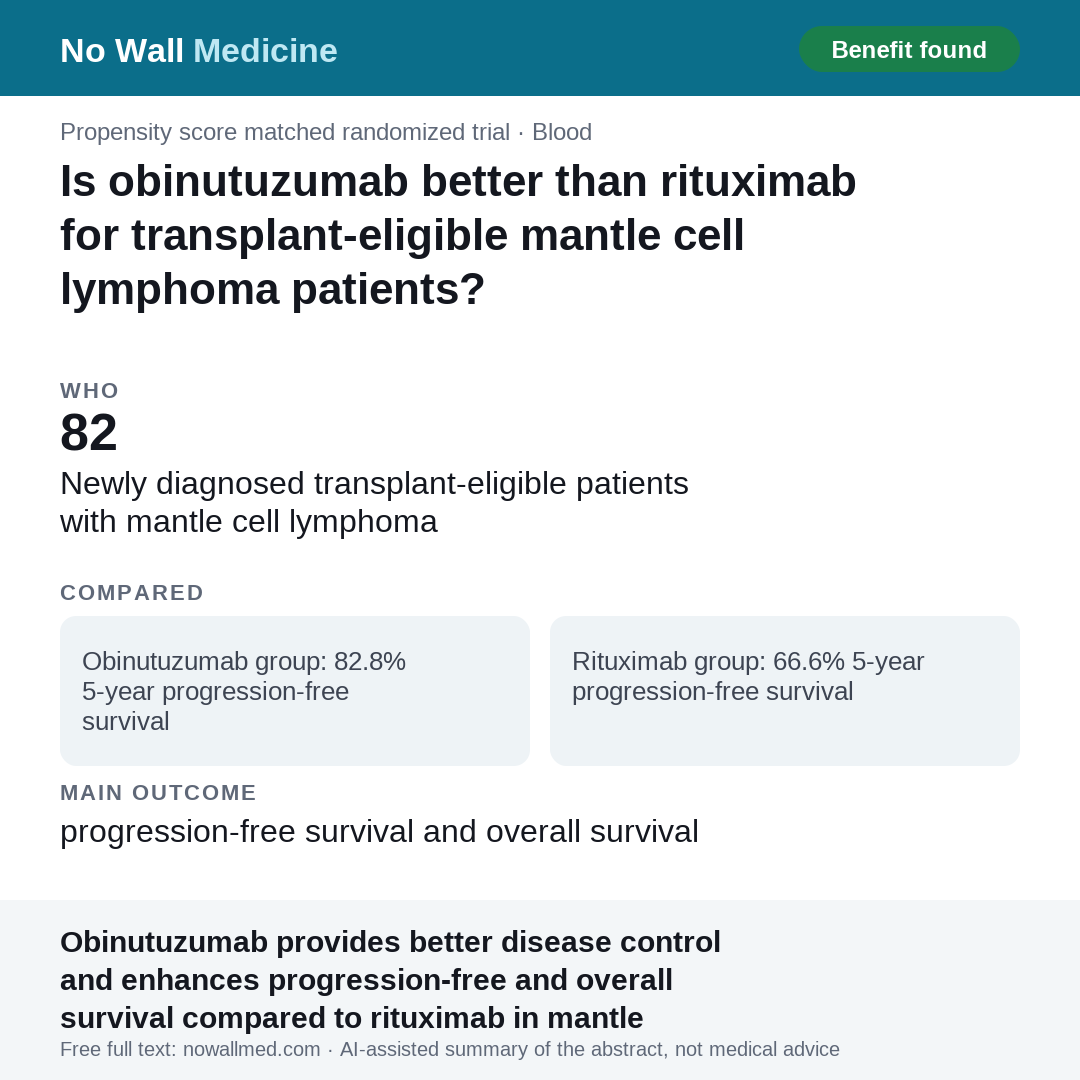
Clinical question: Is obinutuzumab better than rituximab for transplant-eligible mantle cell lymphoma patients?
Key points
- Researchers compared 82 patients receiving obinutuzumab with 82 patients receiving rituximab, both combined with chemotherapy and followed by maintenance therapy before and after transplantation.
- The obinutuzumab group had a higher rate of bone marrow measurable residual disease negativity at the end of induction at 83.1% compared to 63.4% for rituximab.
- The obinutuzumab group had a 5-year progression-free survival of 82.8% and an overall survival of 86.4%, compared to 66.6% and 71.4% for the rituximab group.
Headline and key points written with AI from the paper’s abstract, with every number checked against it. Read the paper before relying on them.
Was this summary helpful?
Subject terms
Headline, design, result, key points, caveat and citation as plain text.
Cite this article
Sarkozy C, Callanan M, Thieblemont C, et al. Obinutuzumab vs rituximab for transplant-eligible patients with mantle cell lymphoma. Blood. 2024. doi:10.1182/blood.2024023944
Spotted a mistake? Suggest a correction