Objective Response Predicts Survival in Advanced Hepatocellular Carcinoma Treated with Systemic Therapies
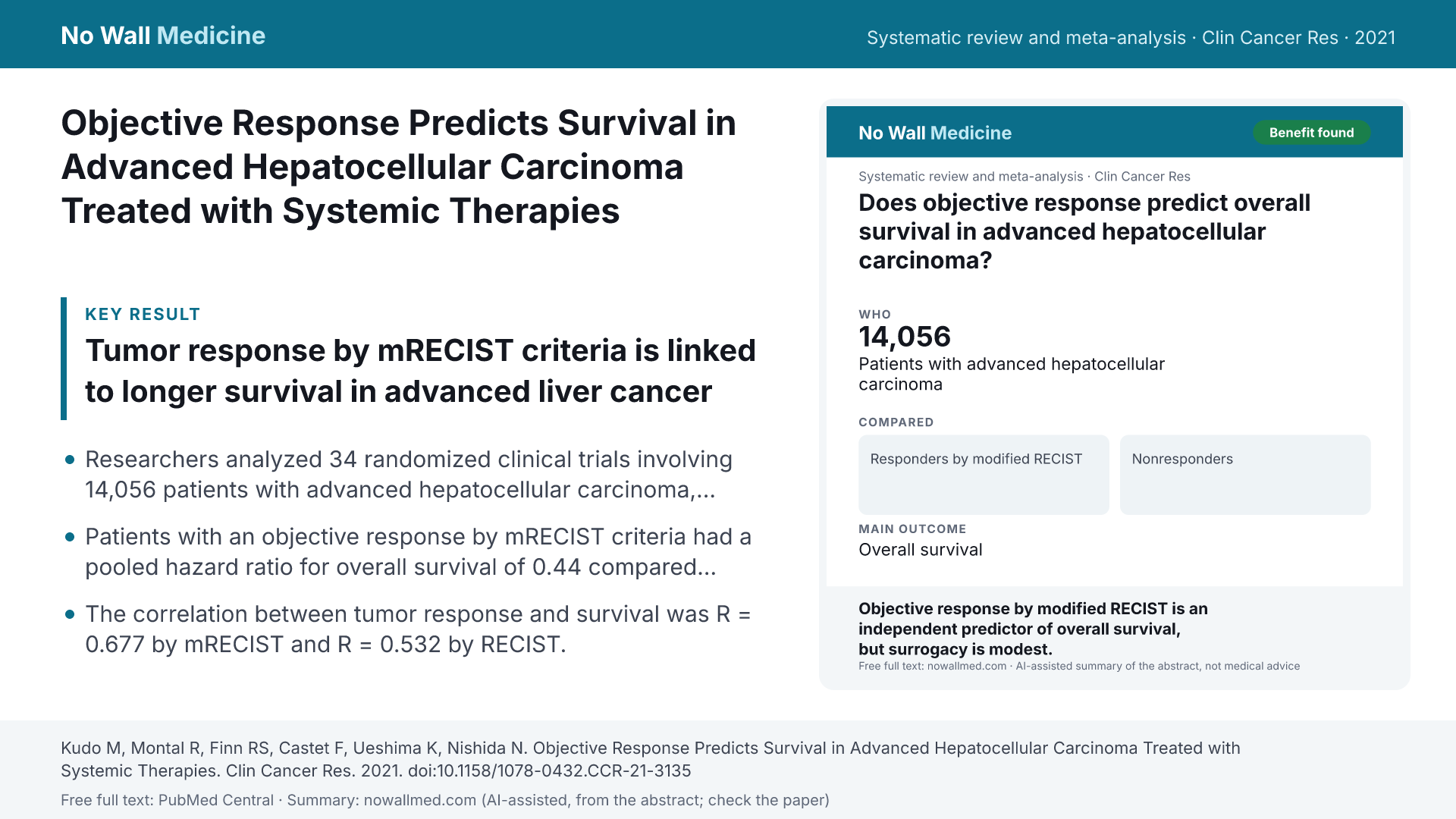
Key result: Tumor response by mRECIST criteria is linked to longer survival in advanced liver cancer
Systematic review and meta-analysisBenefit found
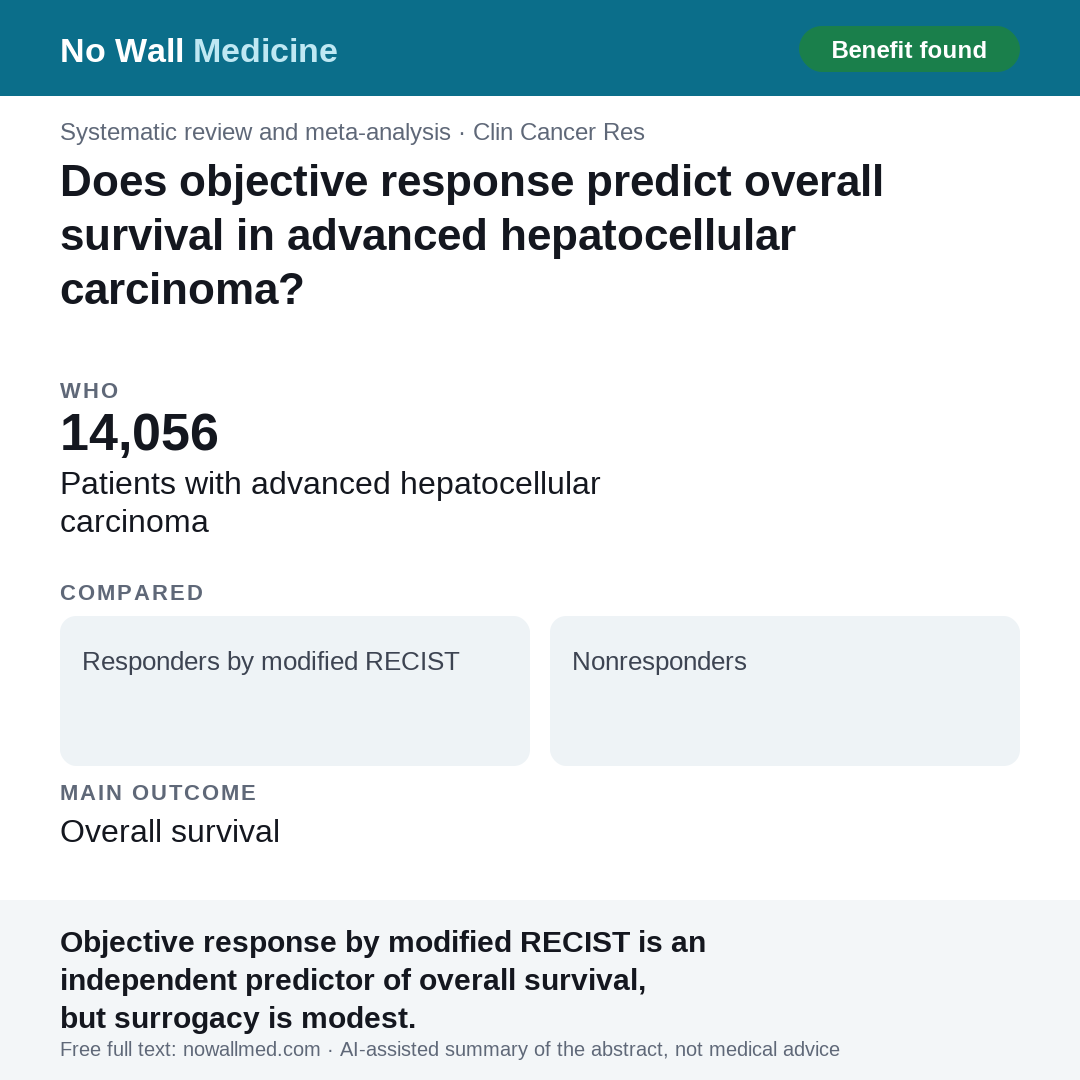
Does objective response predict overall survival in advanced hepatocellular carcinoma?
Who
14,056
Patients with advanced hepatocellular carcinoma
Compared
Responders by modified RECIST
Nonresponders
Main outcome
Overall survival
Result: hazard ratio 0.44 (95% confidence interval, 0.27-0.70)
Bottom line: Objective response by modified RECIST is an independent predictor of overall survival, but surrogacy is modest.
Clin Cancer Res · 2021-12-16Download image
Key points
- Researchers analyzed 34 randomized clinical trials involving 14,056 patients with advanced hepatocellular carcinoma, which is a type of liver cancer.
- Patients with an objective response by mRECIST criteria had a pooled hazard ratio for overall survival of 0.44 compared to nonresponders.
- The correlation between tumor response and survival was R = 0.677 by mRECIST and R = 0.532 by RECIST.
Why it matters: It is unknown if tumor response can serve as a reliable surrogate endpoint for overall survival in advanced liver cancer clinical trials.
Discussion prompts
- Would these patients look like yours? Who was left out?
- Is the main outcome one that matters to patients?
- Is the difference large enough to change what you do?
Cite: Kudo M, Montal R, Finn RS, Castet F, Ueshima K, Nishida N. Objective Response Predicts Survival in Advanced Hepatocellular Carcinoma Treated with Systemic Therapies. Clin Cancer Res. 2021. doi:10.1158/1078-0432.CCR-21-3135
Free full text: PubMed Central · Summary and visual abstract: nowallmed.com/a/objective-response-predicts-survival-in-advanced-hepatocellular-sqs5d5/ (AI-assisted from the abstract; check the paper before relying on it).