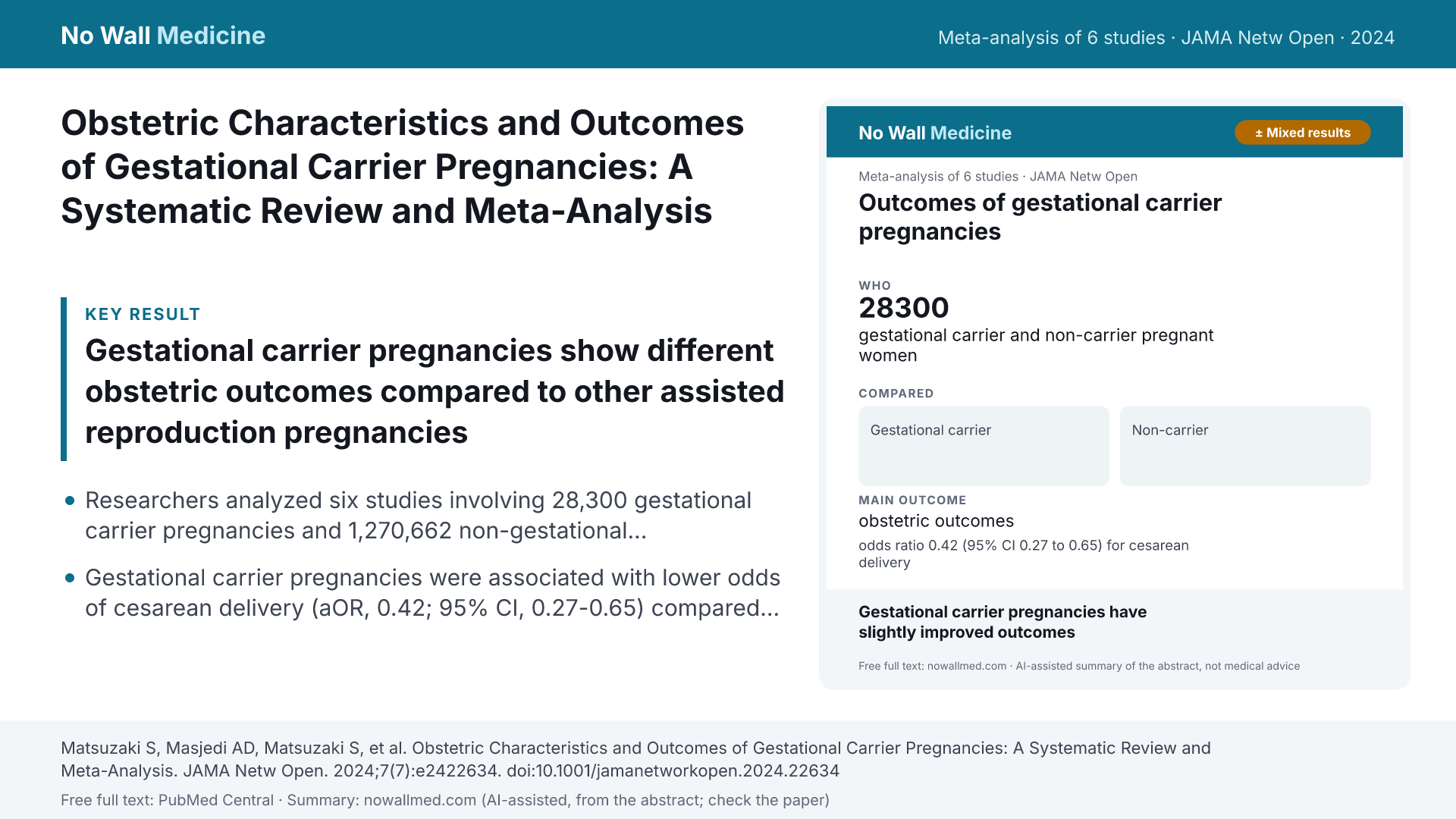
Gestational carrier pregnancies show different obstetric outcomes compared to other assisted reproduction pregnancies
Obstetric Characteristics and Outcomes of Gestational Carrier Pregnancies: A Systematic Review and Meta-Analysis
Meta-analysis of 6 studiesMixed results
Outcomes of gestational carrier pregnancies
Who
28300
gestational carrier and non-carrier pregnant women
Compared
Gestational carrier
Non-carrier
Main outcome
obstetric outcomes
Result: odds ratio 0.42 (95% CI 0.27 to 0.65) for cesarean delivery
Bottom line: Gestational carrier pregnancies have slightly improved outcomes
JAMA Netw Open · 2024-07-01 · Save PNG

Key points
- Researchers analyzed six studies involving 28,300 gestational carrier pregnancies and 1,270,662 non-gestational carrier pregnancies.
- Gestational carrier pregnancies were associated with lower odds of cesarean delivery (aOR, 0.42; 95% CI, 0.27-0.65) compared to other assisted reproduction pregnancies.
- Compared to general pregnancies, gestational carrier pregnancies were associated with higher odds of hypertensive disorders (aOR, 1.44; 95% CI, 1.13-1.84).
Headline and key points written with AI from the paper’s abstract, with every number checked against it. Read the paper before relying on them.
Was this summary helpful?
Subject terms
Headline, design, result, key points, caveat and citation as plain text.
Cite this article
Matsuzaki S, Masjedi AD, Matsuzaki S, et al. Obstetric Characteristics and Outcomes of Gestational Carrier Pregnancies: A Systematic Review and Meta-Analysis. JAMA Netw Open. 2024;7(7):e2422634. doi:10.1001/jamanetworkopen.2024.22634
Spotted a mistake? Suggest a correction