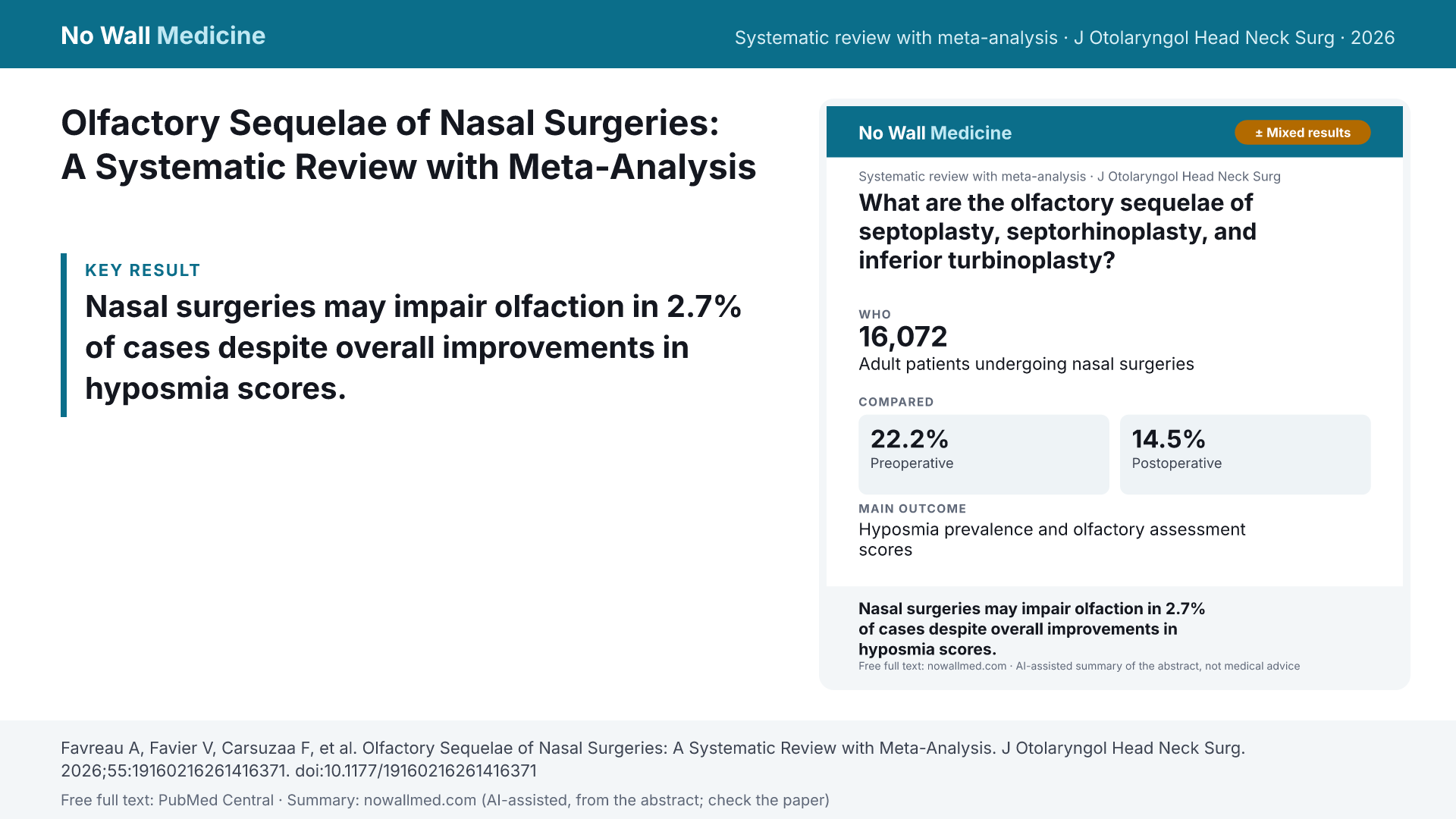
Olfactory Sequelae of Nasal Surgeries: A Systematic Review with Meta-Analysis
Systematic review with meta-analysisMixed results
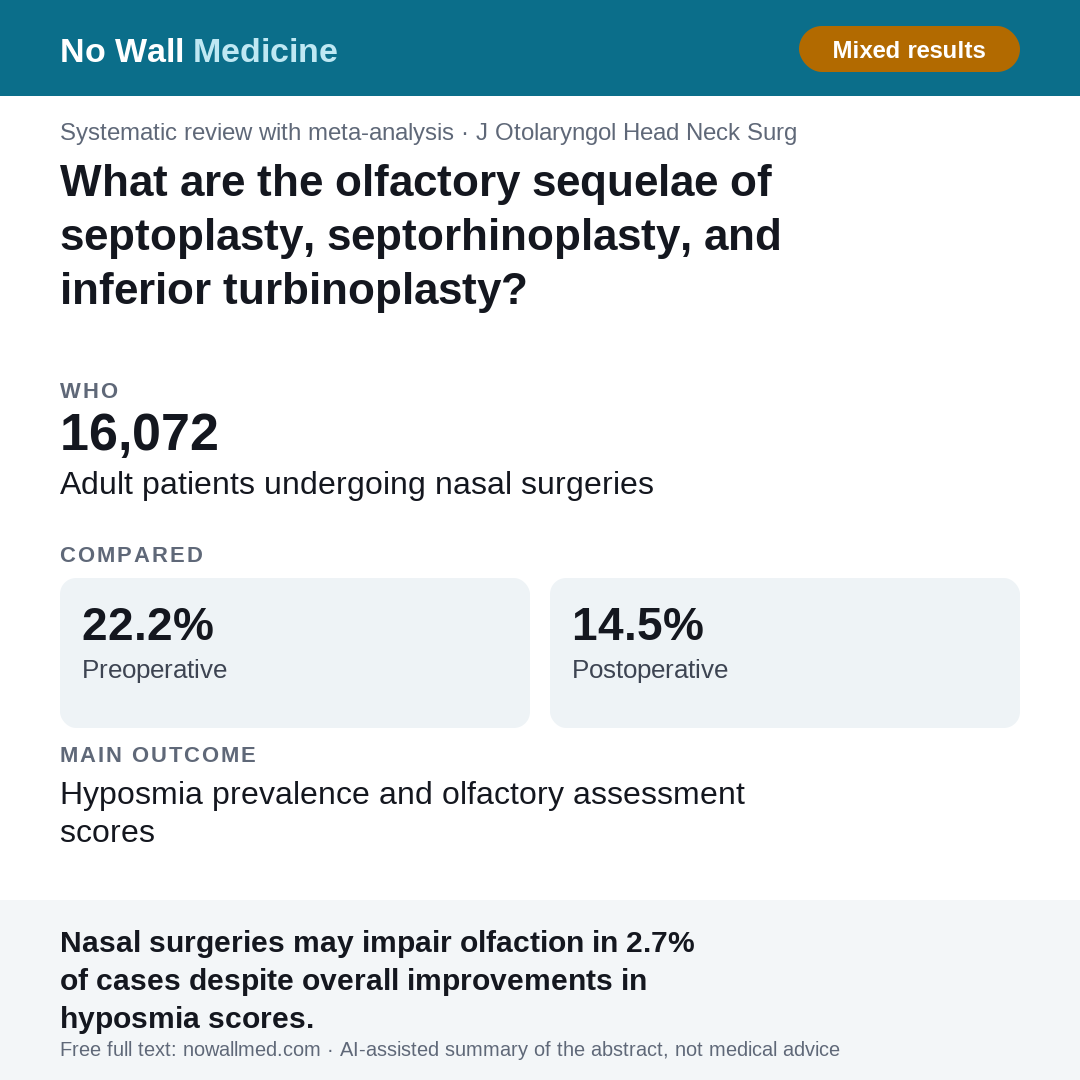
What are the olfactory sequelae of septoplasty, septorhinoplasty, and inferior turbinoplasty?
Who
16,072
Adult patients undergoing nasal surgeries
Compared
22.2%Preoperative (945/4254)
14.5%Postoperative (380/2620)
Main outcome
Hyposmia prevalence and olfactory assessment scores
Bottom line: Nasal surgeries may impair olfaction in 2.7% of cases despite overall improvements in hyposmia scores.
Limitation: The study highlights the need for objective and systematic olfactory assessment in nasal surgery studies.
J Otolaryngol Head Neck Surg · 2026-02-26Download image
Clinical question: What are the olfactory sequelae of septoplasty, septorhinoplasty, and inferior turbinoplasty?
Abstract
ImportanceSeptoplasty, turbinoplasty, and septorhinoplasty are common and generally-safe procedures. However, their effects on the olfactory system, despite its anatomical proximity, are not well documented. Given the importance of olfaction for quality of life, evaluating the olfactory impact of these surgeries is warranted.ObjectiveThis study aimed to assess the olfactory sequelae of nasal surgeries.DesignSystematic review with meta-analysisSetting and ParticipantsA search equation used in PubMed/Medline, Cochrane Library, Web of Science, and Embase identified 7780 articles published since 1990, evaluating the adverse events of nasal surgeries.ExposureThe studies included evaluated adult patients exposed to one of the following nasal surgeries: septoplasty, septorhinoplasty, and/or inferior turbinoplasty.Main outcome measuresOlfactory assessment results and number of patients presenting with preoperative or postoperative hyposmia were extracted, as well as the number of patients presenting with surgery-induced hyposmia.A meta-analysis was conducted to compare different surgical subgroups.ResultsOne hundred and two studies were ultimately included in the analysis, centralizing data from 16,072 patients. Surgery-induced hyposmia was identified in 2.7% of cases, regardless of the surgical intervention performed. Overall, nasal surgeries led to a postoperative improvement in hyposmia scores [3.73 (±1.58) vs 2.39 (±1.45), P < .001] and a reduction in the number of patients with hyposmia [22.2% (945/4254) vs 14.5% (380/2620), P < .001]. The meta-analysis revealed no significant difference between the surgical subgroups.Conclusion and RelevanceThe present systematic review and meta-analysis suggest that nasal surgery may impair olfaction in a non-negligible number of cases and highlight the need for objective and systematic olfactory assessment in nasal surgery studies.
Subject terms
Cite this article
Favreau A, Favier V, Carsuzaa F, et al. Olfactory Sequelae of Nasal Surgeries: A Systematic Review with Meta-Analysis. J Otolaryngol Head Neck Surg. 2026. doi:10.1177/19160216261416371
Spotted a mistake? Suggest a correction