Once-weekly semaglutide was associated with greater body mass index reduction in adolescents with obesity
Once-Weekly Semaglutide in Adolescents with Obesity
Double-blind, parallel-group, randomized, placebo-controlled trialBenefit found
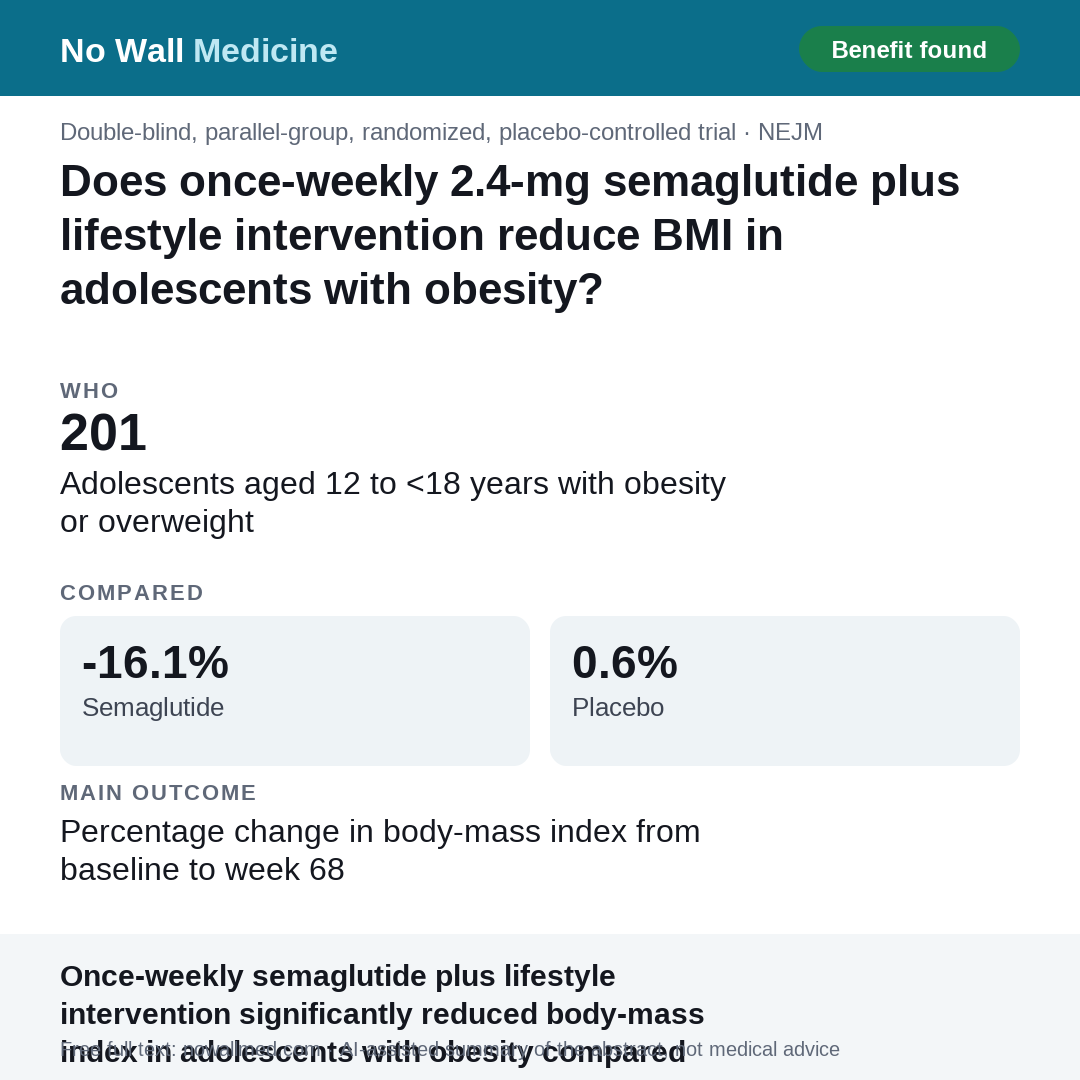
Does once-weekly 2.4-mg semaglutide plus lifestyle intervention reduce BMI in adolescents with obesity?
Who
201
Adolescents aged 12 to <18 years with obesity or overweight
Compared
-16.1%Semaglutide
0.6%Placebo
Main outcome
Percentage change in body-mass index from baseline to week 68
Result: -16.7 percentage points (95% CI, -20.3 to -13.2)
Bottom line: Once-weekly semaglutide plus lifestyle intervention significantly reduced body-mass index in adolescents with obesity compared to placebo.
Funded by: Novo Nordisk
NEJM · 2022-11-02Download image
Clinical question: Does once-weekly 2.4-mg semaglutide plus lifestyle intervention reduce BMI in adolescents with obesity?
Why it matters: The effects of a 2.4-mg dose of semaglutide, a glucagon-like peptide-1 receptor agonist, in adolescents with obesity were previously lacking.
Key points
- Researchers studied 201 adolescents with obesity or overweight and at least one weight-related condition who received either semaglutide or a placebo for 68 weeks.
- The semaglutide group had a mean body mass index change of -16.1% compared to 0.6% in the placebo group, and 73% achieved at least 5% weight loss.
- Gastrointestinal side effects occurred in 62% of the semaglutide group compared to 42% of the placebo group, and 4% of semaglutide participants had cholelithiasis (gallstones).
Headline and key points written with AI from the paper’s abstract, with every number checked against it. Read the paper before relying on them.
Was this summary helpful?
Subject terms
Cite this article
Weghuber D, Barrett T, Barrientos-Pérez M, Gies I, Hesse D, Jeppesen OK. Once-Weekly Semaglutide in Adolescents with Obesity. NEJM. 2022. doi:10.1056/NEJMoa2208601
Spotted a mistake? Suggest a correction
Top studies every Monday
The week’s key trials and guidelines in your specialties, plus any topics you follow. By email, free.
Get the weekly digest