Optimal Antithrombotic Therapy for Peripheral Artery Disease: A Systematic Review and Network Meta-Analysis
Network meta-analysisBenefit found
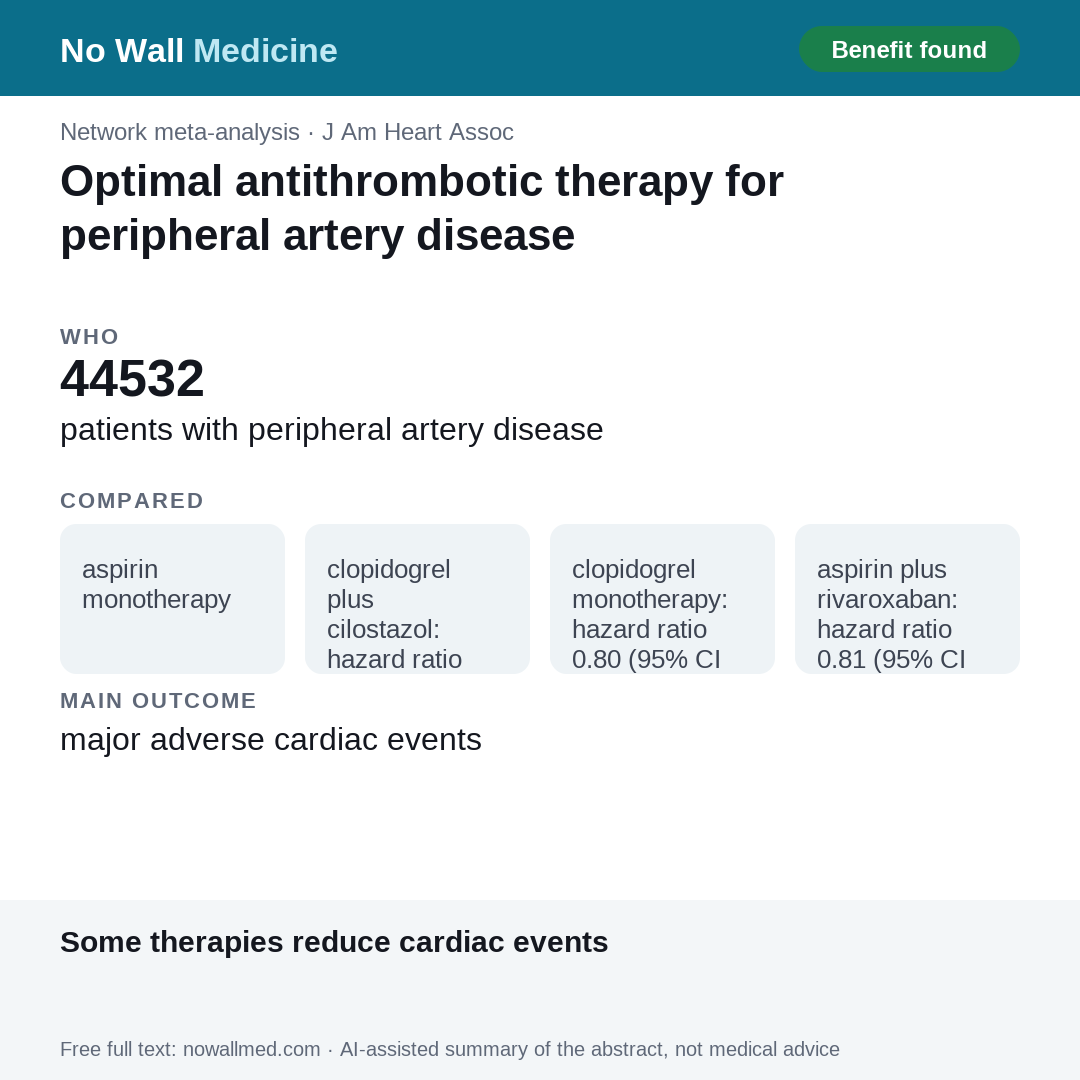
Optimal antithrombotic therapy for peripheral artery disease
Who
44532
patients with peripheral artery disease
Compared
aspirin monotherapy
clopidogrel plus cilostazol: hazard ratio 0.37 (95% CI 0.20-0.72)
clopidogrel monotherapy: hazard ratio 0.80 (95% CI 0.67-0.96)
aspirin plus rivaroxaban: hazard ratio 0.81 (95% CI 0.72-0.92)
Main outcome
major adverse cardiac events
Bottom line: Some therapies reduce cardiac events
J Am Heart Assoc · 2026-06-15Download image
Abstract
Background
The optimal antithrombotic regimen for peripheral artery disease, balancing thromboembolic and bleeding risks, remains uncertain. This study aimed to compare the efficacy and safety of antithrombotic regimens in patients with peripheral artery disease. Methods
We reviewed randomized controlled trials evaluating antithrombotic therapies for peripheral artery disease, including aspirin, P2Y12 inhibitors, cilostazol, and rivaroxaban. The primary outcome was major adverse cardiac events, defined as a composite of cardiovascular death, myocardial infarction, and stroke. The secondary outcomes included major adverse limb events, defined as a composite of acute limb ischemia, revascularization, and amputation. The safety outcome was major bleeding, primarily assessed using the Thrombolysis in Myocardial Infarction criteria. We performed a network meta-analysis to compare antithrombotic regimens. Results
Seventeen randomized controlled trials involving 44 532 participants were included. Compared with aspirin monotherapy, the following were associated with lower risks of major adverse cardiac events: clopidogrel, 75 mg/d, plus cilostazol, 200 mg/d (hazard ratio [HR], 0.37 [95% CI, 0.20-0.72]), clopidogrel, 75 mg/d, monotherapy (HR, 0.80 [95% CI, 0.67-0.96]), aspirin plus low-dose rivaroxaban, 2.5 mg twice daily (HR, 0.81 [95% CI, 0.72-0.92]), and aspirin plus ticagrelor, 60 to 90 mg twice daily (HR, 0.81 [95% CI, 0.69-0.96]). Aspirin plus rivaroxaban or ticagrelor showed a lower risk of major adverse limb events compared with aspirin alone. Rivaroxaban monotherapy, 5 mg twice daily, and aspirin plus rivaroxaban or clopidogrel were associated with a higher risk of major bleeding. Conclusions
Clopidogrel plus cilostazol or clopidogrel monotherapy might be a balanced strategy in patients with peripheral artery disease.
Topics
Spotted a mistake? Suggest a correction