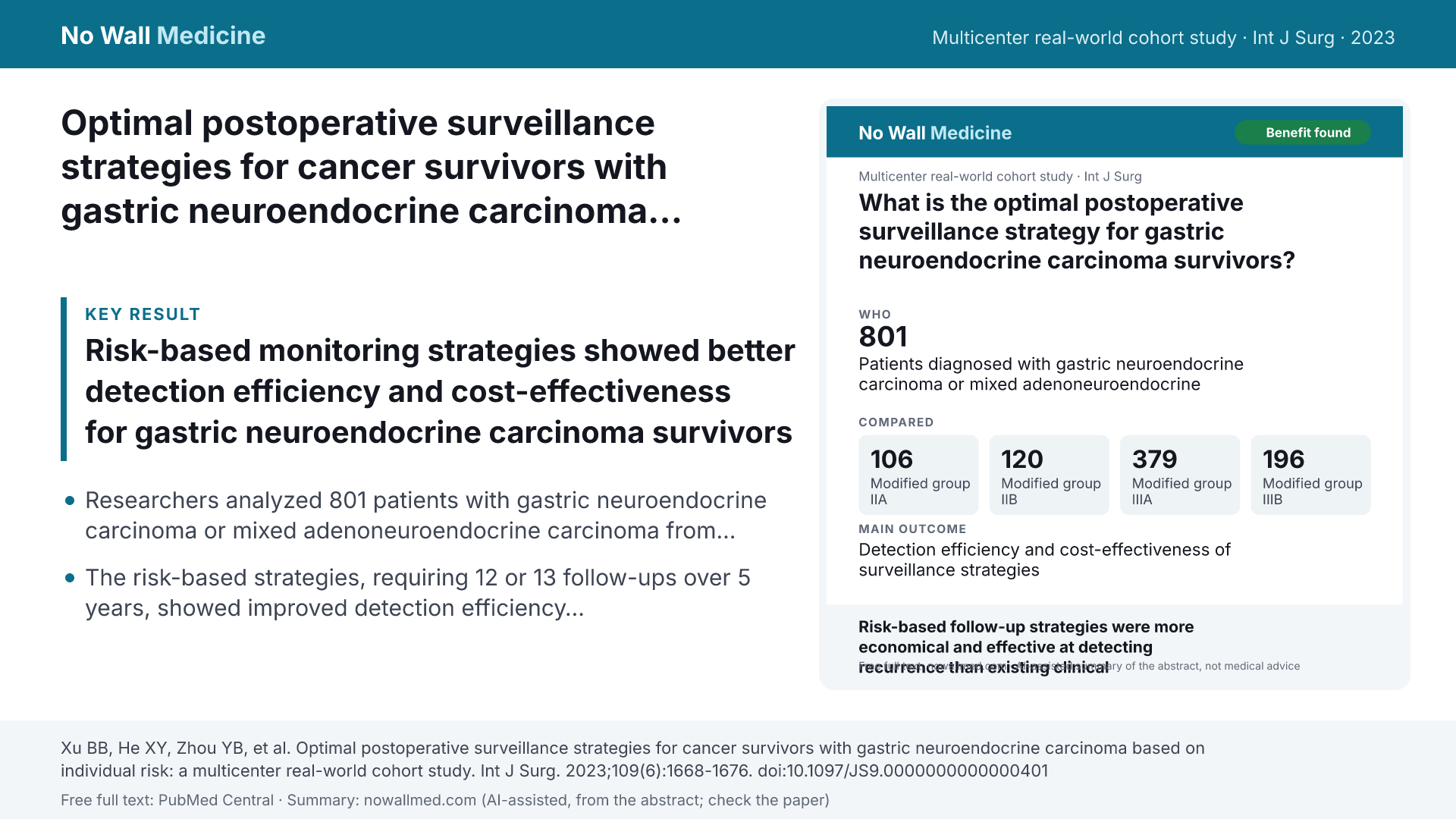
Risk-based monitoring strategies showed better detection efficiency and cost-effectiveness for gastric neuroendocrine carcinoma survivors
Optimal postoperative surveillance strategies for cancer survivors with gastric neuroendocrine carcinoma based on individual risk: a multicenter real-world cohort study
Multicenter real-world cohort studyBenefit found
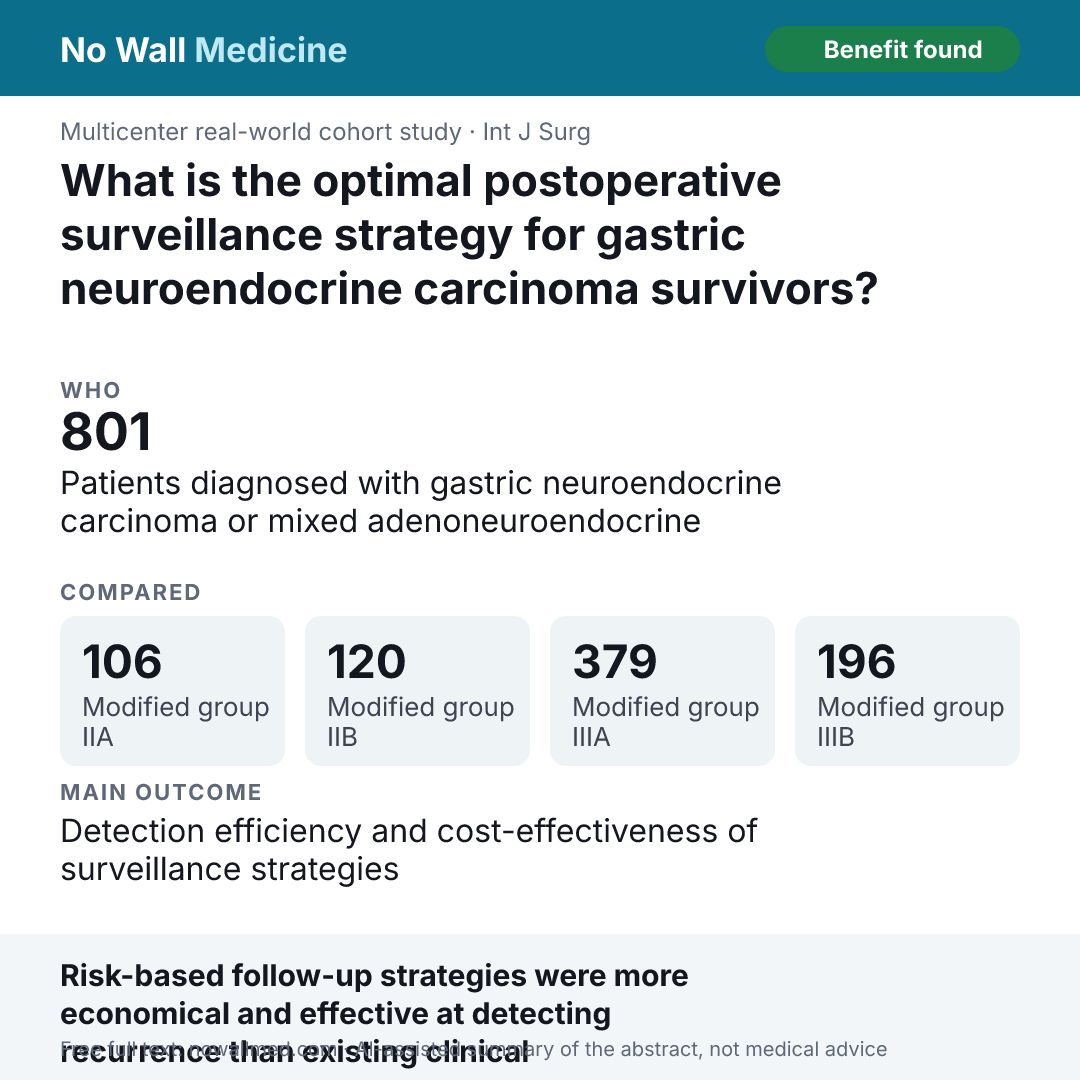
What is the optimal postoperative surveillance strategy for gastric neuroendocrine carcinoma survivors?
Who
801
Patients diagnosed with gastric neuroendocrine carcinoma or mixed adenoneuroendocrine carcinoma · 21 centers in China
Compared
106Modified group IIA (13.2%)
120Modified group IIB (15.0%)
379Modified group IIIA (47.3%)
196Modified group IIIB (24.5%)
Main outcome
Detection efficiency and cost-effectiveness of surveillance strategies
Bottom line: Risk-based follow-up strategies were more economical and effective at detecting recurrence than existing clinical guidelines.
Limitation: Results are limited by biases related to the retrospective study design.
Int J Surg · 2023-06-01
Headline and visual abstract written with AI from the paper’s abstract, with every number checked against it. Read the paper before relying on them.
Was this summary helpful?
Subject terms
Cite this article
Xu BB, He XY, Zhou YB, et al. Optimal postoperative surveillance strategies for cancer survivors with gastric neuroendocrine carcinoma based on individual risk: a multicenter real-world cohort study. Int J Surg. 2023;109(6):1668-1676. doi:10.1097/JS9.0000000000000401
Spotted a mistake? Suggest a correction