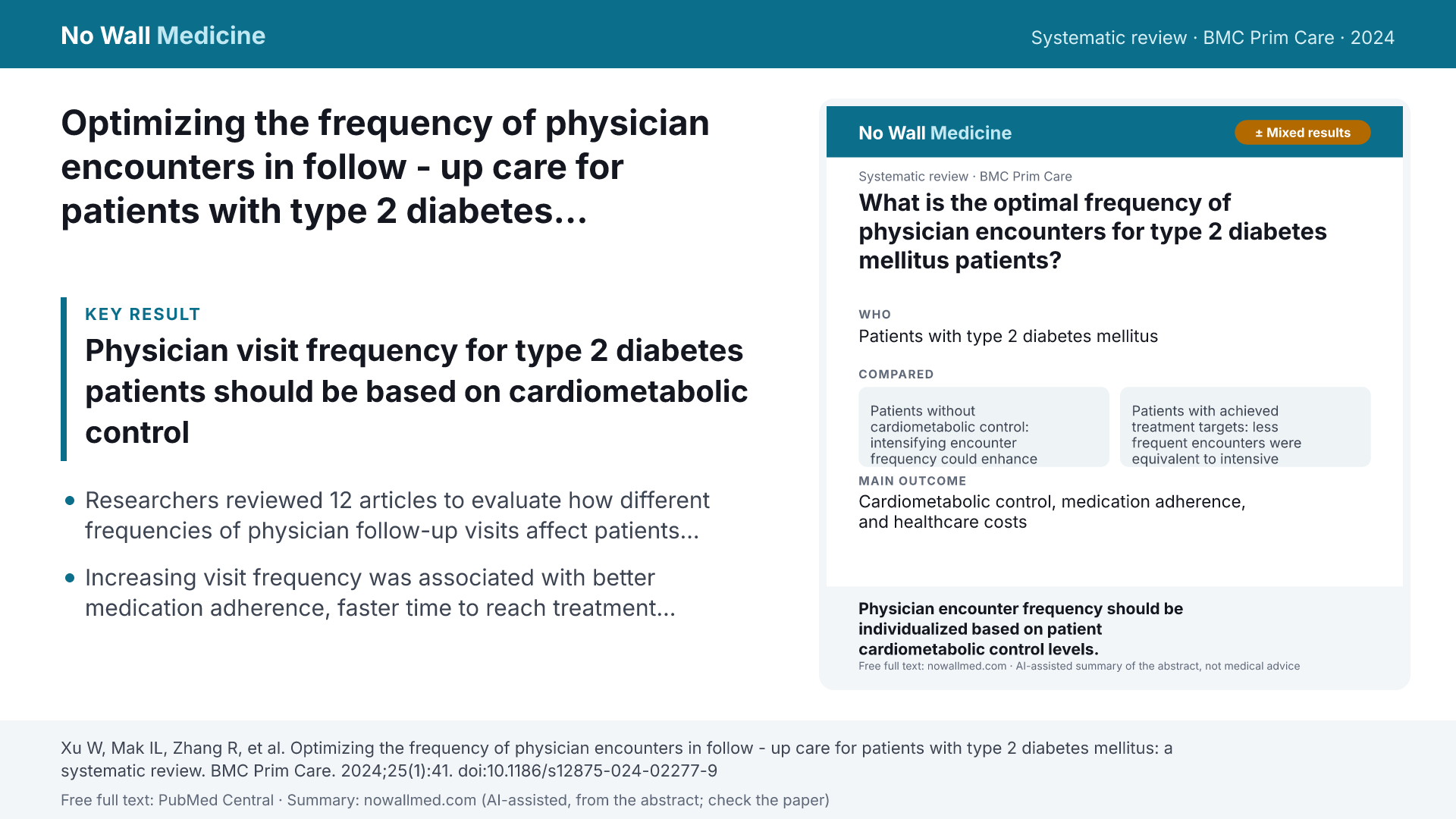
Physician visit frequency for type 2 diabetes patients should be based on cardiometabolic control
Optimizing the frequency of physician encounters in follow - up care for patients with type 2 diabetes mellitus: a systematic review
Systematic reviewMixed results
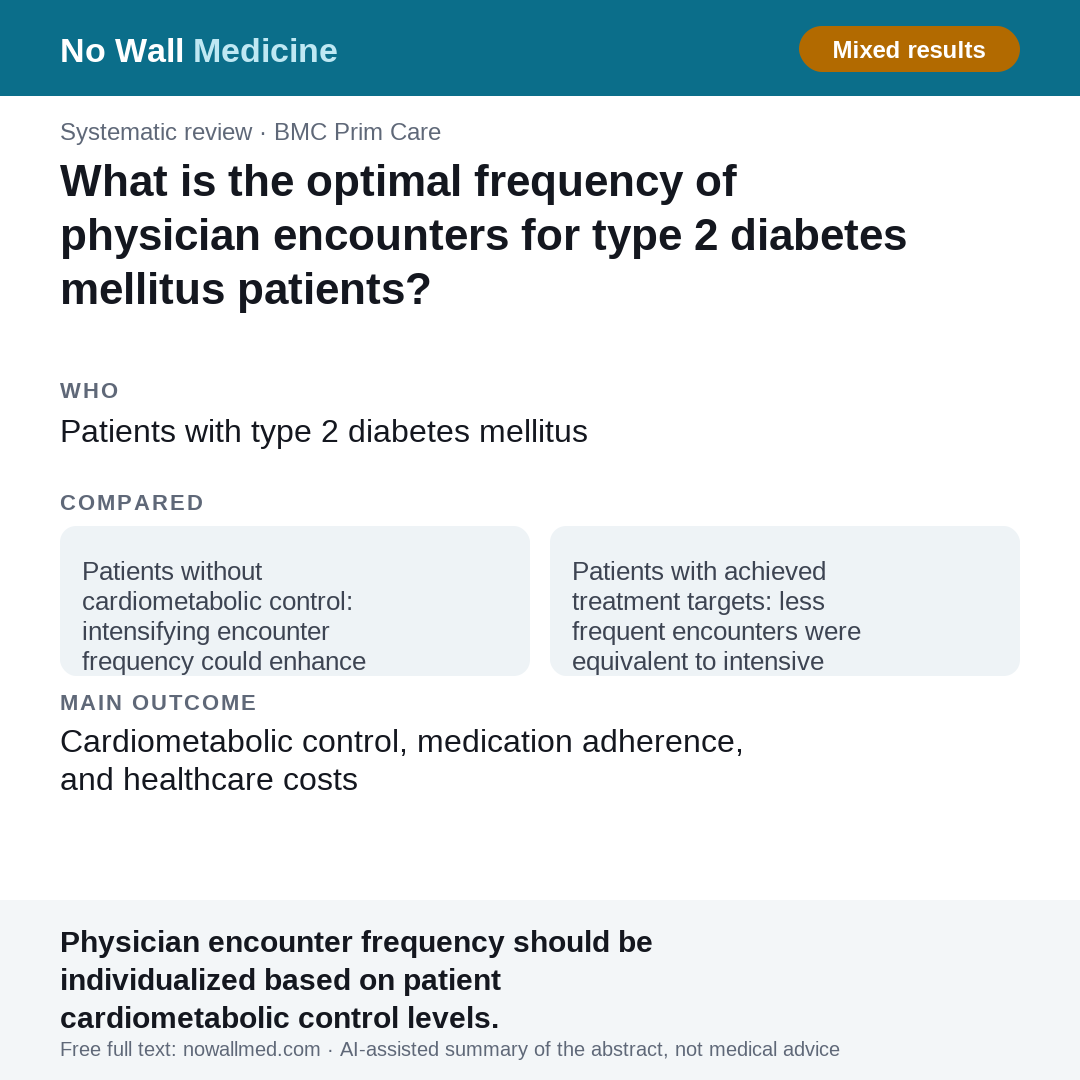
What is the optimal frequency of physician encounters for type 2 diabetes mellitus patients?
Who
Patients with type 2 diabetes mellitus
Compared
Patients without cardiometabolic control: intensifying encounter frequency could enhance medication adherence, shorten time to target, and improve quality of life
Patients with achieved treatment targets: less frequent encounters were equivalent to intensive encounters in maintaining cardiometabolic control
Main outcome
Cardiometabolic control, medication adherence, and healthcare costs
Bottom line: Physician encounter frequency should be individualized based on patient cardiometabolic control levels.
Limitation: More research is needed to determine how to optimize encounter frequency.
BMC Prim Care · 2024-01-26Download image
Clinical question: What is the optimal frequency of physician encounters for type 2 diabetes mellitus patients?
Key points
- Researchers reviewed 12 articles to evaluate how different frequencies of physician follow-up visits affect patients with type 2 diabetes mellitus.
- Increasing visit frequency was associated with better medication adherence, faster time to reach treatment targets, and improved quality of life for patients without cardiometabolic control.
- For patients who already met treatment targets, less frequent visits were associated with equivalent cardiometabolic control and lower healthcare costs.
Headline and key points written with AI from the paper’s abstract, with every number checked against it. Read the paper before relying on them.
Was this summary helpful?
Subject terms
Headline, design, result, key points, caveat and citation as plain text.
Cite this article
Xu W, Mak IL, Zhang R, et al. Optimizing the frequency of physician encounters in follow - up care for patients with type 2 diabetes mellitus: a systematic review. BMC Prim Care. 2024. doi:10.1186/s12875-024-02277-9
Spotted a mistake? Suggest a correction