Oral antihypertensive treatment during pregnancy: a systematic review and network meta-analysis
Systematic review and network meta-analysisMixed results
What are the effects of methyldopa, labetalol, or nifedipine for hypertensive disorders of pregnancy?
Who
3989
Women with hypertensive disorders of pregnancy
Compared
Labetalol: relative risk 0.20 [95% confidence interval 0.09-0.48] for severe hypertension
Methyldopa: 0.44 [0.20-0.99] for severe hypertension
Placebo or no treatment
Main outcome
maternal or fetal/neonatal morbidity and mortality
Result: relative risk 0.50 [0.28-0.87] for preeclampsia (labetalol vs nifedipine)
Bottom line: Labetalol may be modestly preferred over nifedipine for preeclampsia and preterm birth, but no significant differences exist for severe hypertension.
Limitation: Included studies were of low overall quality warranting caution when interpreting results.
AJOG · 2025-04-10Download image
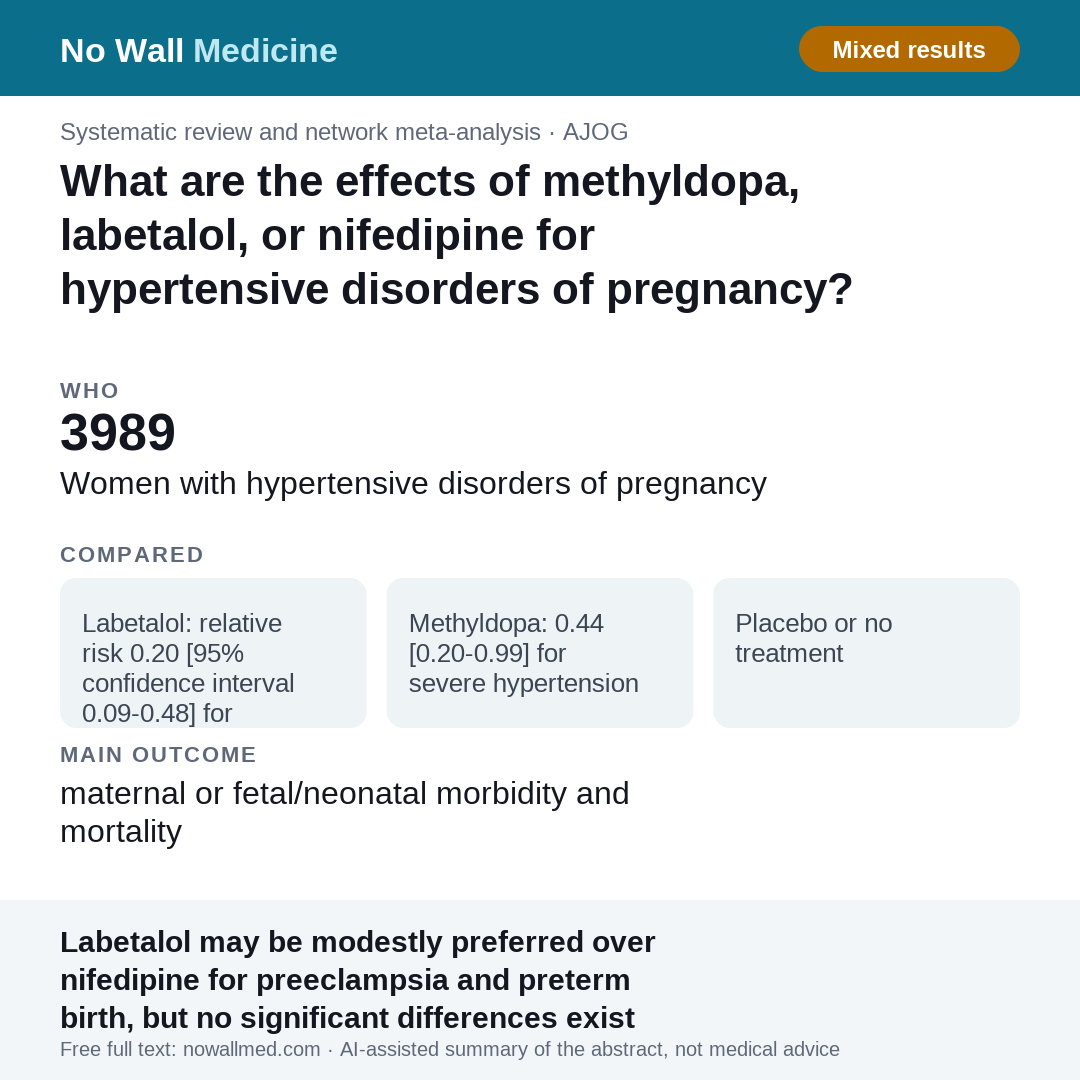
Clinical question: What are the effects of methyldopa, labetalol, or nifedipine for hypertensive disorders of pregnancy?
Abstract
Objective
Considering safety and effectiveness of oral antihypertensive agents when treating hypertensive disorders of pregnancy, no preference can be stated between the 3 agents currently available. Therefore, this systematic review and network meta-analysis aims to determine the effects of antenatal treatment with methyldopa, labetalol, or nifedipine for hypertensive disorders of pregnancy regarding maternal or fetal/neonatal morbidity and mortality. Data sources
On August 25, 2023, an electronic search in PubMed/Medline, Embase, and CENTRAL was performed. Study eligibility criteria
Randomized controlled trials reporting on perinatal outcomes in hypertensive pregnancies treated with oral antihypertensive agents of interest (methyldopa, labetalol, or nifedipine) or placebo/no treatment were identified. Study appraisal and synthesis methods
Quality assessment was performed using the Cochrane Risk of Bias tool for randomized controlled trials and trustworthiness was assessed with the Trustworthiness in RAndomised Controlled Trials Checklist. Data on our predefined outcomes were extracted and relative risks were calculated in network estimates if possible. Results
Twenty three trials (3989 women) were included in our network meta-analysis with an overall low-to-moderate quality. Compared to placebo/no treatment, labetalol and methyldopa significantly reduced the incidence of severe hypertension (including 8 studies, relative risk 0.20 [95% confidence interval 0.09-0.48] and 0.44 [0.20-0.99], respectively). In the network meta-analysis, labetalol vs nifedipine was associated with a reduction in preeclampsia (relative risk, 0.50 [0.28-0.87]; 15 studies) and preterm birth (relative risk, 0.68 [0.52-0.90]; 14 studies). No significant differences could be detected for any of the other outcomes of interest. Conclusion
When comparing the oral antihypertensive agents currently available head-to-head, no significant differences in the primary outcome, severe hypertension, could be detected as well as on most of the secondary outcomes of interest. Considering the preference of labetalol over nifedipine regarding the outcomes preeclampsia and preterm birth, a modest favor for labetalol could be stated. Included studies however were of low overall quality warranting caution when interpreting results.
Topics
Cite this article
Hup RJ, Damen JAA, Terstappen J, Klein Haneveld MJ, Terstappen F, Magee LA. Oral antihypertensive treatment during pregnancy: a systematic review and network meta-analysis. AJOG. 2025. doi:10.1016/j.ajog.2025.04.011
Spotted a mistake? Suggest a correction
Top studies every Monday
The week’s key trials and guidelines in your specialties, plus any topics you follow. By email, free.
Get the weekly digest