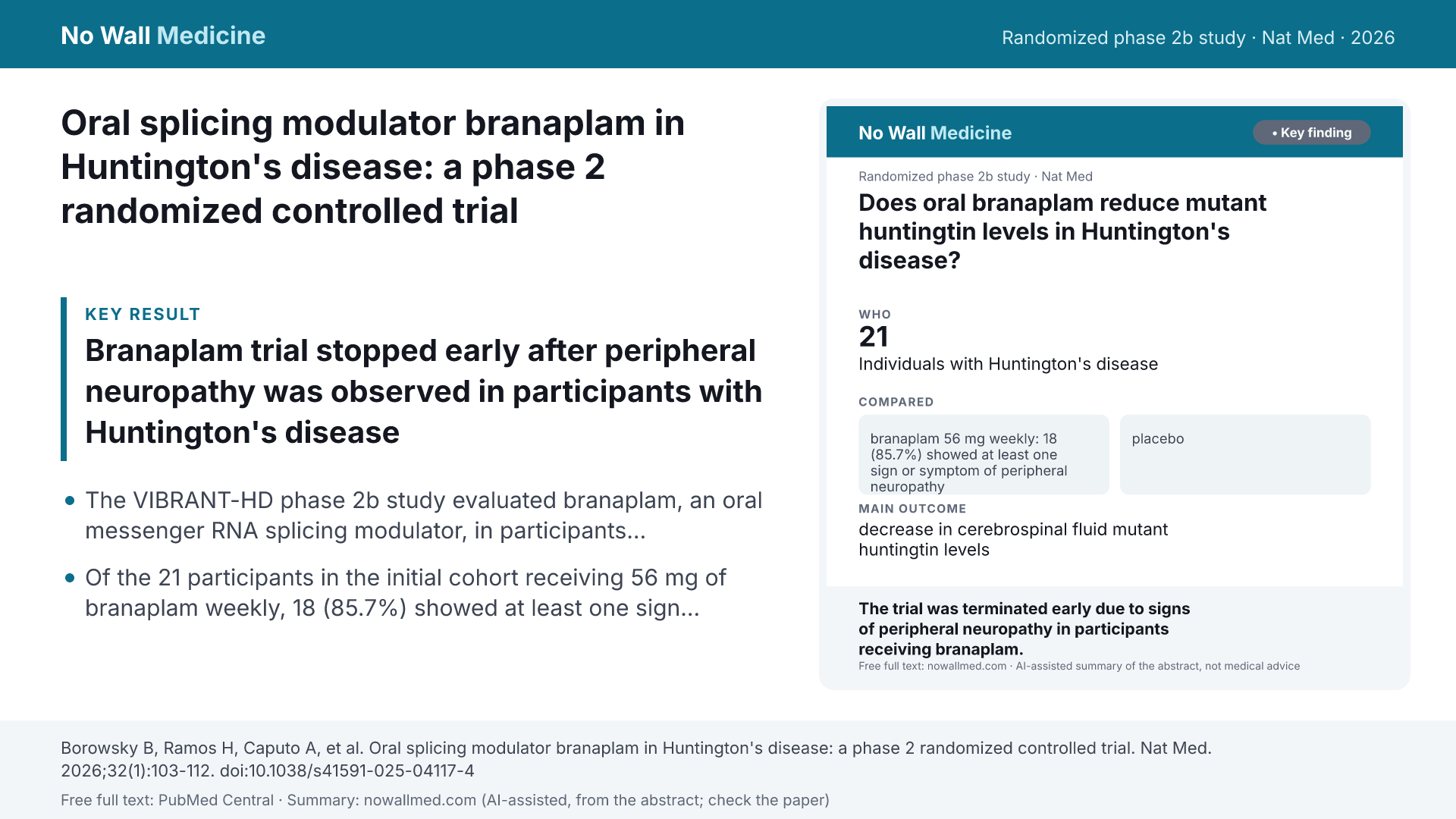
Branaplam trial stopped early after peripheral neuropathy was observed in participants with Huntington's disease
Oral splicing modulator branaplam in Huntington's disease: a phase 2 randomized controlled trial
Randomized phase 2b studyKey finding
Does oral branaplam reduce mutant huntingtin levels in Huntington's disease?
Who
21
Individuals with Huntington's disease
Compared
branaplam 56 mg weekly: 18 (85.7%) showed at least one sign or symptom of peripheral neuropathy
placebo
Main outcome
decrease in cerebrospinal fluid mutant huntingtin levels
Bottom line: The trial was terminated early due to signs of peripheral neuropathy in participants receiving branaplam.
Nat Med · 2026-01-05 · Save PNG
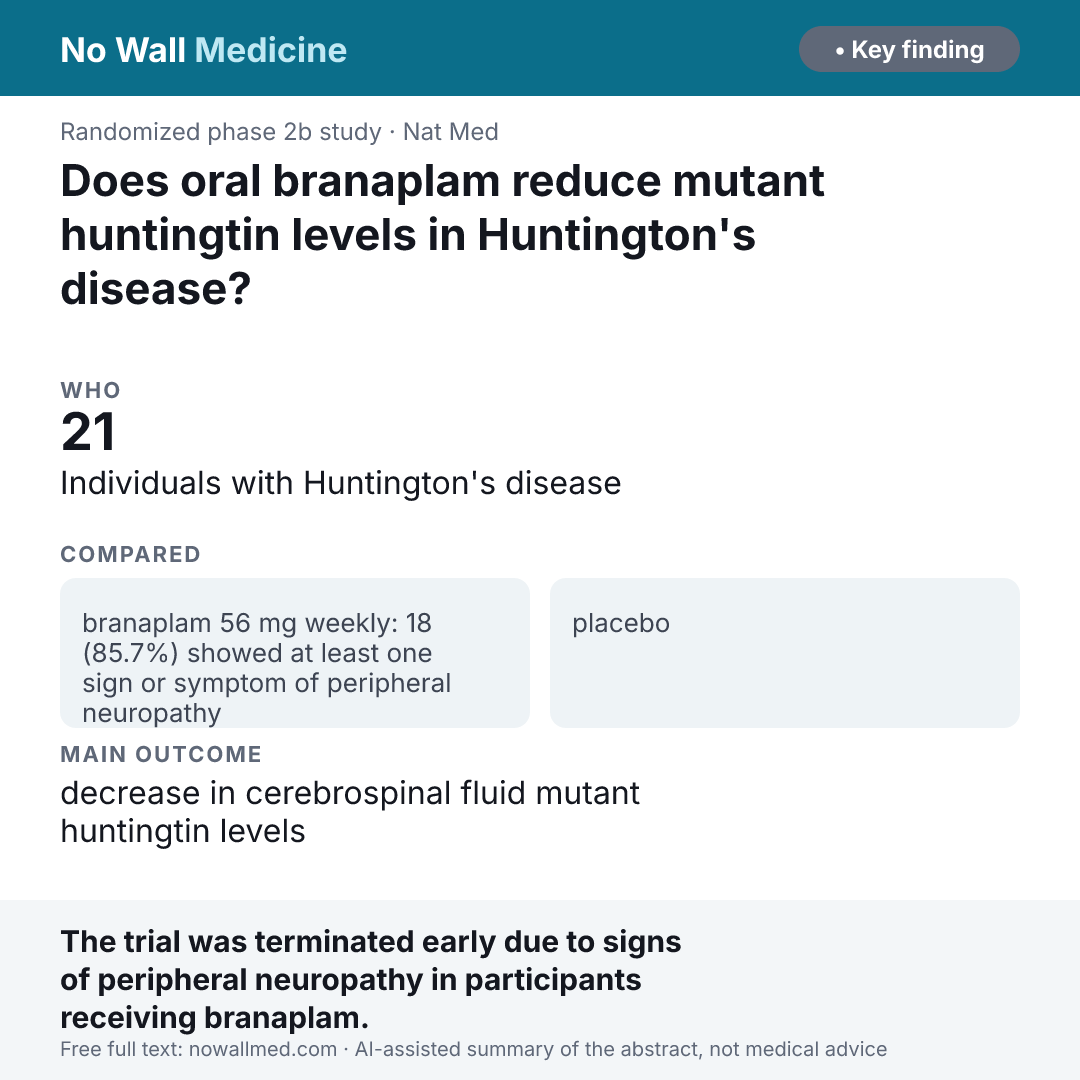
Clinical question: Does oral branaplam reduce mutant huntingtin levels in Huntington's disease?
Why it matters: Lowering mutant huntingtin protein levels is a potential approach for slowing Huntington's disease progression, but the safety of splicing modulators in humans has not been established.
Key points
- The VIBRANT-HD phase 2b study evaluated branaplam, an oral messenger RNA splicing modulator, in participants with Huntington's disease.
- Of the 21 participants in the initial cohort receiving 56 mg of branaplam weekly, 18 (85.7%) showed at least one sign or symptom of peripheral neuropathy, which is nerve damage.
- Increased neurofilament light chain levels, a marker of nerve injury, were observed in most participants but reversed after treatment was stopped.
Headline and key points written with AI from the paper’s abstract, with every number checked against it. Read the paper before relying on them.
Was this summary helpful?
Subject terms
Headline, design, result, key points, caveat and citation as plain text.
Cite this article
Borowsky B, Ramos H, Caputo A, et al. Oral splicing modulator branaplam in Huntington's disease: a phase 2 randomized controlled trial. Nat Med. 2026;32(1):103-112. doi:10.1038/s41591-025-04117-4
Spotted a mistake? Suggest a correction