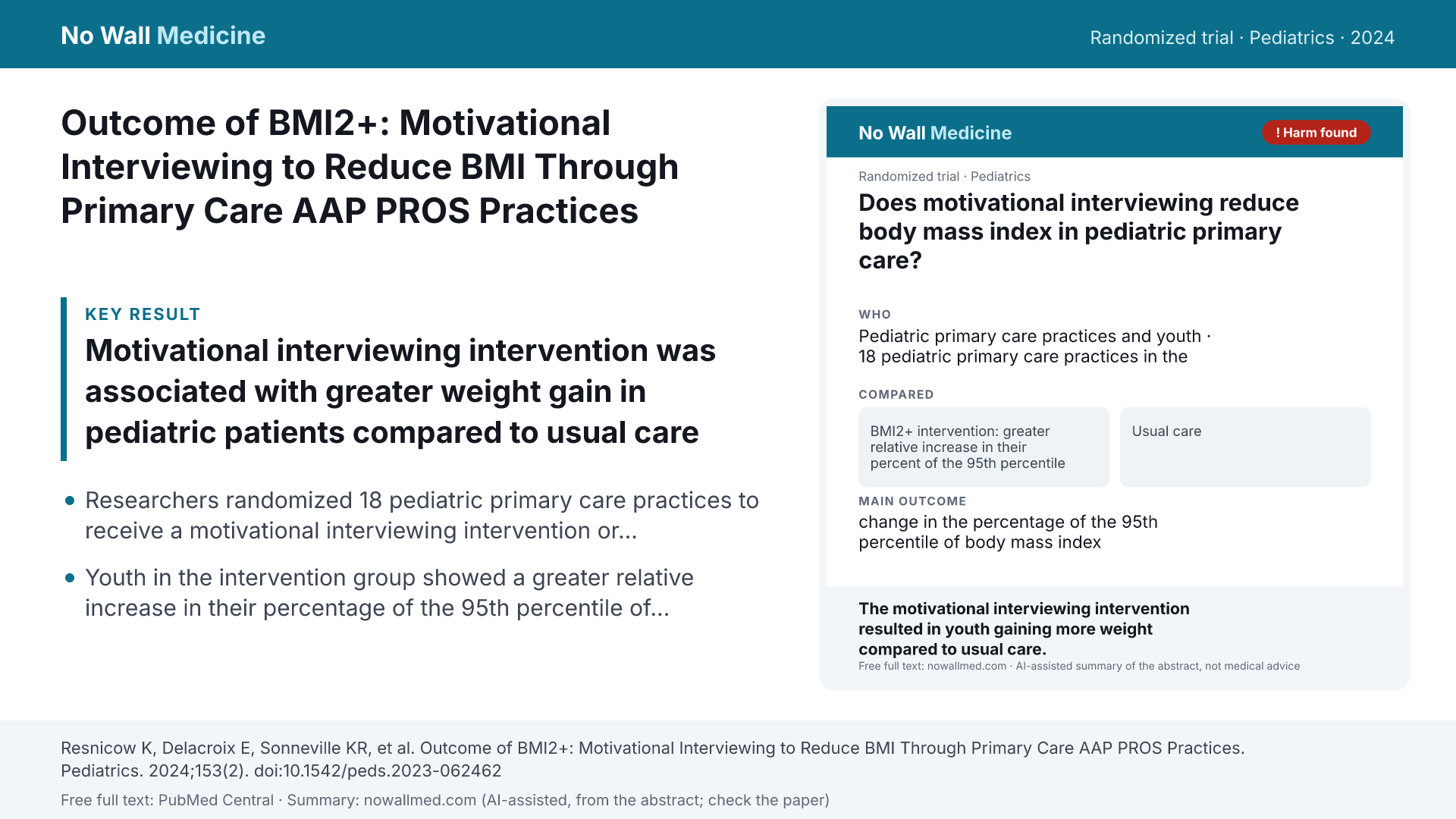
Motivational interviewing intervention was associated with greater weight gain in pediatric patients compared to usual care
Outcome of BMI2+: Motivational Interviewing to Reduce BMI Through Primary Care AAP PROS Practices
Randomized trialHarm found
Does motivational interviewing reduce body mass index in pediatric primary care?
Who
Pediatric primary care practices and youth · 18 pediatric primary care practices in the United States
Compared
BMI2+ intervention: greater relative increase in their percent of the 95th percentile
Usual care
Main outcome
change in the percentage of the 95th percentile of body mass index
Result: b = 0.017, 95% confidence interval: [0.0066-0.027]
Bottom line: The motivational interviewing intervention resulted in youth gaining more weight compared to usual care.
Pediatrics · 2024-01-29Download image
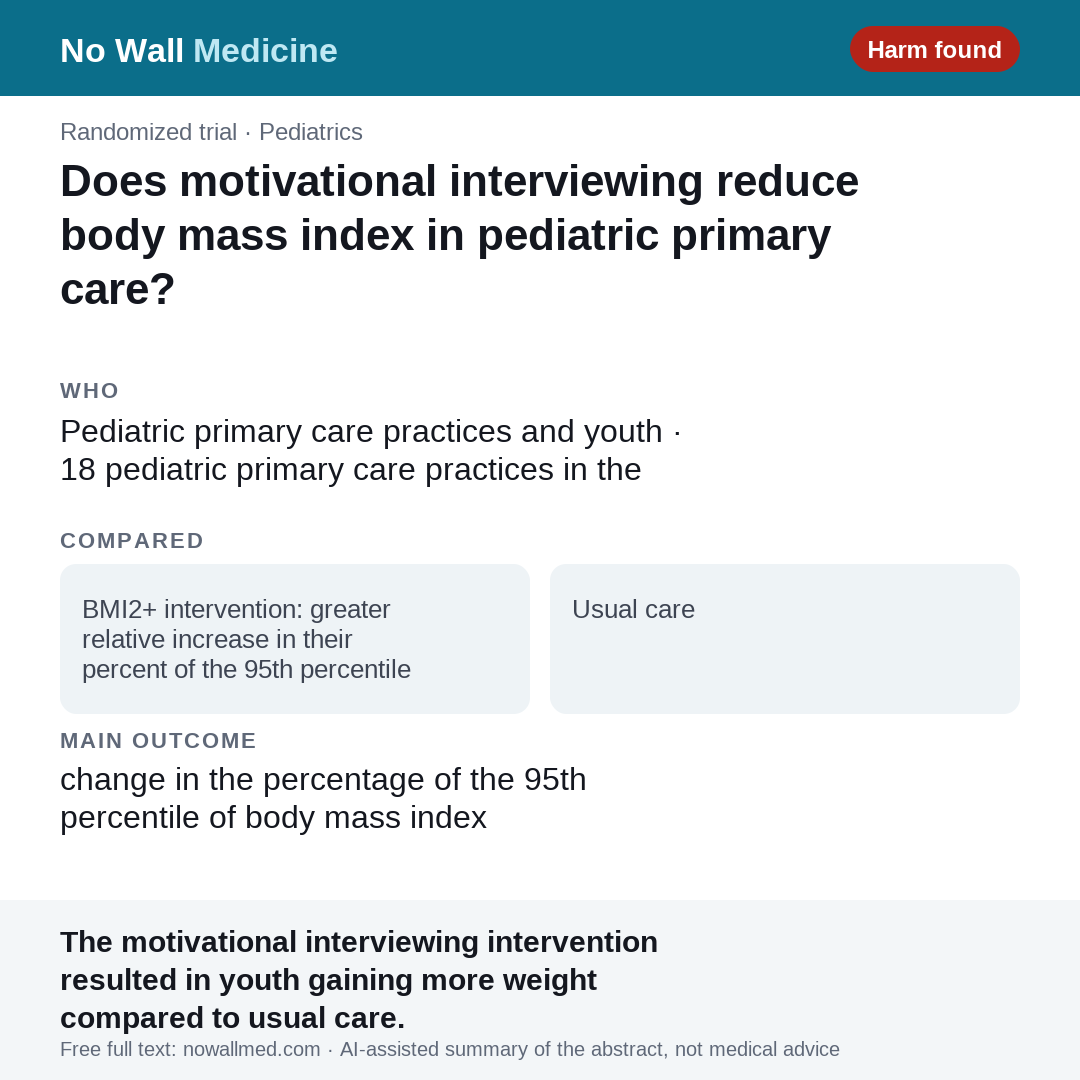
Clinical question: Does motivational interviewing reduce body mass index in pediatric primary care?
Key points
- Researchers randomized 18 pediatric primary care practices to receive a motivational interviewing intervention or continue with usual care.
- Youth in the intervention group showed a greater relative increase in their percentage of the 95th percentile of body mass index compared to the usual care group.
- The absolute excess weight gain in the intervention group was approximately 0.5 BMI units and 1 kg over 2 years.
Headline and key points written with AI from the paper’s abstract, with every number checked against it. Read the paper before relying on them.
Was this summary helpful?
Subject terms
Cite this article
Resnicow K, Delacroix E, Sonneville KR, et al. Outcome of BMI2+: Motivational Interviewing to Reduce BMI Through Primary Care AAP PROS Practices. Pediatrics. 2024;153(2). doi:10.1542/peds.2023-062462
Spotted a mistake? Suggest a correction