Outcomes 12 Months After Temperature-Controlled Radiofrequency Device Treatment of the Nasal Valve for Patients With Nasal Airway Obstruction
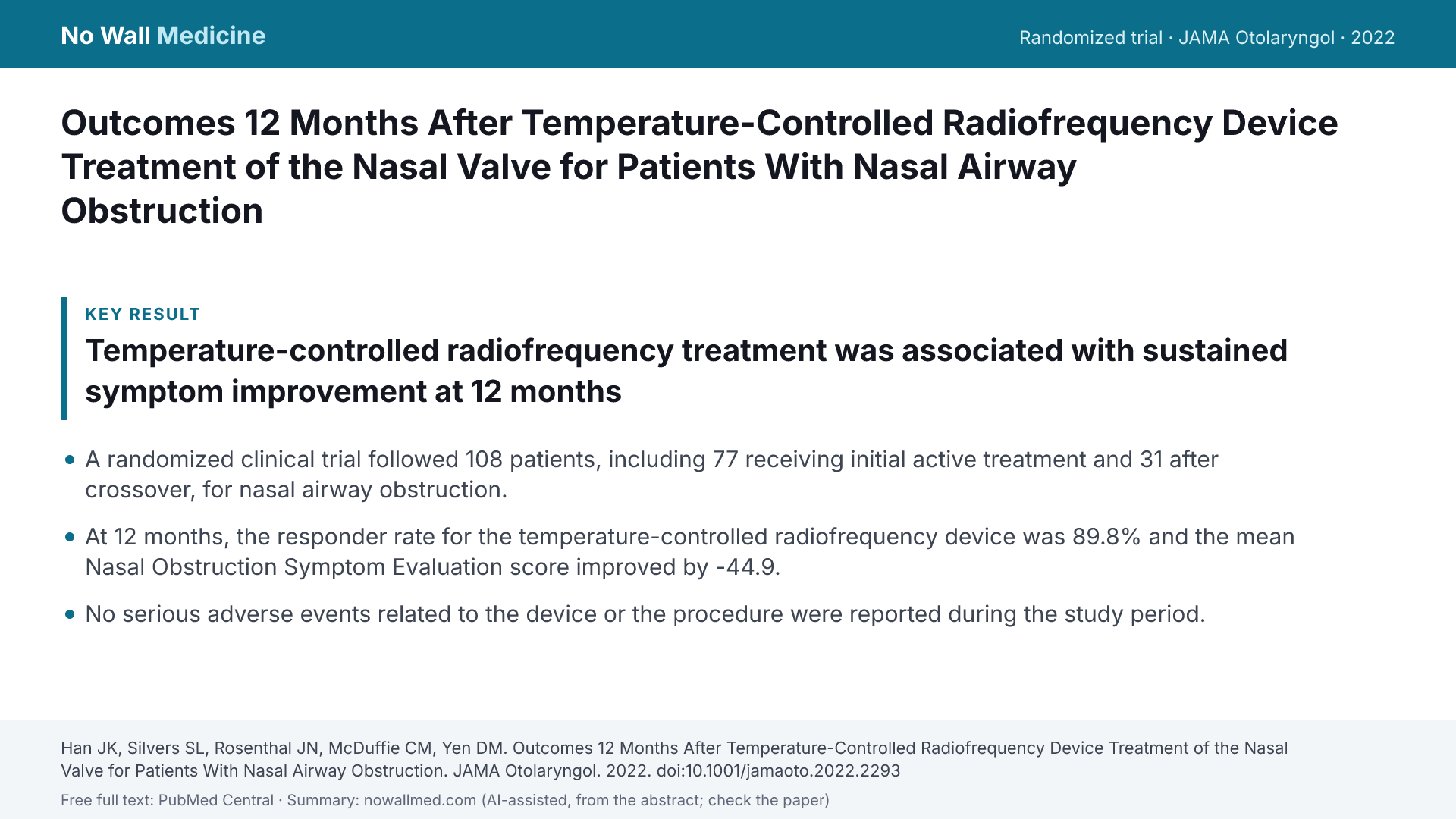
Key result: Temperature-controlled radiofrequency treatment was associated with sustained symptom improvement at 12 months
Key points
- A randomized clinical trial followed 108 patients, including 77 receiving initial active treatment and 31 after crossover, for nasal airway obstruction.
- At 12 months, the responder rate for the temperature-controlled radiofrequency device was 89.8% and the mean Nasal Obstruction Symptom Evaluation score improved by -44.9.
- No serious adverse events related to the device or the procedure were reported during the study period.
Why it matters: It was unknown if the benefits of temperature-controlled radiofrequency treatment for nasal valve collapse were safe and sustained through 12 months.
Discussion prompts
- Would these patients look like yours? Who was left out?
- Is the main outcome one that matters to patients?
- Is the difference large enough to change what you do?
Cite: Han JK, Silvers SL, Rosenthal JN, McDuffie CM, Yen DM. Outcomes 12 Months After Temperature-Controlled Radiofrequency Device Treatment of the Nasal Valve for Patients With Nasal Airway Obstruction. JAMA Otolaryngol. 2022. doi:10.1001/jamaoto.2022.2293
Free full text: PubMed Central · Summary and visual abstract: nowallmed.com/a/outcomes-12-months-after-temperature-controlled-radiofrequency-device-dfgko/ (AI-assisted from the abstract; check the paper before relying on it).