Complication rates were low for biosynthetic mesh used in implant-based breast reconstruction
Outcomes in Implant-Based Breast Reconstruction Utilizing Biosynthetic Mesh: A Meta-Analysis
Meta-analysisBenefit found
What are the complication rates of biosynthetic mesh in implant-based breast reconstruction?
Who
2167
Patients undergoing implant-based breast reconstruction with biosynthetic mesh
Compared
Biosynthetic mesh: seroma formation 5.26%
Biosynthetic mesh: hematoma formation 2.5%
Biosynthetic mesh: skin necrosis 5.5%
Biosynthetic mesh: infection rate 4.8%
Main outcome
Overall complication rates
Bottom line: Biosynthetic mesh shows low complication rates and potential cost advantages for implant-based breast reconstruction.
Aesthet Surg J · 2025-01-07Download image
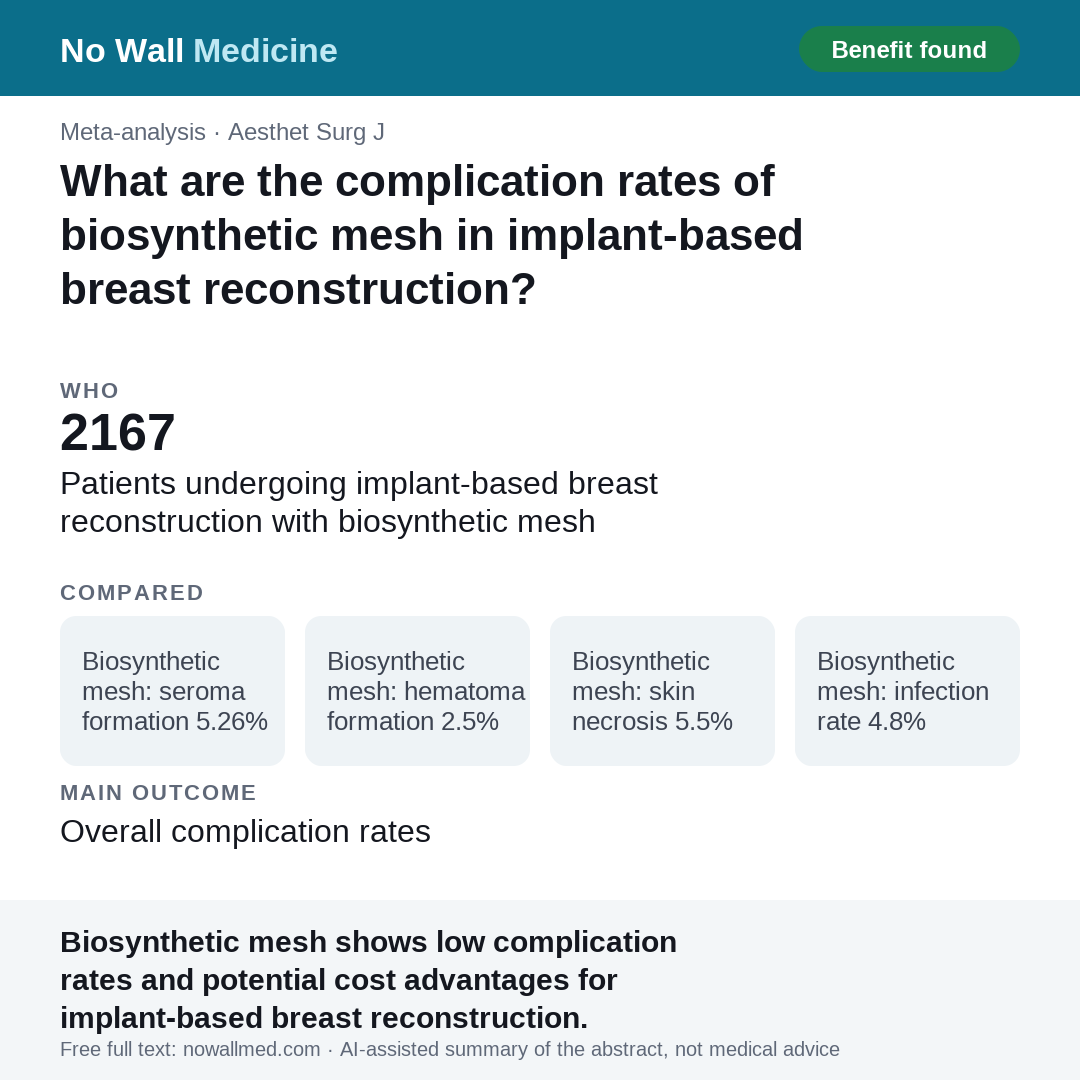
Clinical question: What are the complication rates of biosynthetic mesh in implant-based breast reconstruction?
Why it matters: It is unknown how different types of biosynthetic mesh used for soft tissue support affect complication rates during implant-based breast reconstruction.
Key points
- Researchers analyzed 24 studies involving 2167 individual breasts undergoing reconstruction with six types of biosynthetic mesh.
- The pooled complication rates were 5.26% for seroma formation, 2.5% for hematoma, 5.5% for skin necrosis, 4.8% for infection, and 3.85% for implant loss.
- The analysis included various mesh types such as TIGR, Vicryl, PDO, TiLOOP, Durasorb, and Galaflex.
Headline and key points written with AI from the paper’s abstract, with every number checked against it. Read the paper before relying on them.
Cite this article
Arnautovic A, Williams S, Ash M, Menon A, Shauly O, Losken A. Outcomes in Implant-Based Breast Reconstruction Utilizing Biosynthetic Mesh: A Meta-Analysis. Aesthet Surg J. 2025. doi:10.1093/asj/sjaf002
Spotted a mistake? Suggest a correction
Top studies every Monday
The week’s key trials and guidelines in your specialties, by email. Free.
Get the weekly digest