Treatment methods for spinal arteriovenous malformations show different rates of success and neurological risks
Outcomes of Microsurgical, Endovascular, Multimodal, and Radiosurgical Management of Spinal Intramedullary Arteriovenous Malformations: A Systematic Review and Exploratory Meta-Analysis
Systematic review and exploratory meta-analysisMixed results
What are the outcomes of different management modalities for spinal intramedullary arteriovenous malformations?
Who
672
Patients with Takai Type II/III or nidus-type spinal intramedullary arteriovenous malformations
Compared
Microsurgery: 16.1% permanent neurological deterioration
Embolization-only: 5.6% permanent neurological deterioration
Embolization-only complete obliteration: 68/258 (26.4%)
Main outcome
radiographic, functional, and safety outcomes
Bottom line: Evidence supports lesion-specific, complementary use of different modalities rather than declaring one modality superior.
Limitation: Outcome definitions were heterogeneous and comparisons are vulnerable to confounding by indication.
Brain Spine · 2026-08-18 · Save PNG
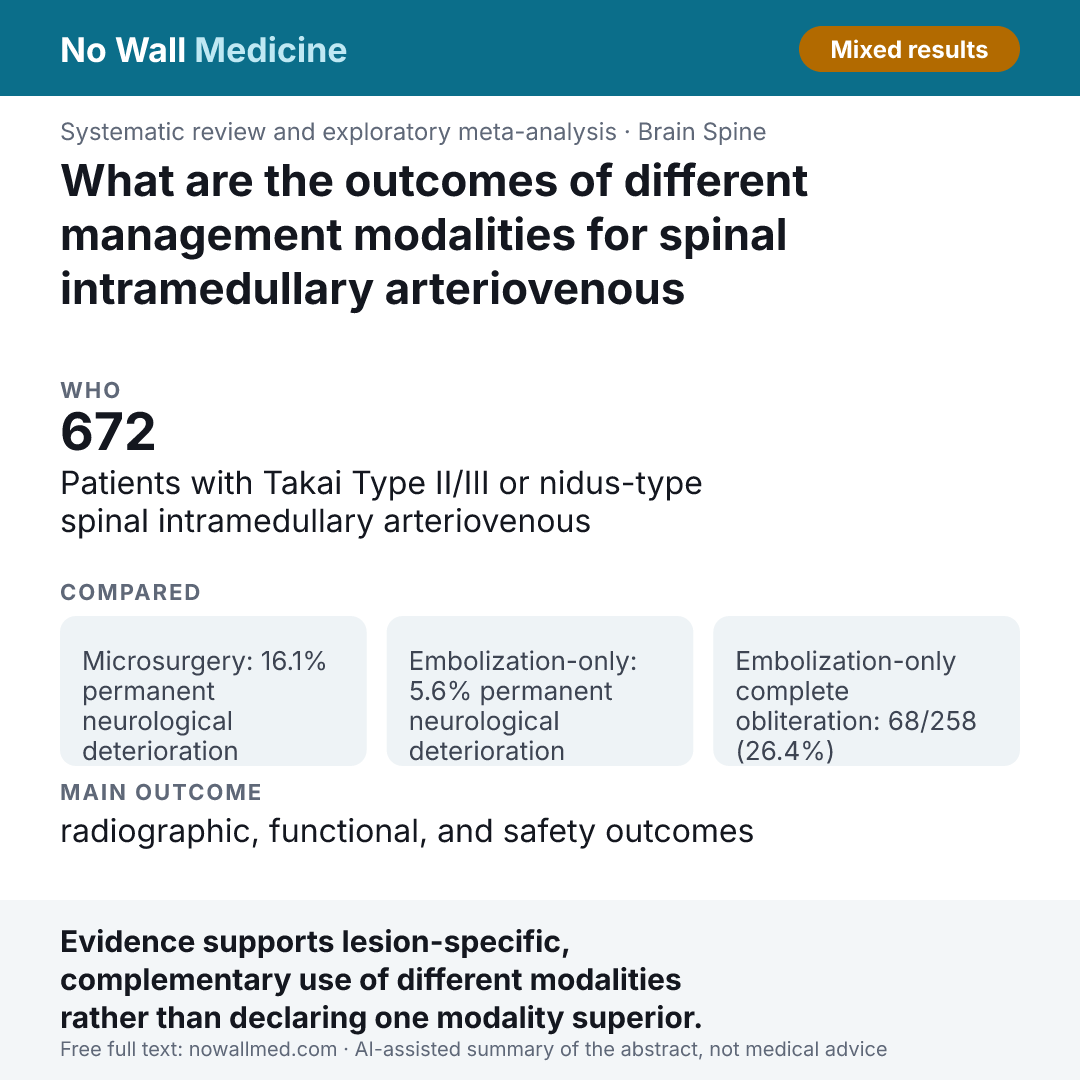
Clinical question: What are the outcomes of different management modalities for spinal intramedullary arteriovenous malformations?
Why it matters: Comparing different treatment methods for these rare spinal lesions is difficult because the type of lesion and the intended treatment plan vary between patients.
Key points
- Researchers analyzed seven retrospective studies involving up to 672 spinal intramedullary arteriovenous malformations, which are abnormal connections between arteries and veins inside the spinal cord.
- In the largest group, 26.4% of patients receiving only embolization, a procedure to block blood vessels, achieved complete removal of the lesion on imaging.
- Permanent neurological deterioration was associated with microsurgery at a rate of 16.1% compared to 5.6% for embolization.
Limitation the authors note: The study was a systematic review and exploratory meta-analysis of retrospective studies where outcome definitions were heterogeneous and pooled estimates were descriptive.
Headline and key points written with AI from the paper’s abstract, with every number checked against it. Read the paper before relying on them.
Was this summary helpful?
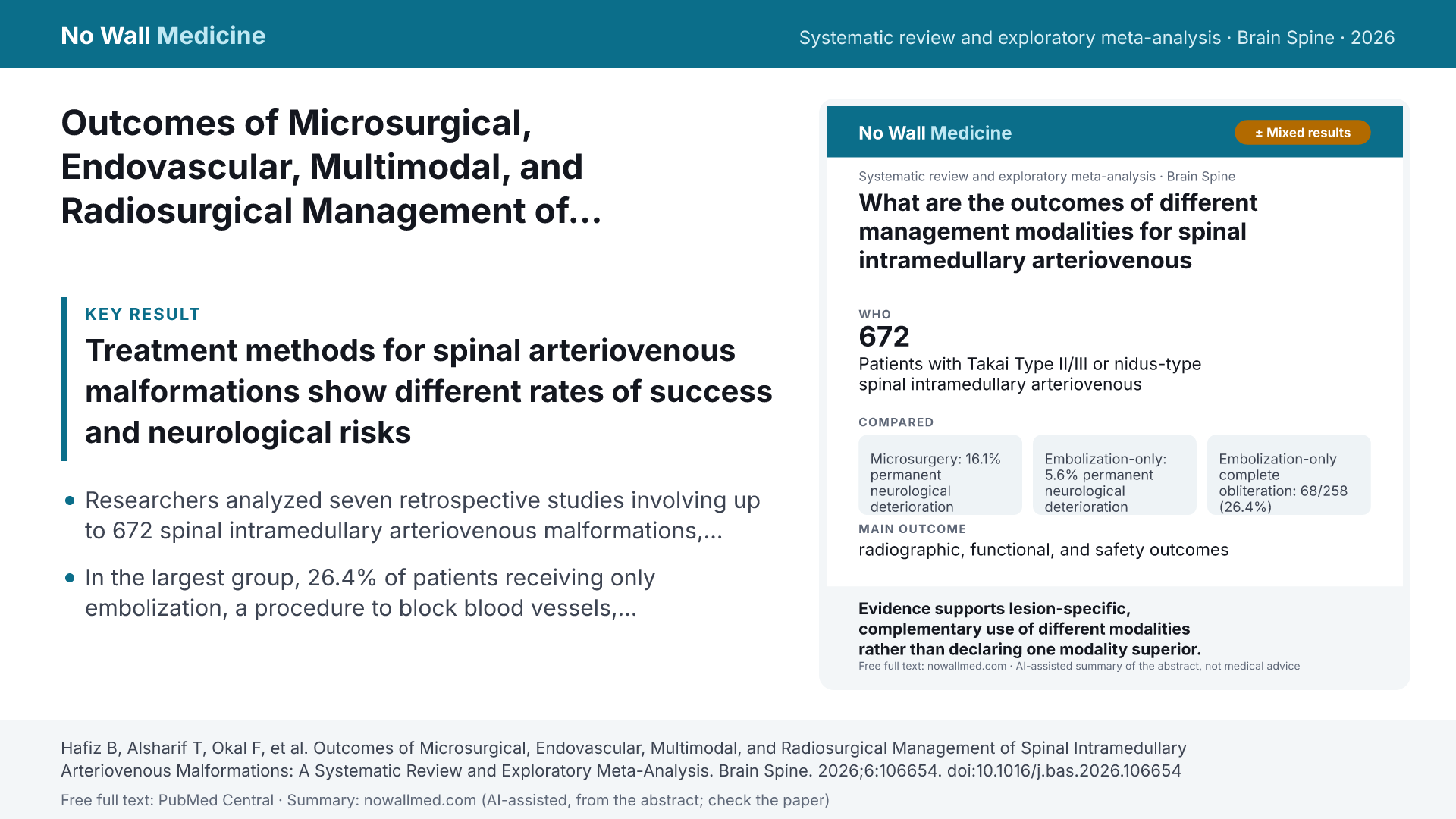
Headline, design, result, key points, caveat and citation as plain text.
Cite this article
Hafiz B, Alsharif T, Okal F, et al. Outcomes of Microsurgical, Endovascular, Multimodal, and Radiosurgical Management of Spinal Intramedullary Arteriovenous Malformations: A Systematic Review and Exploratory Meta-Analysis. Brain Spine. 2026;6:106654. doi:10.1016/j.bas.2026.106654
Spotted a mistake? Suggest a correction