Overall survival and objective response in advanced unresectable hepatocellular carcinoma: A subanalysis of the REFLECT study
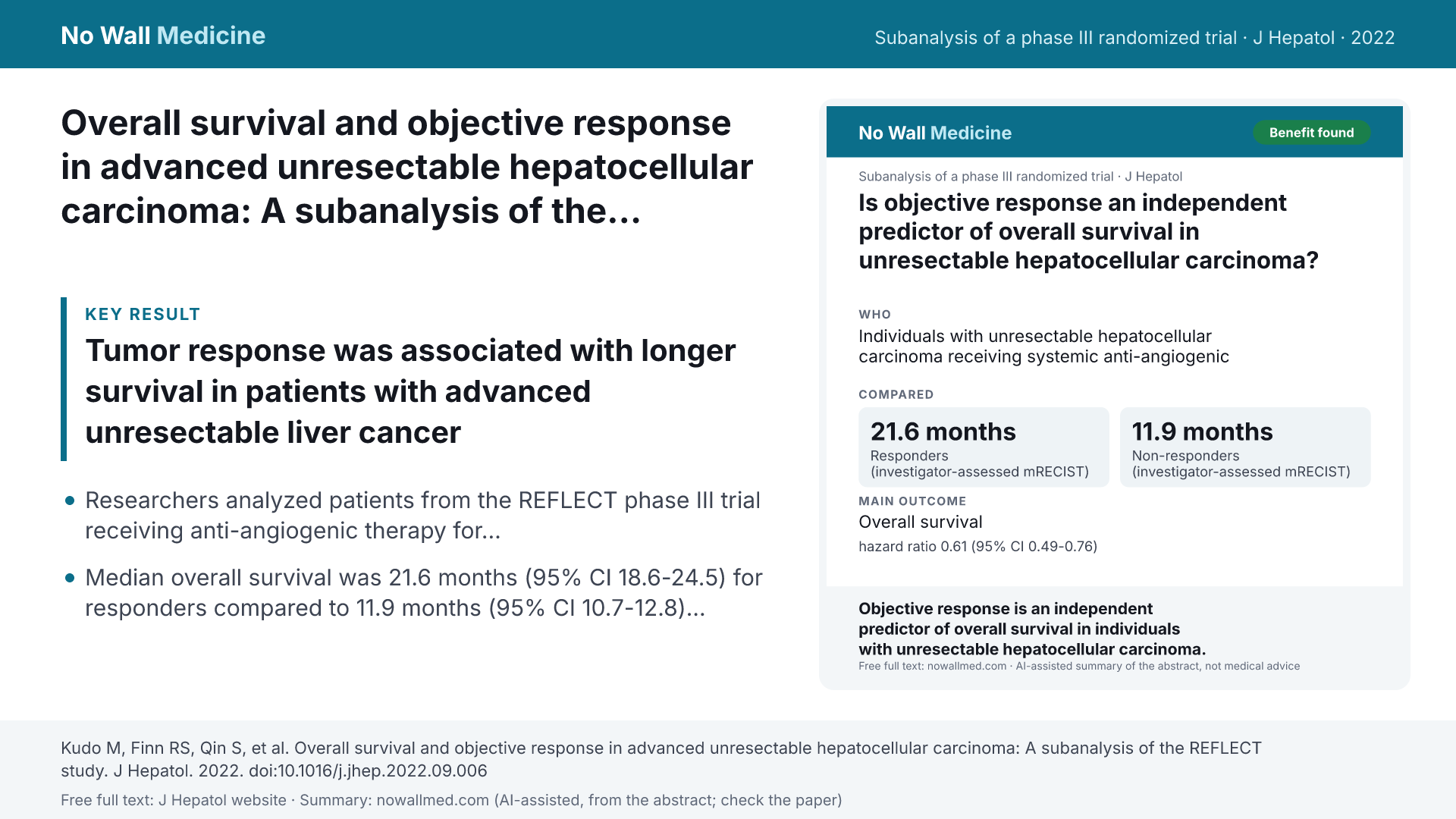
Key result: Tumor response was associated with longer survival in patients with advanced unresectable liver cancer
Key points
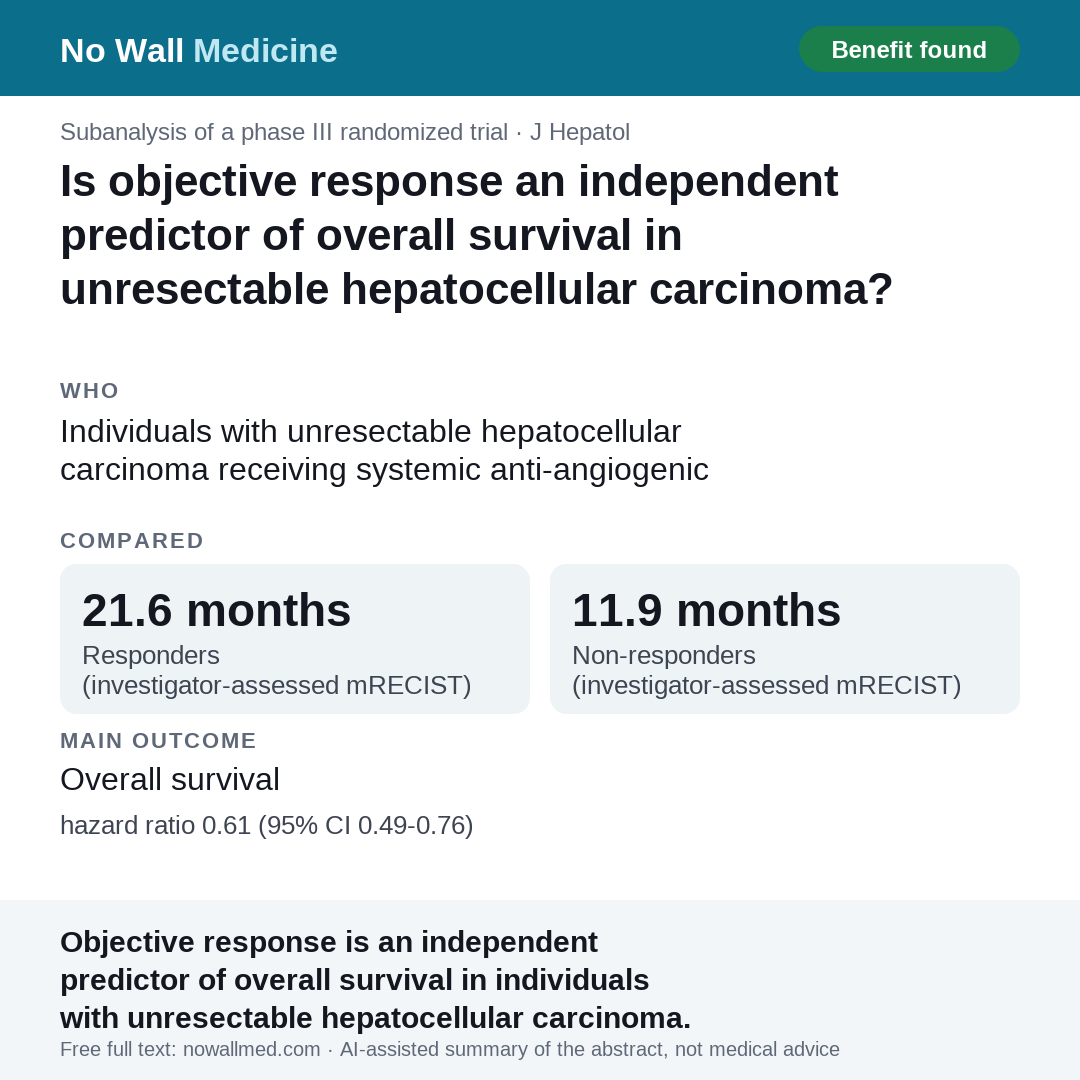
- Researchers analyzed patients from the REFLECT phase III trial receiving anti-angiogenic therapy for unresectable hepatocellular carcinoma, a type of liver cancer.
- Median overall survival was 21.6 months (95% CI 18.6-24.5) for responders compared to 11.9 months (95% CI 10.7-12.8) for non-responders using investigator-assessed mRECIST.
- Objective response was identified as an independent predictor of overall survival using both investigator-assessed mRECIST and independent radiologic review RECIST v1.1.
Why it matters: It is unknown if objective response can serve as a validated surrogate endpoint to predict overall survival in clinical studies for unresectable hepatocellular carcinoma.
Discussion prompts
- Would these patients look like yours? Who was left out?
- Is the main outcome one that matters to patients?
- Is the difference large enough to change what you do?
Cite: Kudo M, Finn RS, Qin S, Han KH, Ikeda K, Cheng AL. Overall survival and objective response in advanced unresectable hepatocellular carcinoma: A subanalysis of the REFLECT study. J Hepatol. 2022. doi:10.1016/j.jhep.2022.09.006
Free full text: J Hepatol website · Summary and visual abstract: nowallmed.com/a/overall-survival-and-objective-response-in-advanced-unresectable-6je93r/ (AI-assisted from the abstract; check the paper before relying on it).