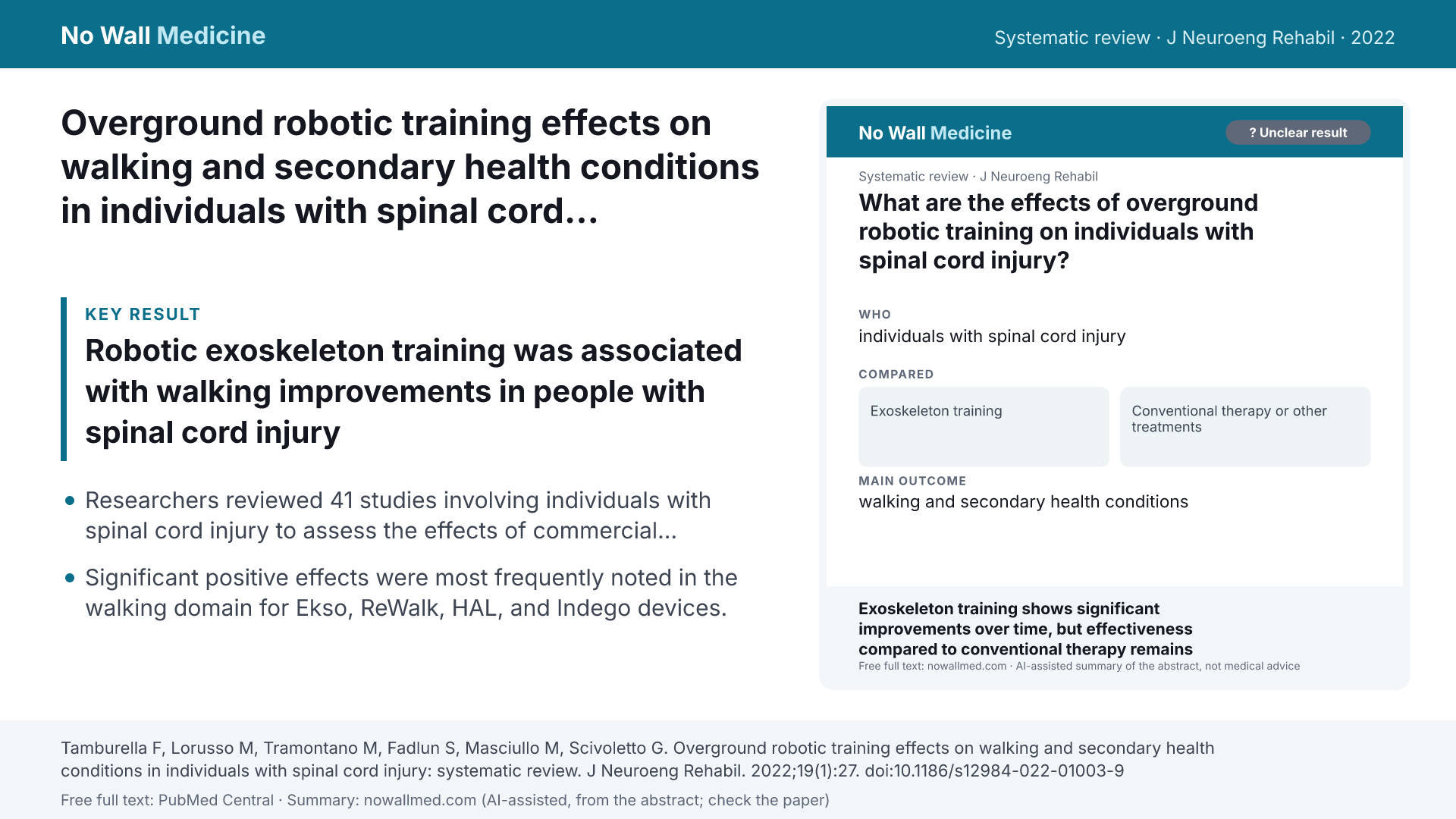
Overground robotic training effects on walking and secondary health conditions in individuals with spinal cord injury: systematic review
Key result: Robotic exoskeleton training was associated with walking improvements in people with spinal cord injury
Systematic reviewUnclear result
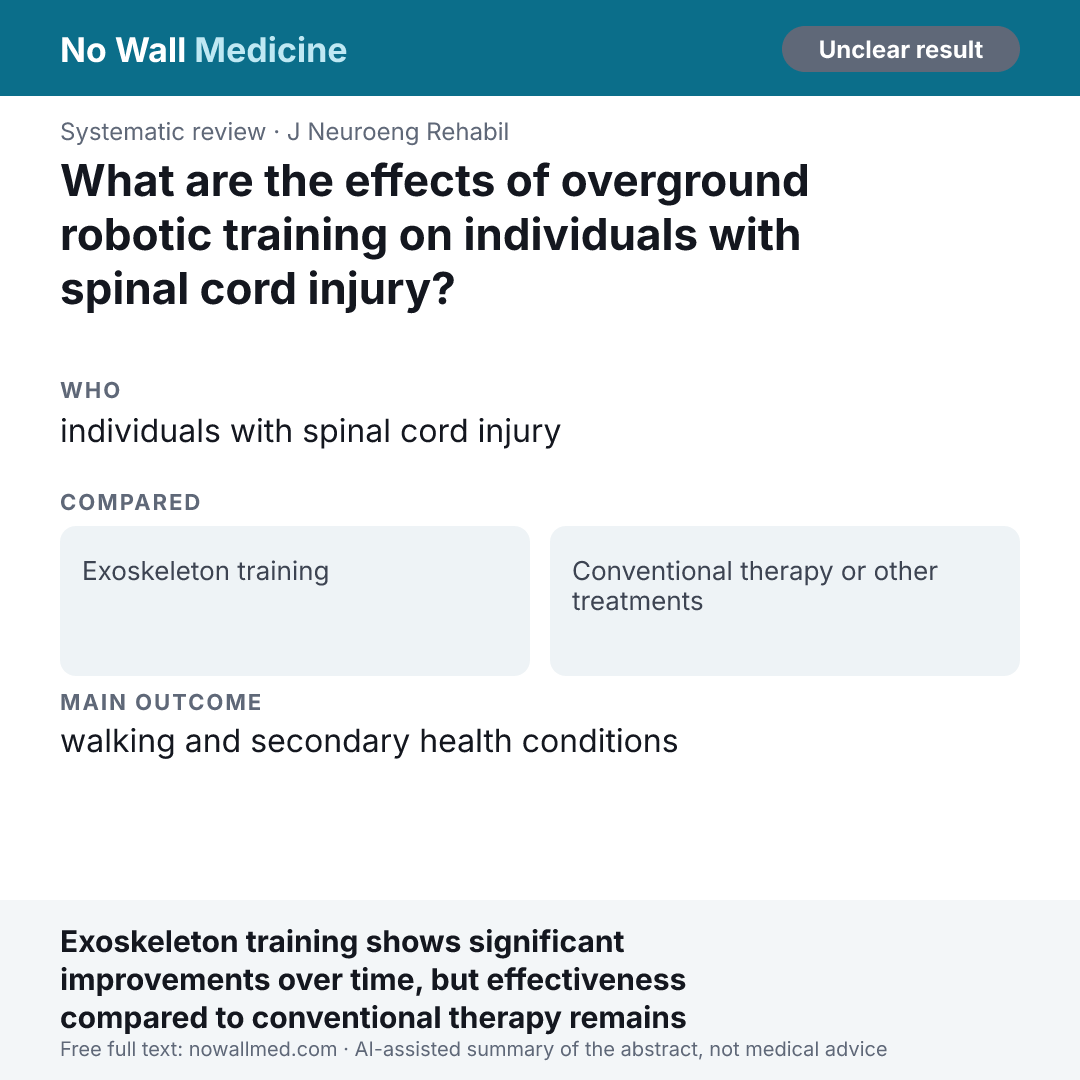
What are the effects of overground robotic training on individuals with spinal cord injury?
Who
individuals with spinal cord injury
Compared
Exoskeleton training
Conventional therapy or other treatments
Main outcome
walking and secondary health conditions
Bottom line: Exoskeleton training shows significant improvements over time, but effectiveness compared to conventional therapy remains mostly unknown.
Limitation: Lack of high-quality studies, heterogeneity of outcome measures, protocols, and neurological features.
J Neuroeng Rehabil · 2022-03-15 · Save PNG
Key points
- Researchers reviewed 41 studies involving individuals with spinal cord injury to assess the effects of commercial powered lower limb exoskeletons.
- Significant positive effects were most frequently noted in the walking domain for Ekso, ReWalk, HAL, and Indego devices.
- No studies reached statistical significance regarding the effects of exoskeleton training on sensory functions or bladder functionality.
Discussion prompts
- Would these patients look like yours? Who was left out?
- Is the main outcome one that matters to patients?
- Is the difference large enough to change what you do?
Cite: Tamburella F, Lorusso M, Tramontano M, Fadlun S, Masciullo M, Scivoletto G. Overground robotic training effects on walking and secondary health conditions in individuals with spinal cord injury: systematic review. J Neuroeng Rehabil. 2022;19(1):27. doi:10.1186/s12984-022-01003-9
Free full text: PubMed Central · Summary and visual abstract: nowallmed.com/a/overground-robotic-training-effects-on-walking-and-secondary-health-9oyt2g/ (AI-assisted from the abstract; check the paper before relying on it).