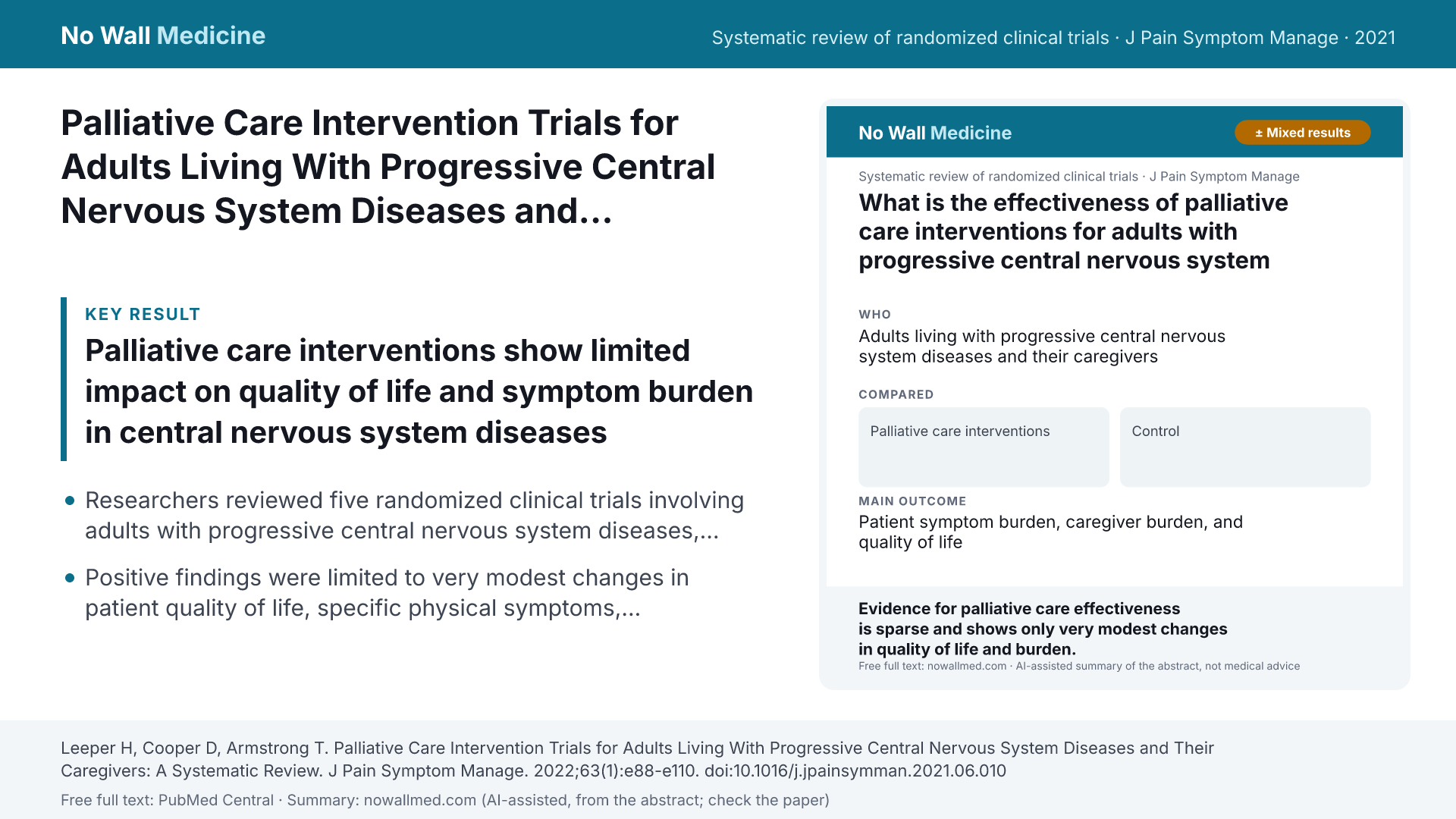
Palliative care interventions show limited impact on quality of life and symptom burden in central nervous system diseases
Palliative Care Intervention Trials for Adults Living With Progressive Central Nervous System Diseases and Their Caregivers: A Systematic Review
Systematic review of randomized clinical trialsMixed results
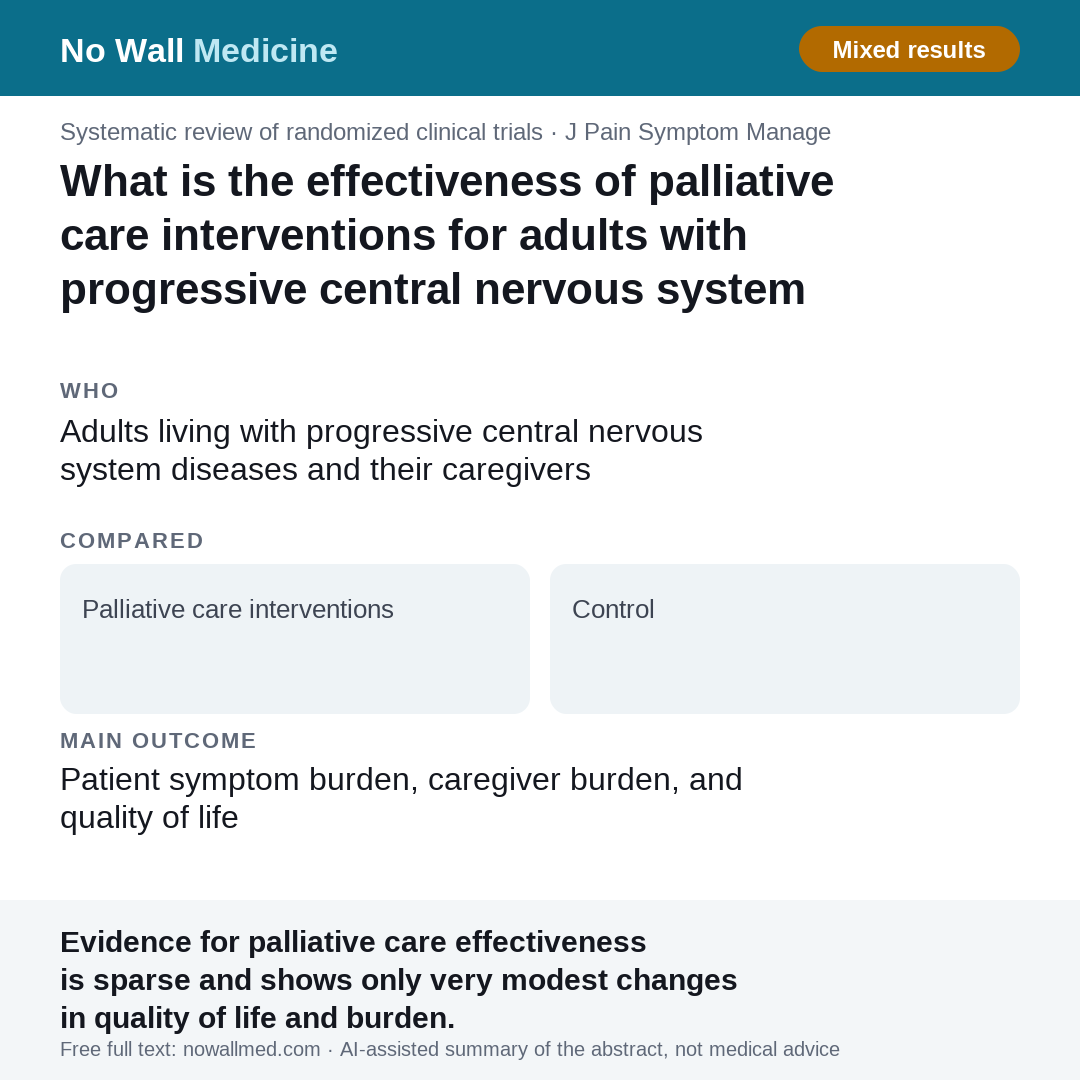
What is the effectiveness of palliative care interventions for adults with progressive central nervous system diseases?
Who
Adults living with progressive central nervous system diseases and their caregivers
Compared
Palliative care interventions
Control
Main outcome
Patient symptom burden, caregiver burden, and quality of life
Bottom line: Evidence for palliative care effectiveness is sparse and shows only very modest changes in quality of life and burden.
Limitation: Most outcome measures lacked clinimetric responsiveness to detect change caused by disease or intervention.
J Pain Symptom Manage · 2021-06-18Download image
Clinical question: What is the effectiveness of palliative care interventions for adults with progressive central nervous system diseases?
Why it matters: It is unclear how effective palliative care interventions are for patients with progressive central nervous system diseases and their caregivers based on current evidence.
Key points
- Researchers reviewed five randomized clinical trials involving adults with progressive central nervous system diseases, such as multiple sclerosis and Parkinson's disease, and their caregivers.
- Positive findings were limited to very modest changes in patient quality of life, specific physical symptoms, and caregiver burden.
- Most outcome measures used in the trials lacked the ability to detect changes caused by the disease or the interventions.
Limitation the authors note: The evidence is described as sparse and of low certainty.
Headline and key points written with AI from the paper’s abstract, with every number checked against it. Read the paper before relying on them.
Was this summary helpful?
Subject terms
Cite this article
Leeper H, Cooper D, Armstrong T. Palliative Care Intervention Trials for Adults Living With Progressive Central Nervous System Diseases and Their Caregivers: A Systematic Review. J Pain Symptom Manage. 2021. doi:10.1016/j.jpainsymman.2021.06.010
Spotted a mistake? Suggest a correction