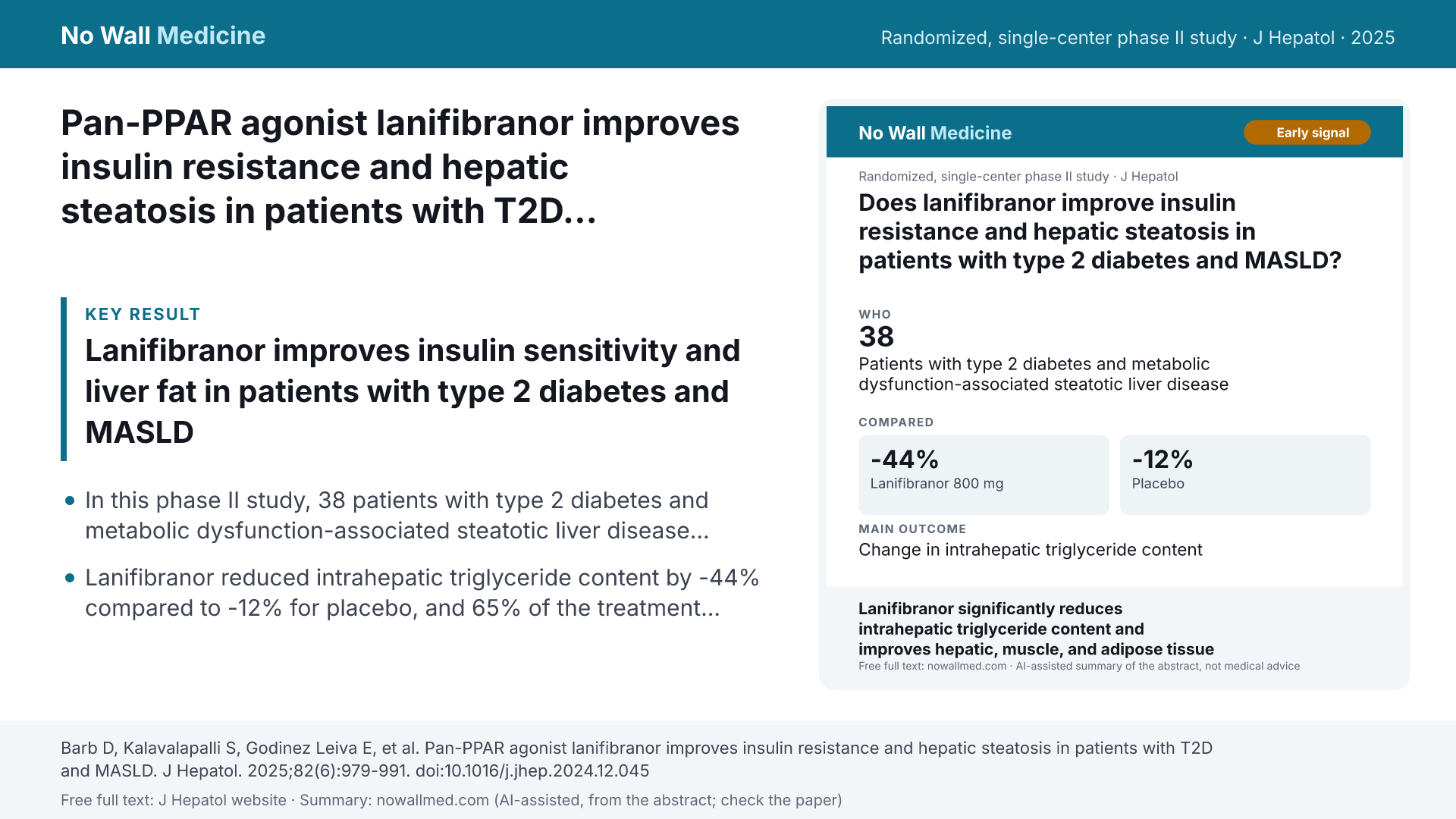
Lanifibranor improves insulin sensitivity and liver fat in patients with type 2 diabetes and MASLD
Pan-PPAR agonist lanifibranor improves insulin resistance and hepatic steatosis in patients with T2D and MASLD
Randomized, single-center phase II studyBenefit found
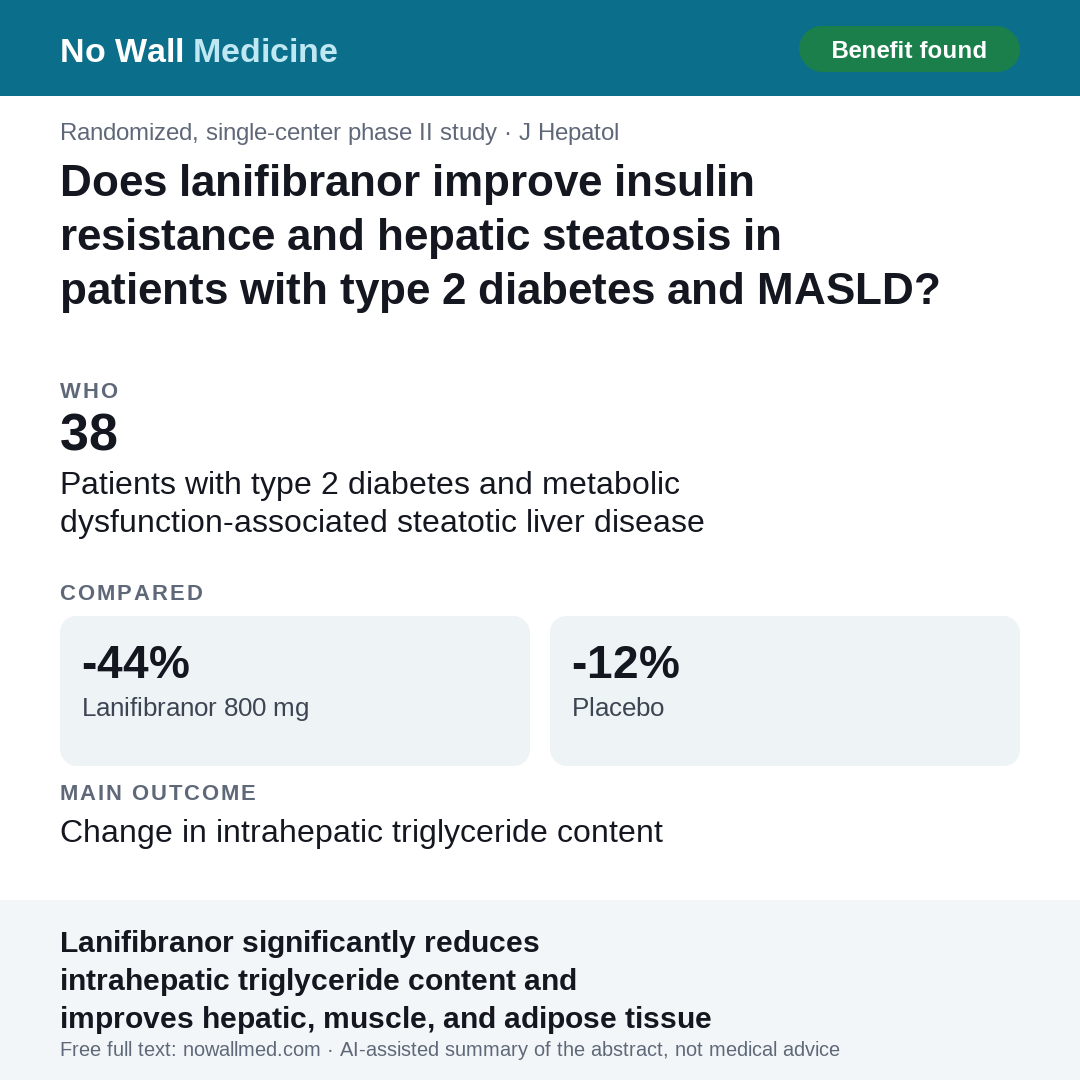
Does lanifibranor improve insulin resistance and hepatic steatosis in patients with type 2 diabetes and MASLD?
Who
38
Patients with type 2 diabetes and metabolic dysfunction-associated steatotic liver disease · Single-center
Compared
-44%Lanifibranor 800 mg
-12%Placebo
Main outcome
Change in intrahepatic triglyceride content
Result: least squares mean difference -31%, 95% CI -51 to -12%
Bottom line: Lanifibranor significantly reduces intrahepatic triglyceride content and improves hepatic, muscle, and adipose tissue insulin sensitivity.
J Hepatol · 2025-01-15Download image
Clinical question: Does lanifibranor improve insulin resistance and hepatic steatosis in patients with type 2 diabetes and MASLD?
Why it matters: It was unknown how lanifibranor affects insulin sensitivity in specific tissues like muscle and fat and how those changes relate to liver fat levels in patients with MASLD and type 2 diabetes.
Key points
- In this phase II study, 38 patients with type 2 diabetes and metabolic dysfunction-associated steatotic liver disease were randomized to receive either 800 mg of lanifibranor or a placebo for 24 weeks.
- Lanifibranor reduced intrahepatic triglyceride content by -44% compared to -12% for placebo, and 65% of the treatment group achieved a reduction of at least 30% versus 22% in the placebo group.
- The treatment was associated with improved insulin sensitivity in the liver, muscle, and fat tissues, though it caused a modest weight gain of +2.7%.
Headline and key points written with AI from the paper’s abstract, with every number checked against it. Read the paper before relying on them.
Was this summary helpful?
Subject terms
Cite this article
Barb D, Kalavalapalli S, Godinez Leiva E, et al. Pan-PPAR agonist lanifibranor improves insulin resistance and hepatic steatosis in patients with T2D and MASLD. J Hepatol. 2025. doi:10.1016/j.jhep.2024.12.045
Spotted a mistake? Suggest a correction