Pancreatic CT perfusion: quantitative meta-analysis of disease discrimination, protocol development, and effect of CT parameters
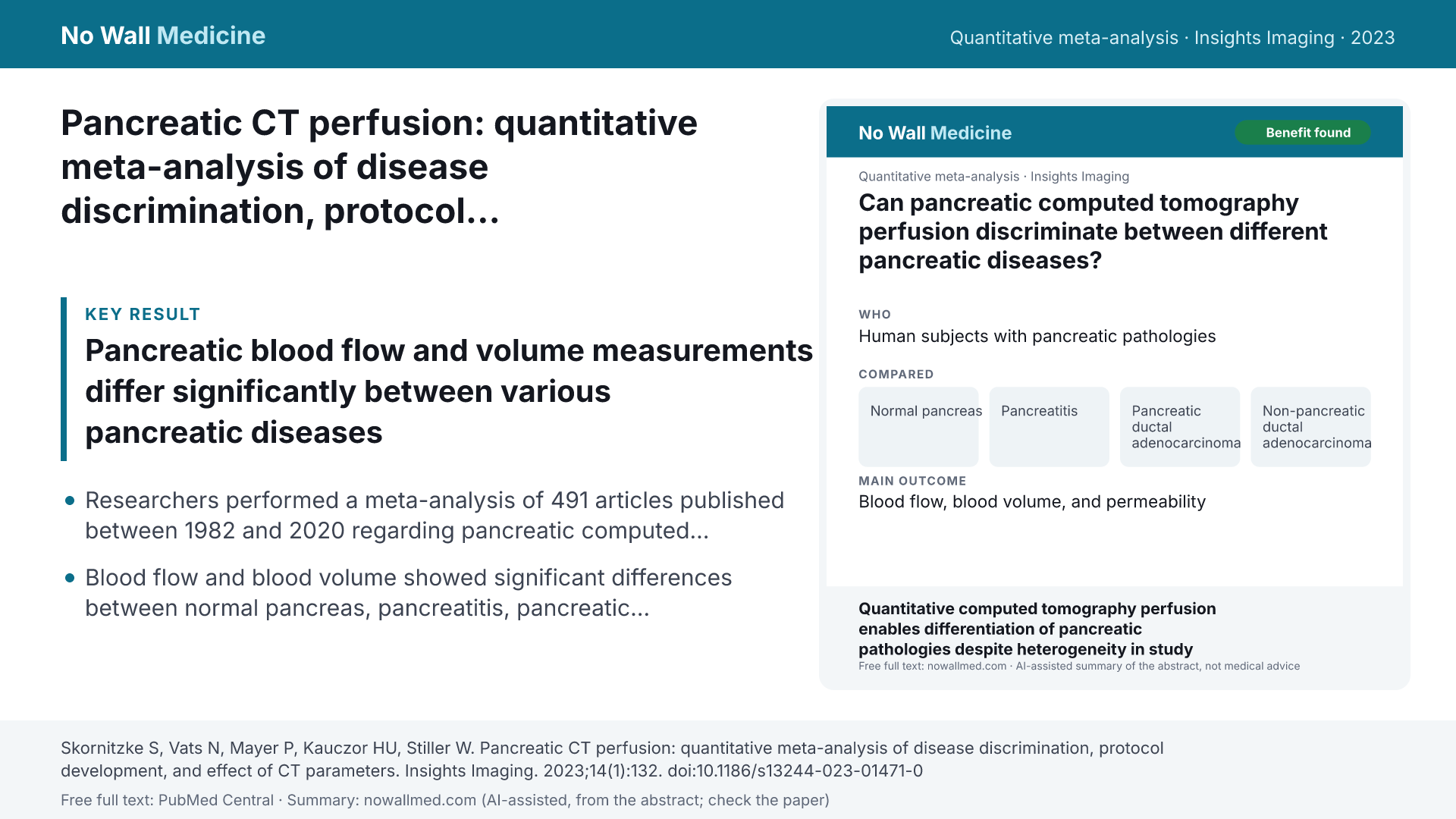
Key result: Pancreatic blood flow and volume measurements differ significantly between various pancreatic diseases
Quantitative meta-analysisBenefit found
Can pancreatic computed tomography perfusion discriminate between different pancreatic diseases?
Who
Human subjects with pancreatic pathologies
Compared
Normal pancreas
Pancreatitis
Pancreatic ductal adenocarcinoma
Non-pancreatic ductal adenocarcinoma
Main outcome
Blood flow, blood volume, and permeability
Bottom line: Quantitative computed tomography perfusion enables differentiation of pancreatic pathologies despite heterogeneity in study parameters.
Insights Imaging · 2023-07-21 · Save PNG

Key points
- Researchers performed a meta-analysis of 491 articles published between 1982 and 2020 regarding pancreatic computed tomography (CT) perfusion studies.
- Blood flow and blood volume showed significant differences between normal pancreas, pancreatitis, pancreatic ductal adenocarcinoma, and non-pancreatic ductal adenocarcinoma pathologies (both p < 0.001).
- Permeability measurements did not show significant differences between these pathologies (p = 0.11).
Discussion prompts
- Would these patients look like yours? Who was left out?
- Is the main outcome one that matters to patients?
- Is the difference large enough to change what you do?
Cite: Skornitzke S, Vats N, Mayer P, Kauczor HU, Stiller W. Pancreatic CT perfusion: quantitative meta-analysis of disease discrimination, protocol development, and effect of CT parameters. Insights Imaging. 2023;14(1):132. doi:10.1186/s13244-023-01471-0
Free full text: PubMed Central · Summary and visual abstract: nowallmed.com/a/pancreatic-ct-perfusion-quantitative-meta-analysis-of-disease-1x0a0a1/ (AI-assisted from the abstract; check the paper before relying on it).