Parents reported higher satisfaction and fewer concerns with intensive movement therapy for children with hemiparesis
Parent Perspectives on I-ACQUIRE Therapy
Randomized trialBenefit found
What are parent perspectives on I-ACQUIRE therapy compared to usual treatment?
Who
167
Parents of infants and toddlers with perinatal arterial ischemic stroke and hemiparesis · United States 15-site
Compared
Usual treatment: 18% reported concerns therapy did not produce clear benefits
Moderate-dose I-ACQUIRE: ≤4% reported concerns therapy did not produce clear benefits
High-dose I-ACQUIRE: ≤4% reported concerns therapy did not produce clear benefits
Main outcome
Parent assessments of stress, concerns, and perceived therapy benefits
Bottom line: Parents reported higher positive feelings and fewer concerns with I-ACQUIRE therapy compared to usual treatment.
Stroke · 2026-10-09Download image
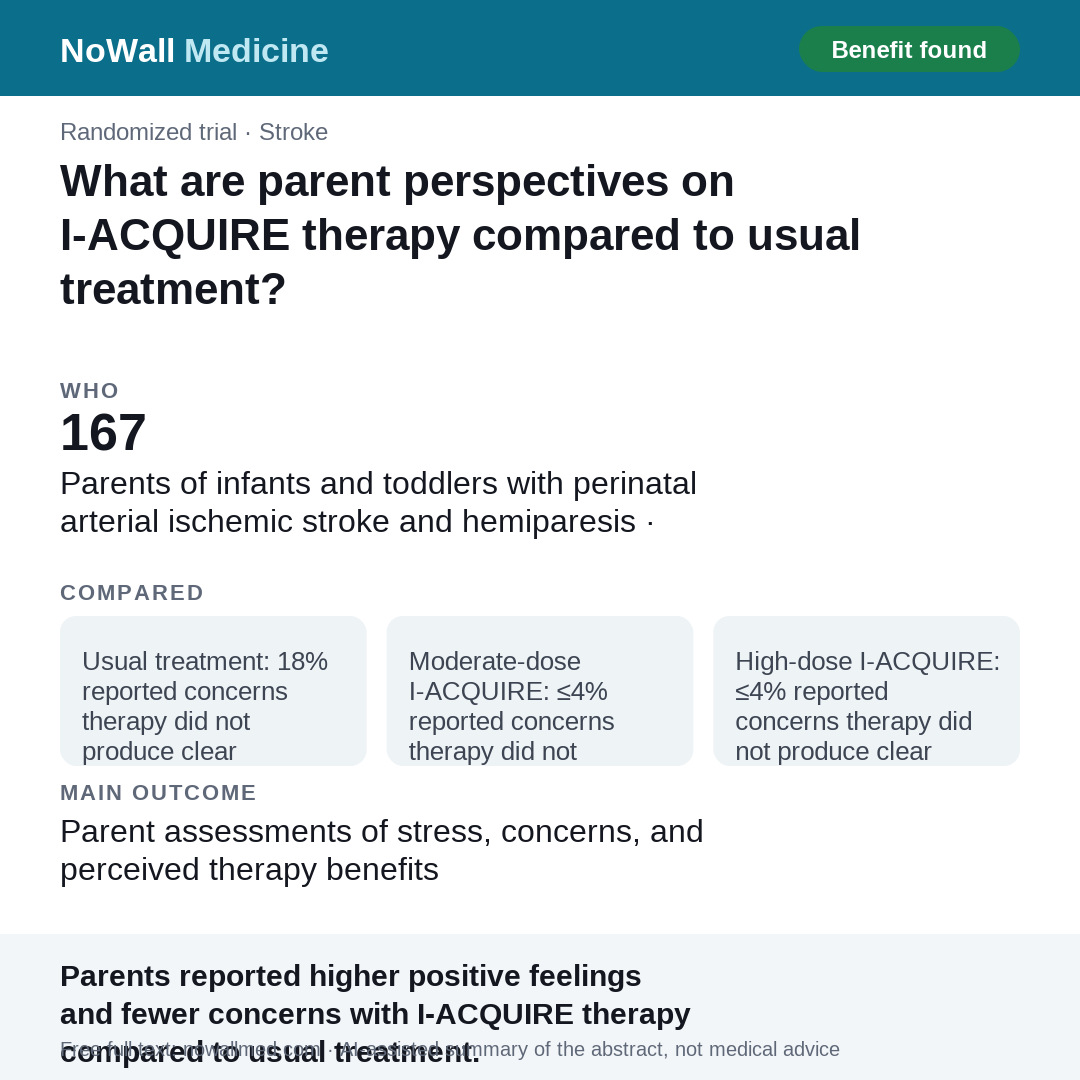
Clinical question: What are parent perspectives on I-ACQUIRE therapy compared to usual treatment?
Why it matters: While intensive movement therapy is recommended for children with hemiparesis, there is a lack of data regarding the perspectives of parents participating in these programs.
Key points
- Researchers studied 167 parents of infants and toddlers with perinatal arterial ischemic stroke and hemiparesis, comparing usual treatment to moderate-dose or high-dose I-ACQUIRE therapy.
- Parents in the I-ACQUIRE groups reported fewer concerns that therapy lacked benefits (≤4% versus 18%) and higher feelings that the treatment was useful (94%-98% versus 83%).
- All groups reported similar levels of stress, difficulty, and tiredness regarding the parent's role in the therapy process.
Headline and key points written with AI from the paper’s abstract, with every number checked against it. Read the paper before relying on them.
Topics
Spotted a mistake? Suggest a correction
More in Neurology
Automated model correctly identified 68 out of 90 seizure events as epileptic or nonepileptic
Video-Based Automated Seizure Classification Using Multimodal Large Language Models
Neuroimmune interactions contribute to migraine headache generation
Cortical and meningeal neuroimmune interactions contribute to the generation of migraine headaches
Pain and depressive symptoms linked to lower cognitive performance in older adults
Joint trajectories of pain and depressive symptoms in relation to repeated cognitive performance: a harmonized longitudinal analysis of four aging cohorts
AD biomarker-positive participants with DLB had faster cognitive decline than biomarker-negative ones
Biomarker-informed differences in treatment-associated cognitive decline in dementia with Lewy bodies