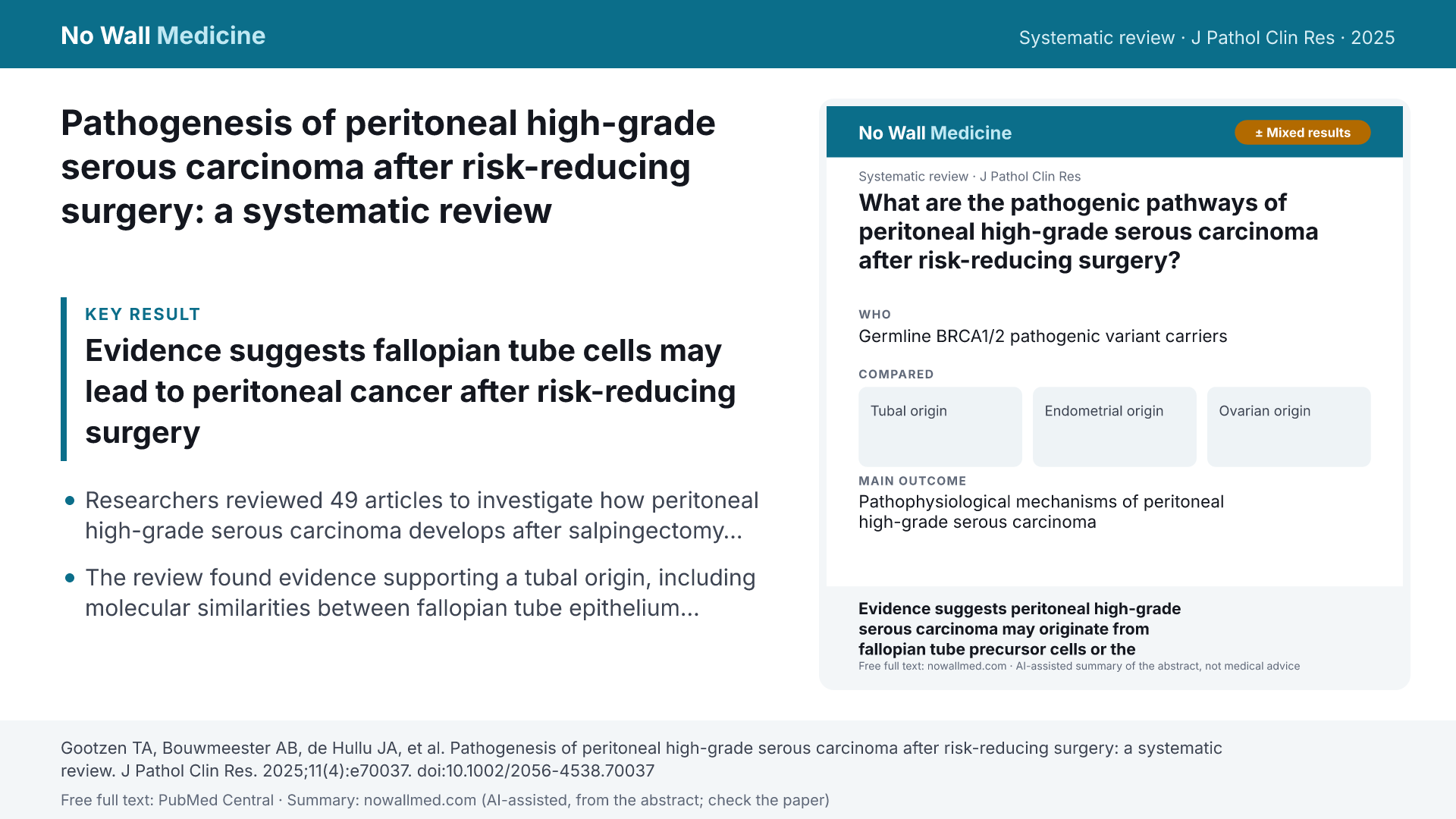
Evidence suggests fallopian tube cells may lead to peritoneal cancer after risk-reducing surgery
Pathogenesis of peritoneal high-grade serous carcinoma after risk-reducing surgery: a systematic review
Systematic reviewMixed results
What are the pathogenic pathways of peritoneal high-grade serous carcinoma after risk-reducing surgery?
Who
Germline BRCA1/2 pathogenic variant carriers
Compared
Tubal origin
Endometrial origin
Ovarian origin
Main outcome
Pathophysiological mechanisms of peritoneal high-grade serous carcinoma
Bottom line: Evidence suggests peritoneal high-grade serous carcinoma may originate from fallopian tube precursor cells or the endometrium.
J Pathol Clin Res · 2025-07-20Download image
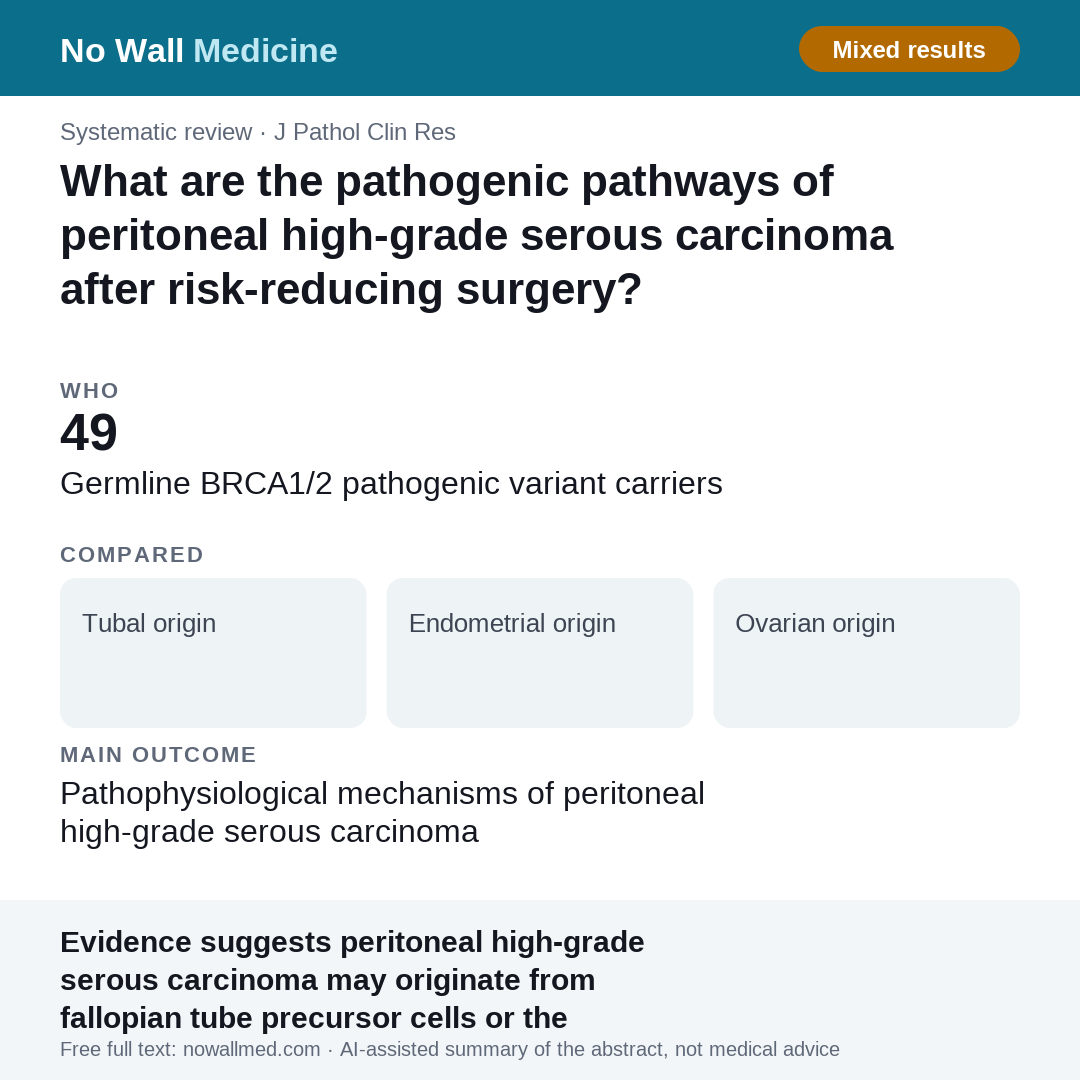
Clinical question: What are the pathogenic pathways of peritoneal high-grade serous carcinoma after risk-reducing surgery?
Why it matters: The mechanism that leads to the development of peritoneal high-grade serous carcinoma after risk-reducing surgery remains largely unknown.
Key points
- Researchers reviewed 49 articles to investigate how peritoneal high-grade serous carcinoma develops after salpingectomy or salpingo-oophorectomy in women with BRCA1/2 mutations.
- The review found evidence supporting a tubal origin, including molecular similarities between fallopian tube epithelium and peritoneal cancer, and a 27.5% risk when serous tubal intraepithelial carcinoma is present.
- Findings also suggested a possible role for the endometrium and noted that follicular fluid in mouse models might assist in the spread of malignant cells.
Headline and key points written with AI from the paper’s abstract, with every number checked against it. Read the paper before relying on them.
Was this summary helpful?
Subject terms
Headline, design, result, key points, caveat and citation as plain text.
Cite this article
Gootzen TA, Bouwmeester AB, de Hullu JA, et al. Pathogenesis of peritoneal high-grade serous carcinoma after risk-reducing surgery: a systematic review. J Pathol Clin Res. 2025. doi:10.1002/2056-4538.70037
Spotted a mistake? Suggest a correction