Rare cardiomyopathy gene variants were associated with higher risks of heart failure and cardiovascular death
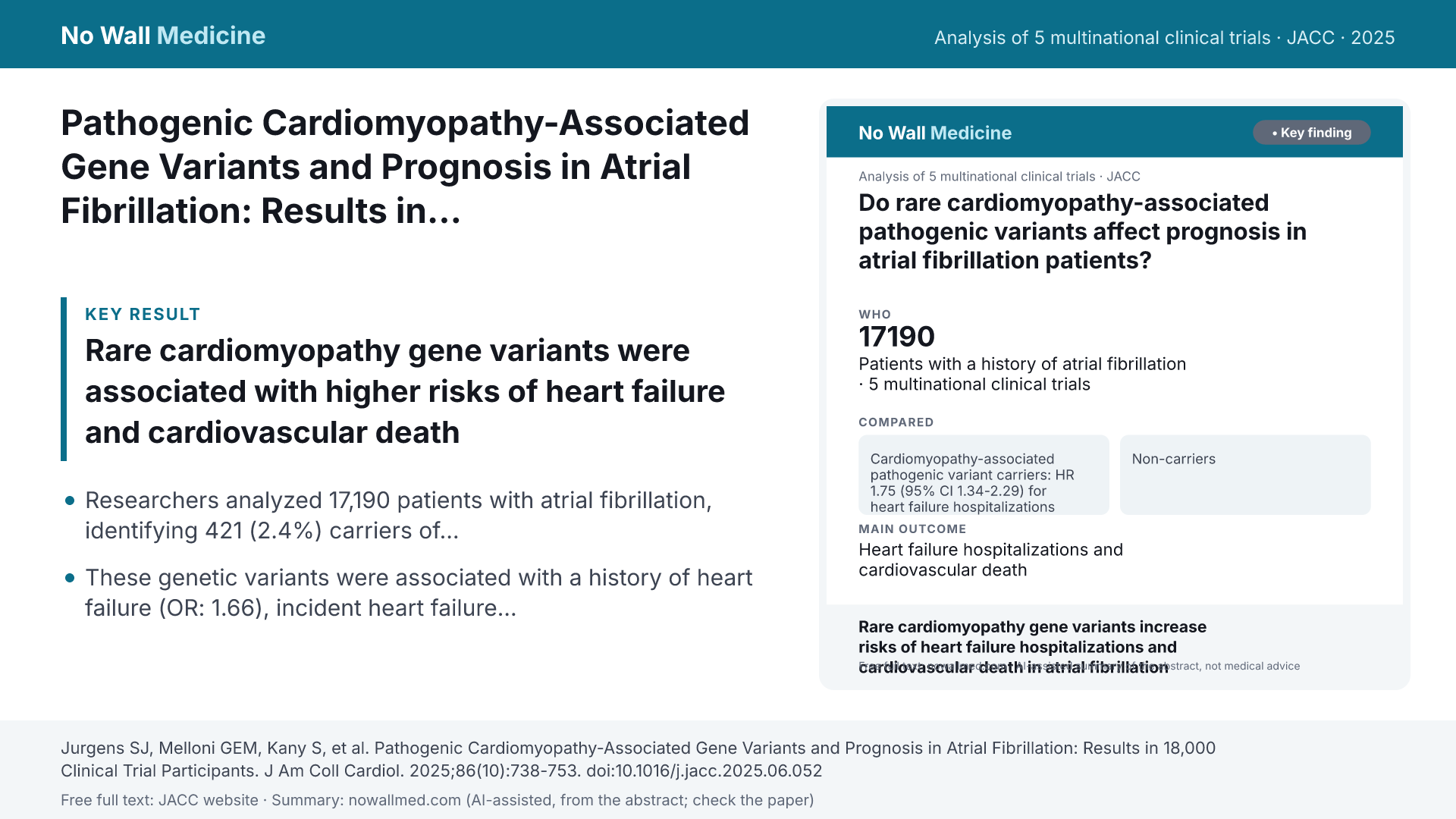
Pathogenic Cardiomyopathy-Associated Gene Variants and Prognosis in Atrial Fibrillation: Results in 18,000 Clinical Trial Participants
Analysis of 5 multinational clinical trialsHarm found
Do rare cardiomyopathy-associated pathogenic variants affect prognosis in atrial fibrillation patients?
Who
17190
Patients with a history of atrial fibrillation · 5 multinational clinical trials
Compared
Cardiomyopathy-associated pathogenic variant carriers: HR 1.75 (95% CI 1.34-2.29) for heart failure hospitalizations
Non-carriers
Main outcome
Heart failure hospitalizations and cardiovascular death
Result: hazard ratio 1.75 (95% CI 1.34-2.29) for heart failure hospitalizations
Bottom line: Rare cardiomyopathy gene variants increase risks of heart failure hospitalizations and cardiovascular death in atrial fibrillation patients.
JACC · 2025-09-04Download image
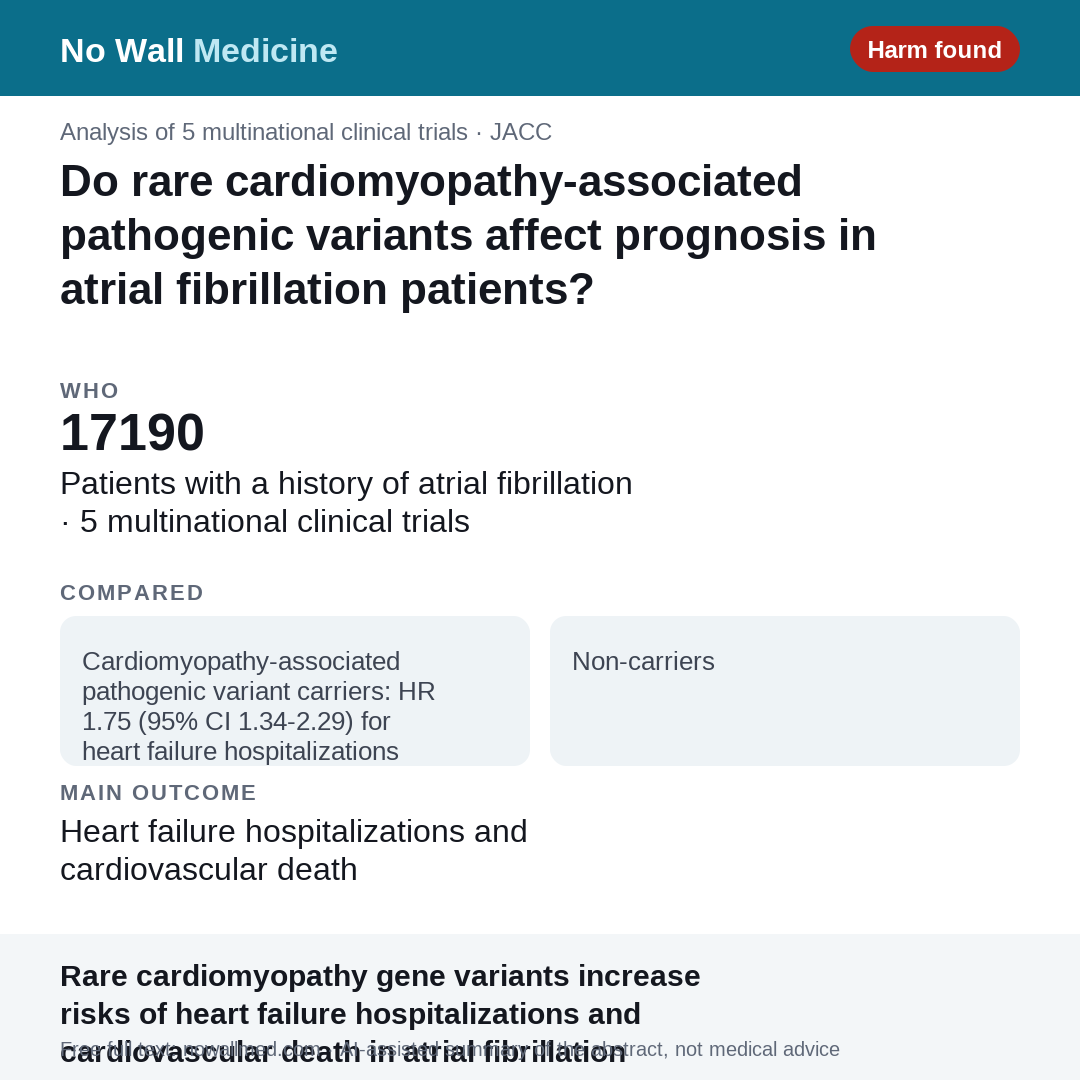
Clinical question: Do rare cardiomyopathy-associated pathogenic variants affect prognosis in atrial fibrillation patients?
Why it matters: Data on how rare cardiomyopathy-associated genetic variants affect clinical outcomes for patients with atrial fibrillation remain sparse.
Key points
- Researchers analyzed 17,190 patients with atrial fibrillation, identifying 421 (2.4%) carriers of rare cardiomyopathy-associated pathogenic variants.
- These genetic variants were associated with a history of heart failure (OR: 1.66), incident heart failure hospitalizations (HR: 1.75), and cardiovascular death (HR: 1.46).
- The variants were not associated with prevalent (OR: 0.99) or incident (HR: 0.95) ischemic stroke.
Headline and key points written with AI from the paper’s abstract, with every number checked against it. Read the paper before relying on them.
Was this summary helpful?
Subject terms
Cite this article
Jurgens SJ, Melloni GEM, Kany S, et al. Pathogenic Cardiomyopathy-Associated Gene Variants and Prognosis in Atrial Fibrillation: Results in 18,000 Clinical Trial Participants. JACC. 2025. doi:10.1016/j.jacc.2025.06.052
Spotted a mistake? Suggest a correction