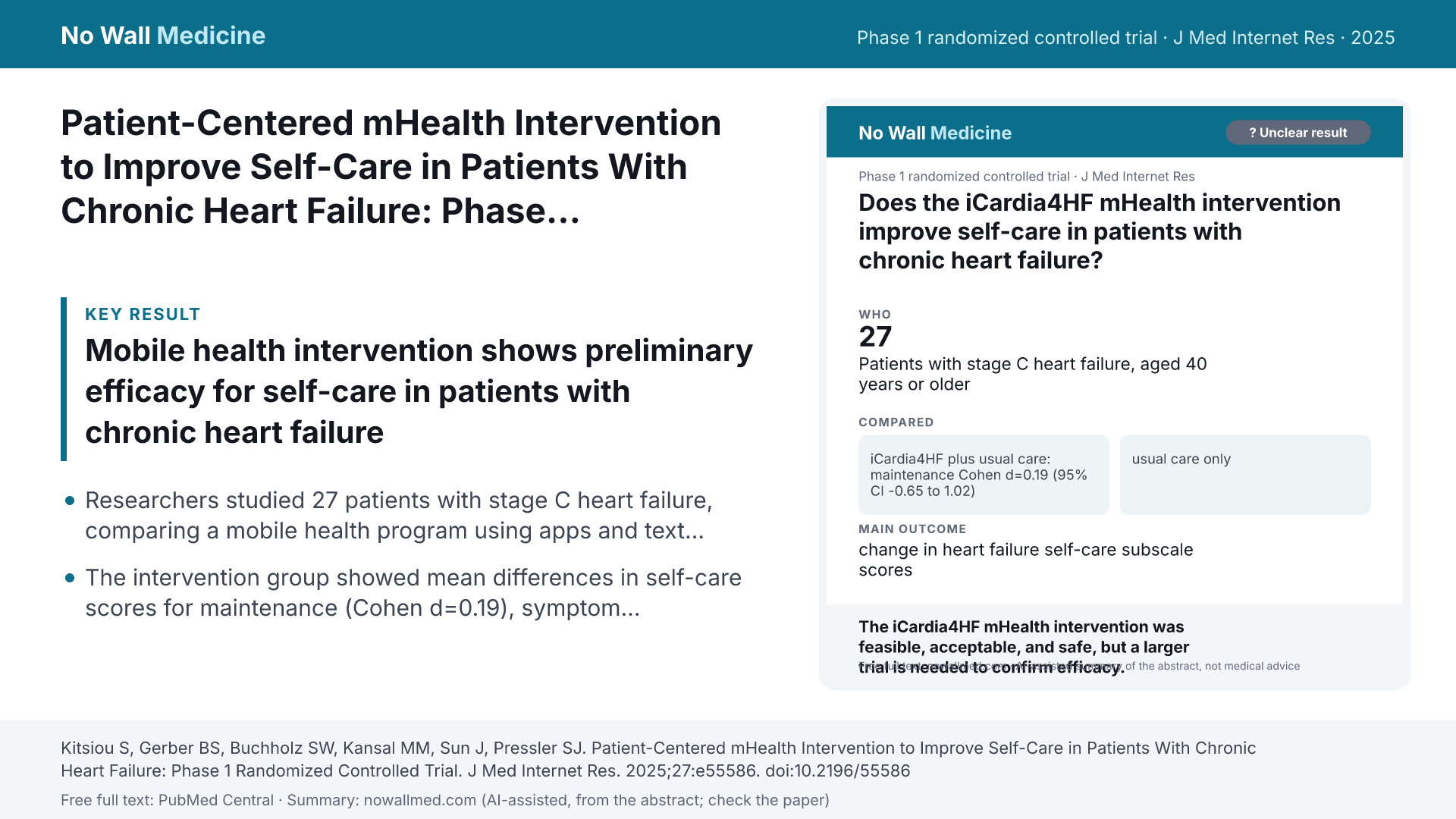
Patient-Centered mHealth Intervention to Improve Self-Care in Patients With Chronic Heart Failure: Phase 1 Randomized Controlled Trial
Key result: Mobile health intervention shows preliminary efficacy for self-care in patients with chronic heart failure
Key points
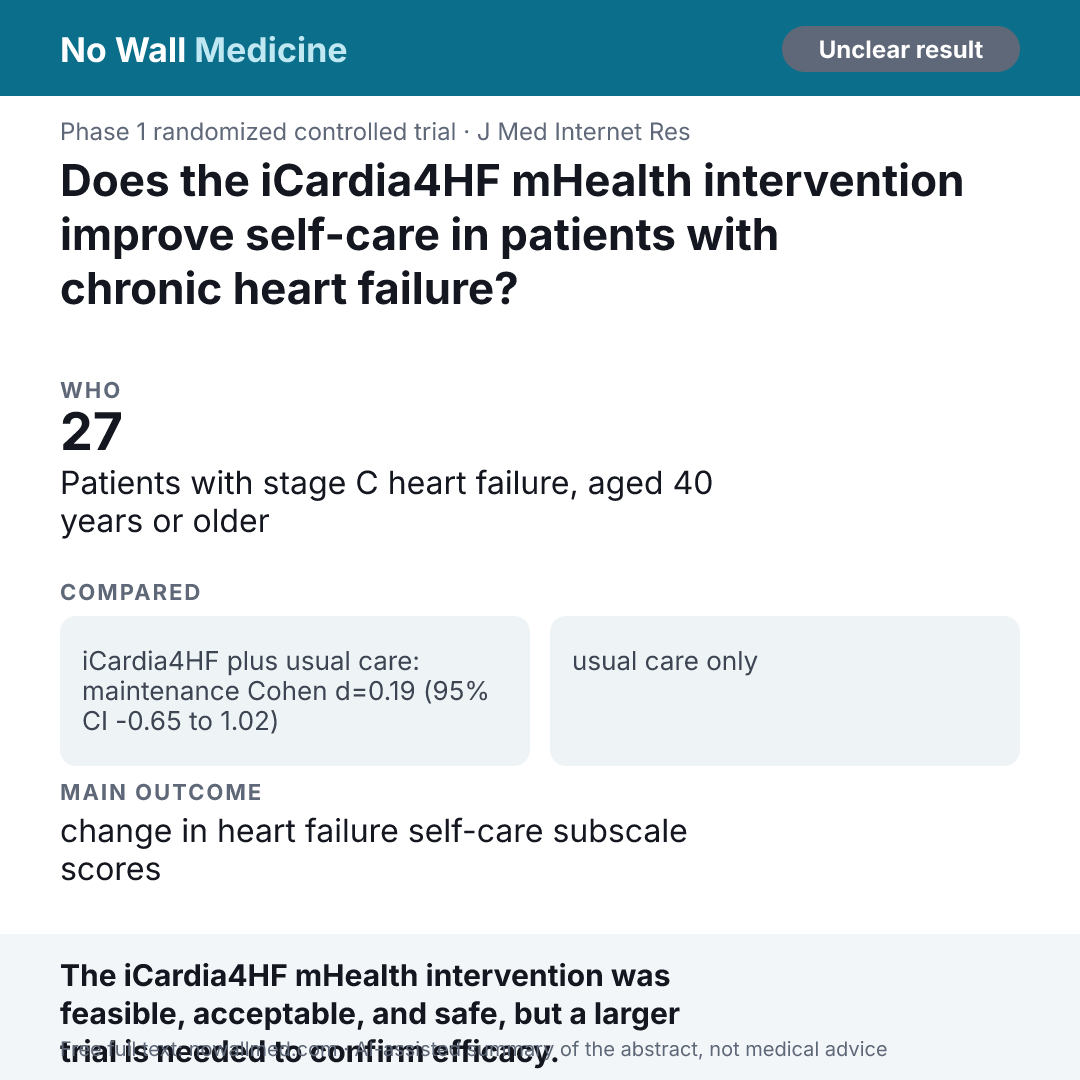
- Researchers studied 27 patients with stage C heart failure, comparing a mobile health program using apps and text messages to usual care over 8 weeks.
- The intervention group showed mean differences in self-care scores for maintenance (Cohen d=0.19), symptom perception (Cohen d=0.33), and self-care management (Cohen d=0.25) that favored the intervention.
- The largest effect sizes were seen in self-efficacy (Cohen d=0.68), health beliefs about medication adherence (Cohen d=0.63), and self-monitoring adherence (Cohen d=0.94).
Why it matters: The efficacy of commercial mobile health technologies and wearable devices for improving self-care in patients with heart failure remains largely underexplored.
Limitation the authors note: The authors state that a larger trial with a longer follow-up duration is warranted to examine efficacy.
Discussion prompts
- Would these patients look like yours? Who was left out?
- Is the main outcome one that matters to patients?
- Is the difference large enough to change what you do?
Cite: Kitsiou S, Gerber BS, Buchholz SW, Kansal MM, Sun J, Pressler SJ. Patient-Centered mHealth Intervention to Improve Self-Care in Patients With Chronic Heart Failure: Phase 1 Randomized Controlled Trial. J Med Internet Res. 2025;27:e55586. doi:10.2196/55586
Free full text: PubMed Central · Summary and visual abstract: nowallmed.com/a/patient-centered-mhealth-intervention-to-improve-self-care-in-117i2c8/ (AI-assisted from the abstract; check the paper before relying on it).