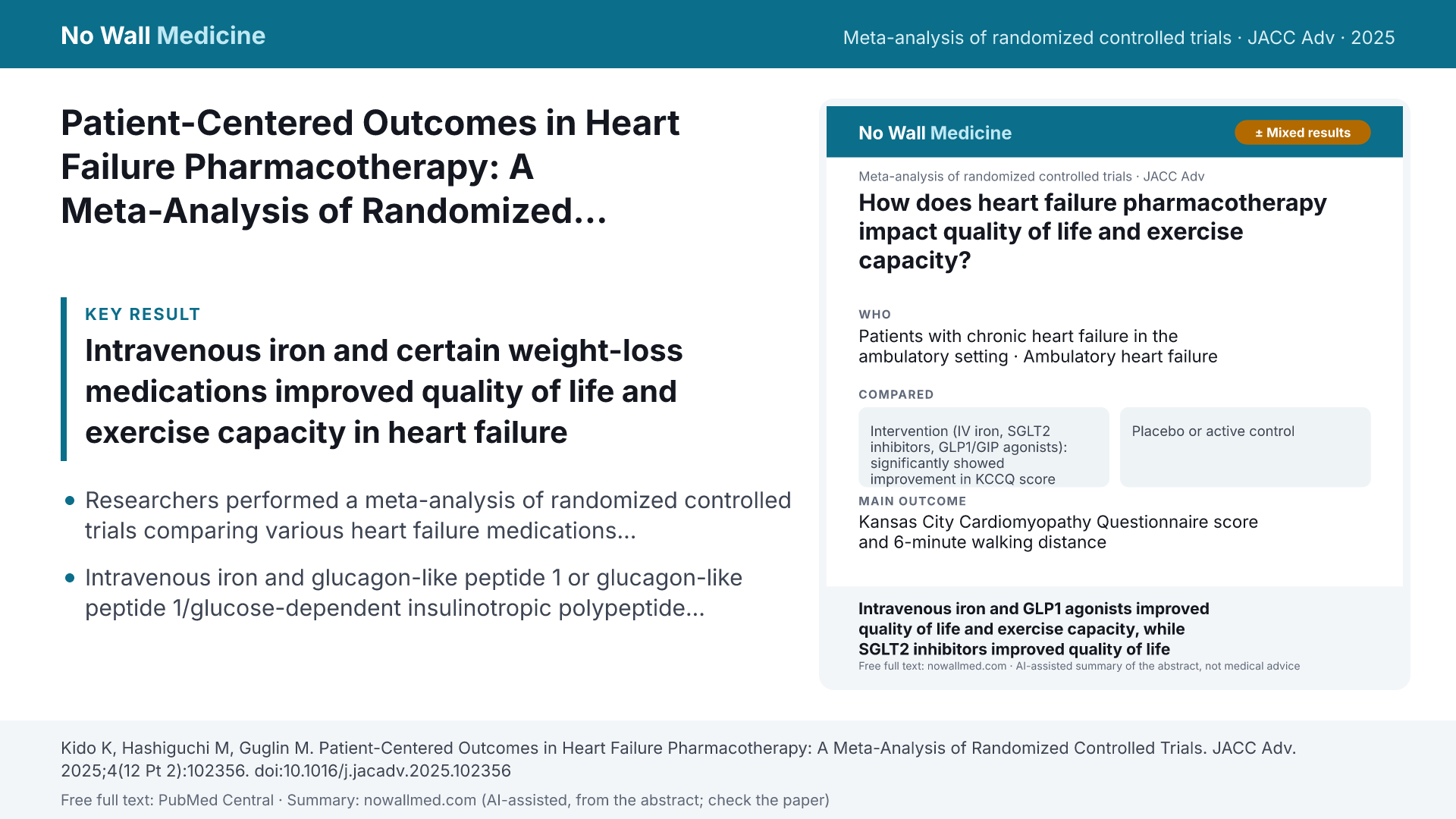
Intravenous iron and certain weight-loss medications improved quality of life and exercise capacity in heart failure
Patient-Centered Outcomes in Heart Failure Pharmacotherapy: A Meta-Analysis of Randomized Controlled Trials
Meta-analysis of randomized controlled trialsMixed results
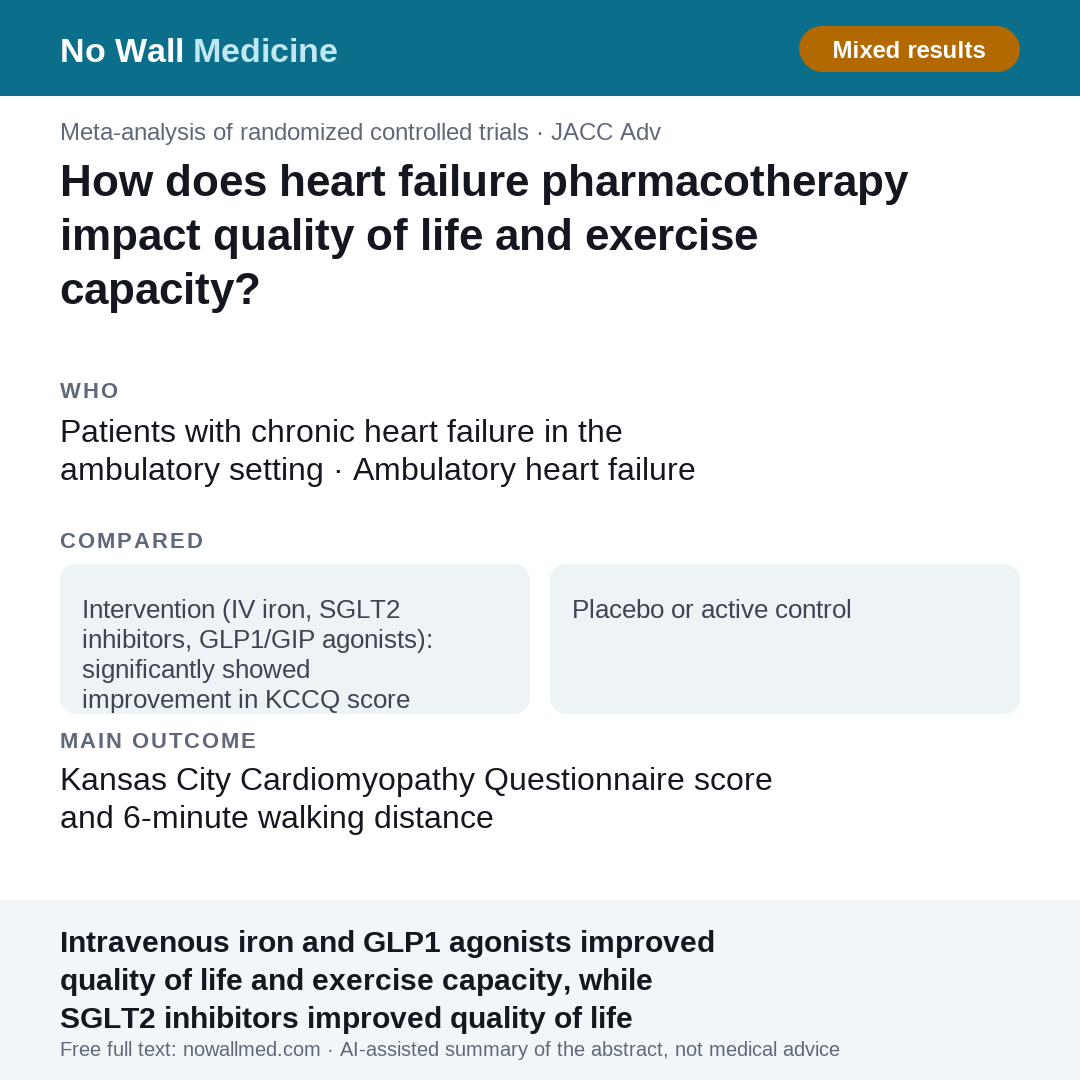
How does heart failure pharmacotherapy impact quality of life and exercise capacity?
Who
Patients with chronic heart failure in the ambulatory setting · Ambulatory heart failure setting
Compared
Intervention (IV iron, SGLT2 inhibitors, GLP1/GIP agonists): significantly showed improvement in KCCQ score
Placebo or active control
Main outcome
Kansas City Cardiomyopathy Questionnaire score and 6-minute walking distance
Bottom line: Intravenous iron and GLP1 agonists improved quality of life and exercise capacity, while SGLT2 inhibitors improved quality of life only.
JACC Adv · 2025-12-25Download image
Clinical question: How does heart failure pharmacotherapy impact quality of life and exercise capacity?
Why it matters: While heart failure medications are known to reduce mortality, less is known about how they impact quality of life and exercise capacity.
Key points
- Researchers performed a meta-analysis of randomized controlled trials comparing various heart failure medications against placebos or active controls.
- Intravenous iron and glucagon-like peptide 1 or glucagon-like peptide 1/glucose-dependent insulinotropic polypeptide agonists significantly improved both quality of life and walking distance.
- Sodium glucose co-transporter 2 inhibitors improved quality of life scores but showed no significant difference in six-minute walking distance.
Headline and key points written with AI from the paper’s abstract, with every number checked against it. Read the paper before relying on them.
Was this summary helpful?
Headline, design, result, key points, caveat and citation as plain text.
Cite this article
Kido K, Hashiguchi M, Guglin M. Patient-Centered Outcomes in Heart Failure Pharmacotherapy: A Meta-Analysis of Randomized Controlled Trials. JACC Adv. 2025. doi:10.1016/j.jacadv.2025.102356
Spotted a mistake? Suggest a correction