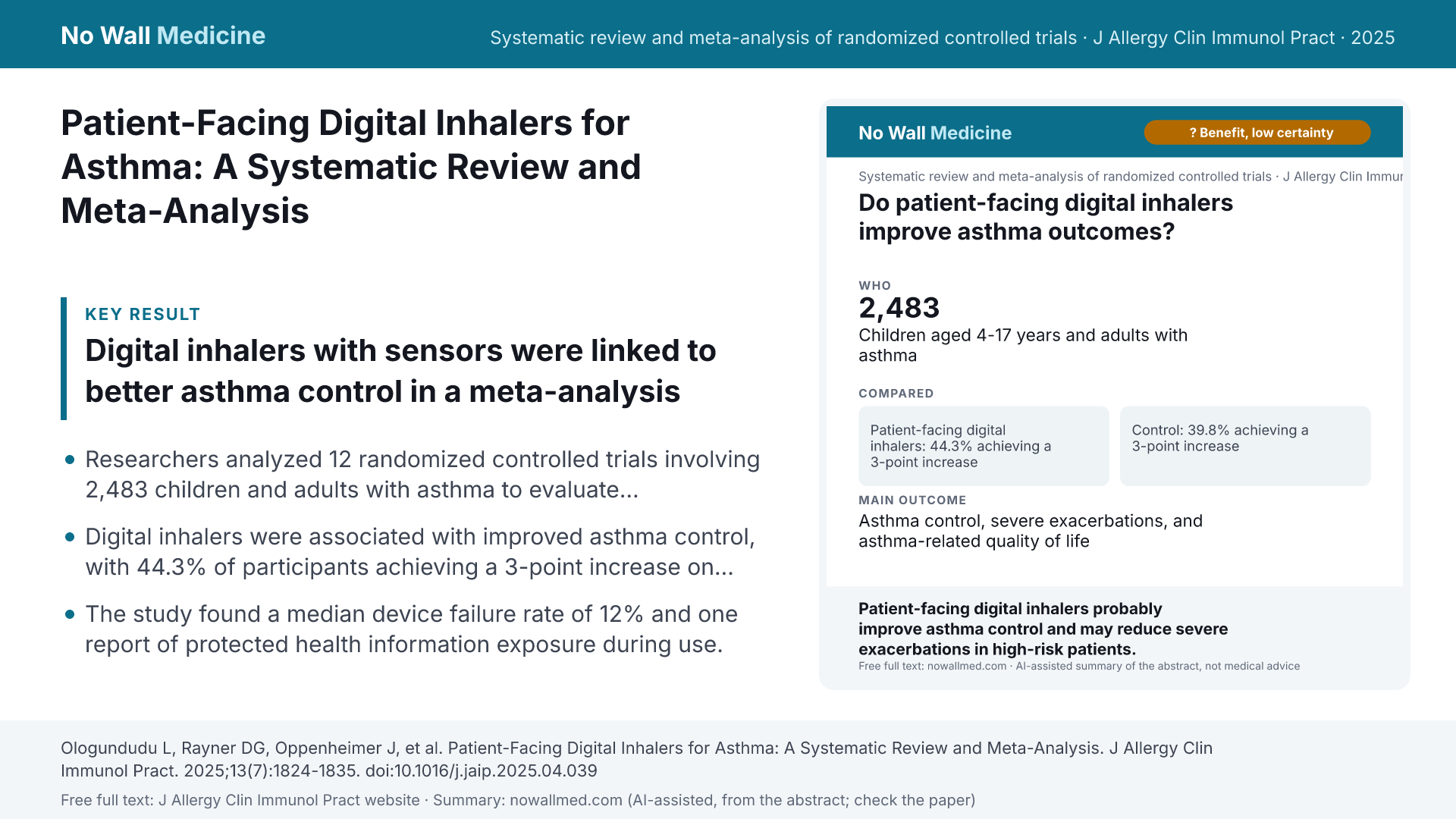
Digital inhalers with sensors were linked to better asthma control in a meta-analysis
Patient-Facing Digital Inhalers for Asthma: A Systematic Review and Meta-Analysis
Systematic review and meta-analysis of randomized controlled trialsBenefit, low certainty
Do patient-facing digital inhalers improve asthma outcomes?
Who
2,483
Children aged 4-17 years and adults with asthma
Compared
Patient-facing digital inhalers: 44.3% achieving a 3-point increase
Control: 39.8% achieving a 3-point increase
Main outcome
Asthma control, severe exacerbations, and asthma-related quality of life
Result: mean difference 0.63 (95% CI 0.29-0.96)
Bottom line: Patient-facing digital inhalers probably improve asthma control and may reduce severe exacerbations in high-risk patients.
J Allergy Clin Immunol Pract · 2025-04-30 · Save PNG
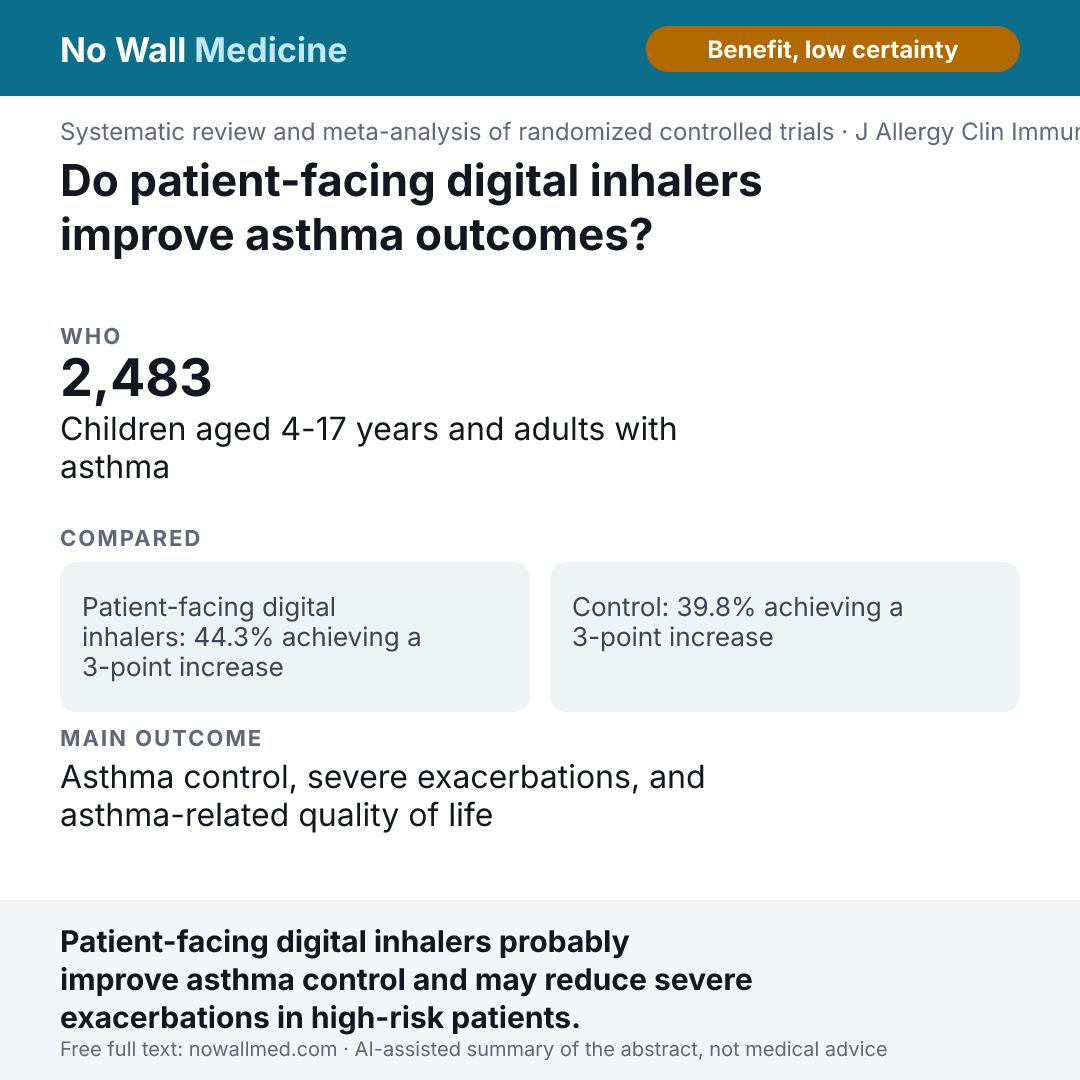
Clinical question: Do patient-facing digital inhalers improve asthma outcomes?
Key points
- Researchers analyzed 12 randomized controlled trials involving 2,483 children and adults with asthma to evaluate digital inhalers that provide feedback on medication use and technique.
- Digital inhalers were associated with improved asthma control, with 44.3% of participants achieving a 3-point increase on the Asthma Control Test compared to 39.8% in control groups.
- The study found a median device failure rate of 12% and one report of protected health information exposure during use.
Headline and key points written with AI from the paper’s abstract, with every number checked against it. Read the paper before relying on them.
Was this summary helpful?
Subject terms
Headline, design, result, key points, caveat and citation as plain text.
Cite this article
Ologundudu L, Rayner DG, Oppenheimer J, et al. Patient-Facing Digital Inhalers for Asthma: A Systematic Review and Meta-Analysis. J Allergy Clin Immunol Pract. 2025;13(7):1824-1835. doi:10.1016/j.jaip.2025.04.039
Spotted a mistake? Suggest a correction