Patients preferred different diabetes medications and experienced better outcomes with their chosen drugs
Patient preference for second- and third-line therapies in type 2 diabetes: a prespecified secondary endpoint of the TriMaster study
Randomized, double-blind, three-way crossover trialBenefit found
What are patient preferences for second- and third-line type 2 diabetes therapies?
Who
448
Patients with type 2 diabetes
Compared
25%Pioglitazone
35%Sitagliptin
38%Canagliflozin
Main outcome
Patient drug preference and glycemic control
Bottom line: Personalized therapy based on patient preference improves glycemic control and reduces side effects compared to nonpreferred drugs.
Nat Med · 2022-12-07Download image
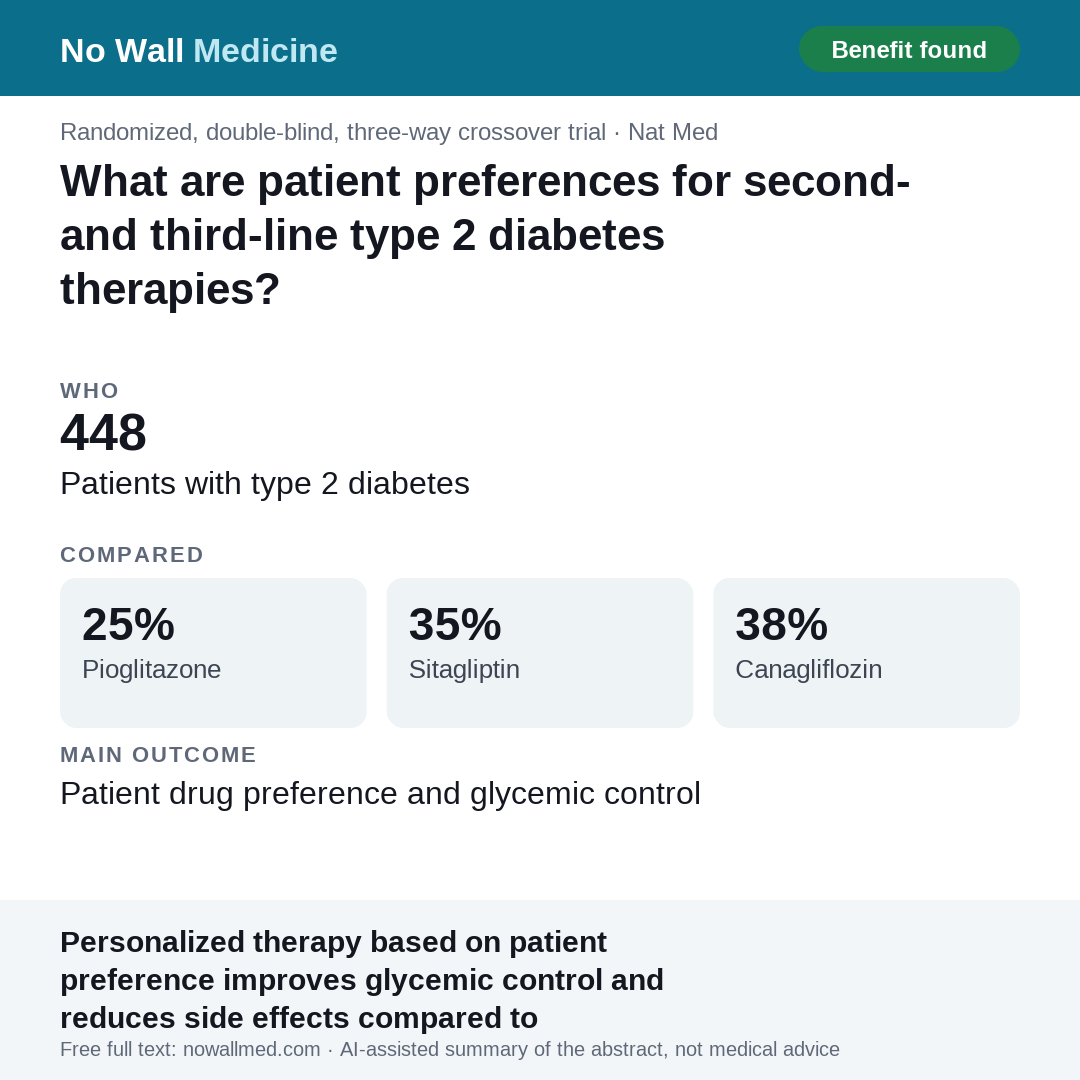
Clinical question: What are patient preferences for second- and third-line type 2 diabetes therapies?
Why it matters: Medication selection in type 2 diabetes requires balancing drug efficacy with potential side effects that vary between individuals.
Key points
- In this randomized crossover trial, 448 participants were treated with three different glucose-lowering drugs: pioglitazone 30 mg, sitagliptin 100 mg, and canagliflozin 100 mg.
- Patients preferred canagliflozin (38%), sitagliptin (35%), or pioglitazone (25%), and their preferred drug was associated with a lower HbA1c and fewer side effects.
- Allocating therapy based on individual preference was associated with 70% of patients achieving their lowest HbA1c compared to 30% when using the overall most preferred drug.
Headline and key points written with AI from the paper’s abstract, with every number checked against it. Read the paper before relying on them.
Topics
Cite this article
Shields BM, Angwin CD, Shepherd MH, Britten N, Jones AG, Sattar N. Patient preference for second- and third-line therapies in type 2 diabetes: a prespecified secondary endpoint of the TriMaster study. Nat Med. 2022. doi:10.1038/s41591-022-02121-6
Spotted a mistake? Suggest a correction