Race and previous prescriptions were linked to pain medication patterns after lower spine imaging
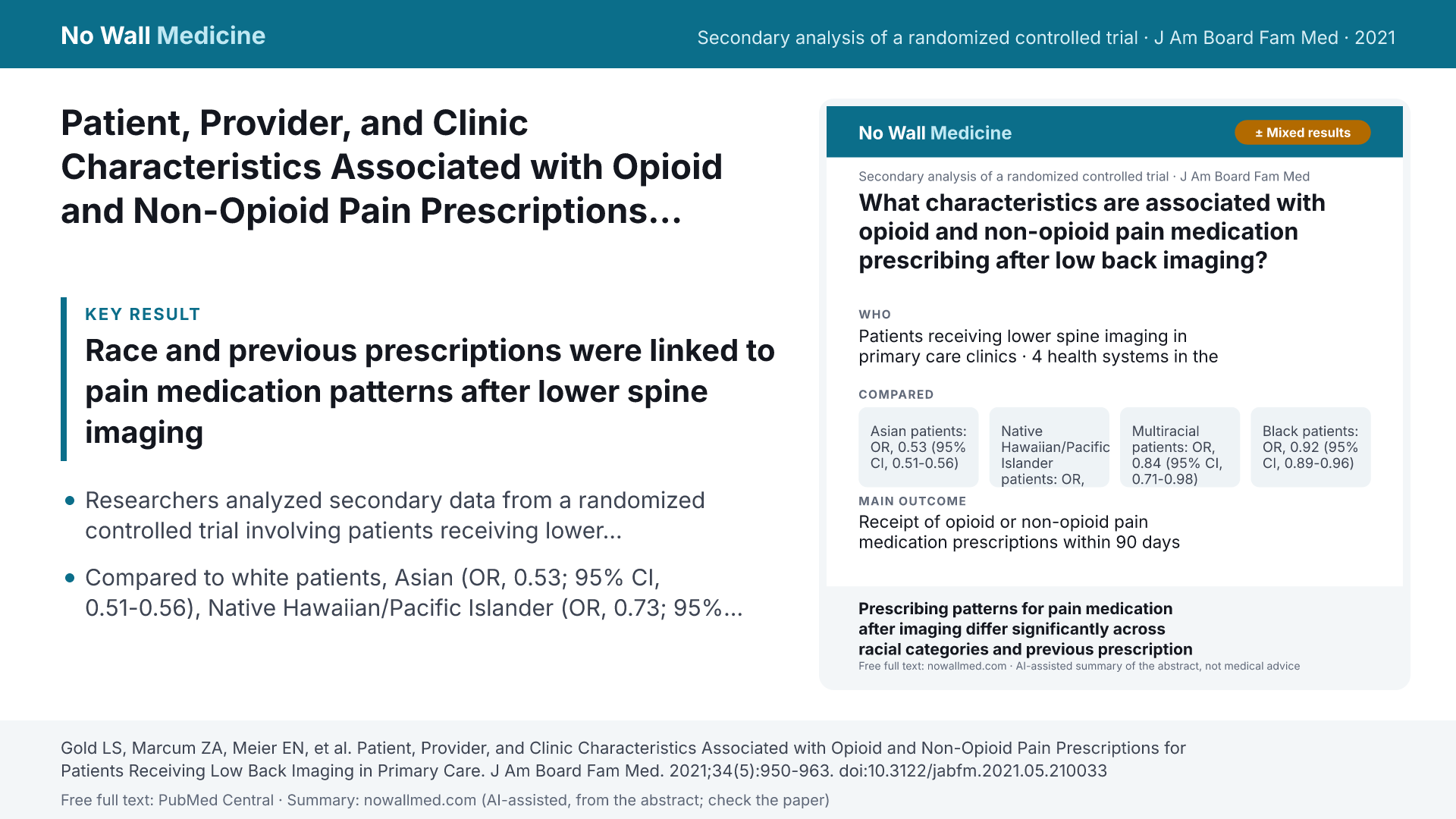
Patient, Provider, and Clinic Characteristics Associated with Opioid and Non-Opioid Pain Prescriptions for Patients Receiving Low Back Imaging in Primary Care
Secondary analysis of a randomized controlled trialMixed results
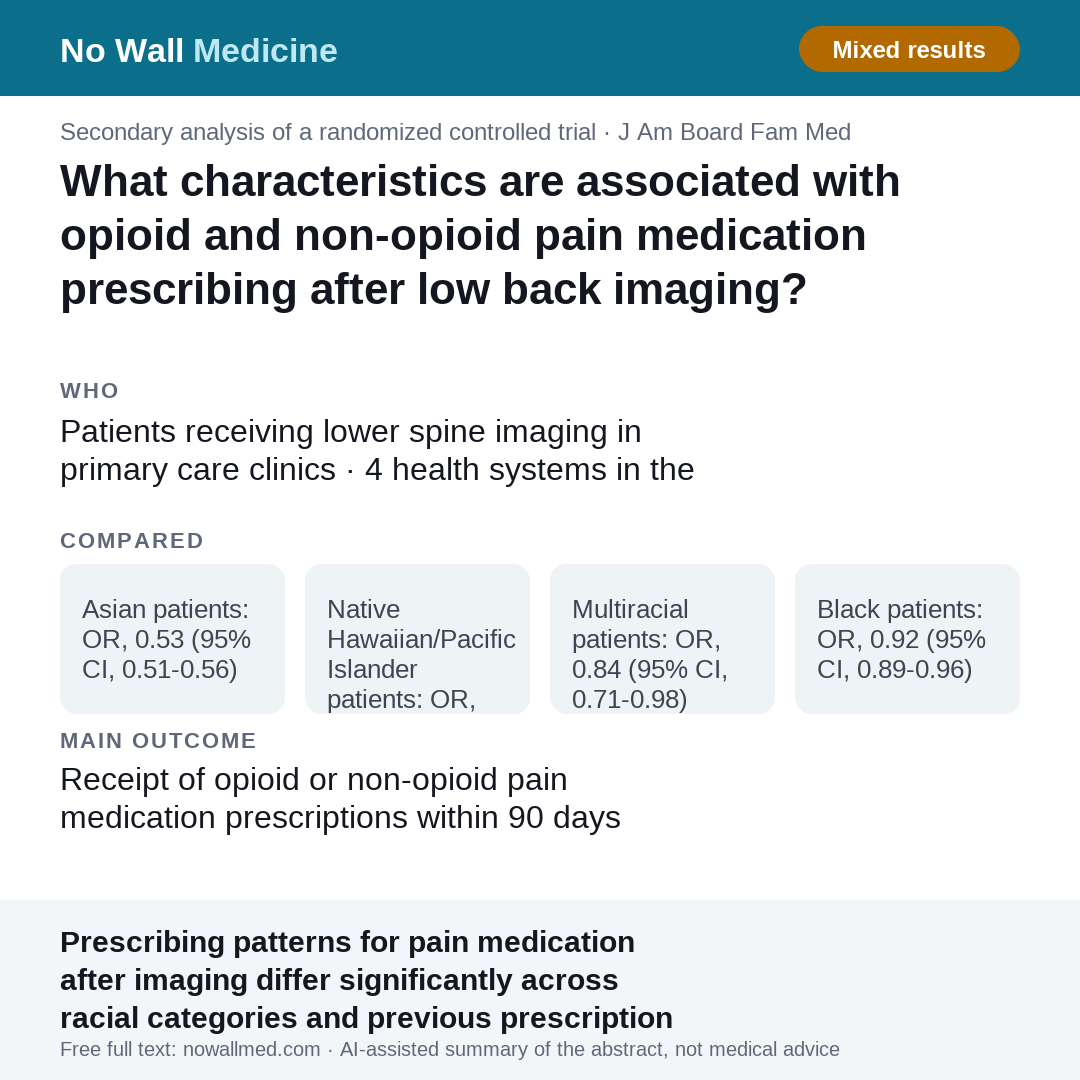
What characteristics are associated with opioid and non-opioid pain medication prescribing after low back imaging?
Who
Patients receiving lower spine imaging in primary care clinics · 4 health systems in the United States
Compared
Asian patients: OR, 0.53 (95% CI, 0.51-0.56)
Native Hawaiian/Pacific Islander patients: OR, 0.73 (95% CI, 0.64-0.83)
Multiracial patients: OR, 0.84 (95% CI, 0.71-0.98)
Black patients: OR, 0.92 (95% CI, 0.89-0.96)
Main outcome
Receipt of opioid or non-opioid pain medication prescriptions within 90 days
Bottom line: Prescribing patterns for pain medication after imaging differ significantly across racial categories and previous prescription history.
J Am Board Fam Med · 2021-09-18Download image
Clinical question: What characteristics are associated with opioid and non-opioid pain medication prescribing after low back imaging?
Why it matters: It was unknown which patient, provider, and clinic characteristics are associated with opioid or non-opioid pain medication prescribing patterns following lower spine imaging.
Key points
- Researchers analyzed secondary data from a randomized controlled trial involving patients receiving lower spine imaging in four United States health systems.
- Compared to white patients, Asian (OR, 0.53; 95% CI, 0.51-0.56), Native Hawaiian/Pacific Islander (OR, 0.73; 95% CI, 0.64-0.83), multiracial (OR, 0.84; 95% CI, 0.71-0.98), and Black (OR, 0.92; 95% CI, 0.89-0.96) patients were associated with lower odds of opioid prescriptions.
- Native American/Alaska Native patients were associated with greater odds of receiving non-opioid pain medications (OR, 1.12; 95% CI, 1.01-1.24) within 90 days after imaging.
Headline and key points written with AI from the paper’s abstract, with every number checked against it. Read the paper before relying on them.
Was this summary helpful?
Subject terms
Cite this article
Gold LS, Marcum ZA, Meier EN, Turner JA, James KT, Kallmes DF. Patient, Provider, and Clinic Characteristics Associated with Opioid and Non-Opioid Pain Prescriptions for Patients Receiving Low Back Imaging in Primary Care. J Am Board Fam Med. 2021. doi:10.3122/jabfm.2021.05.210033
Spotted a mistake? Suggest a correction