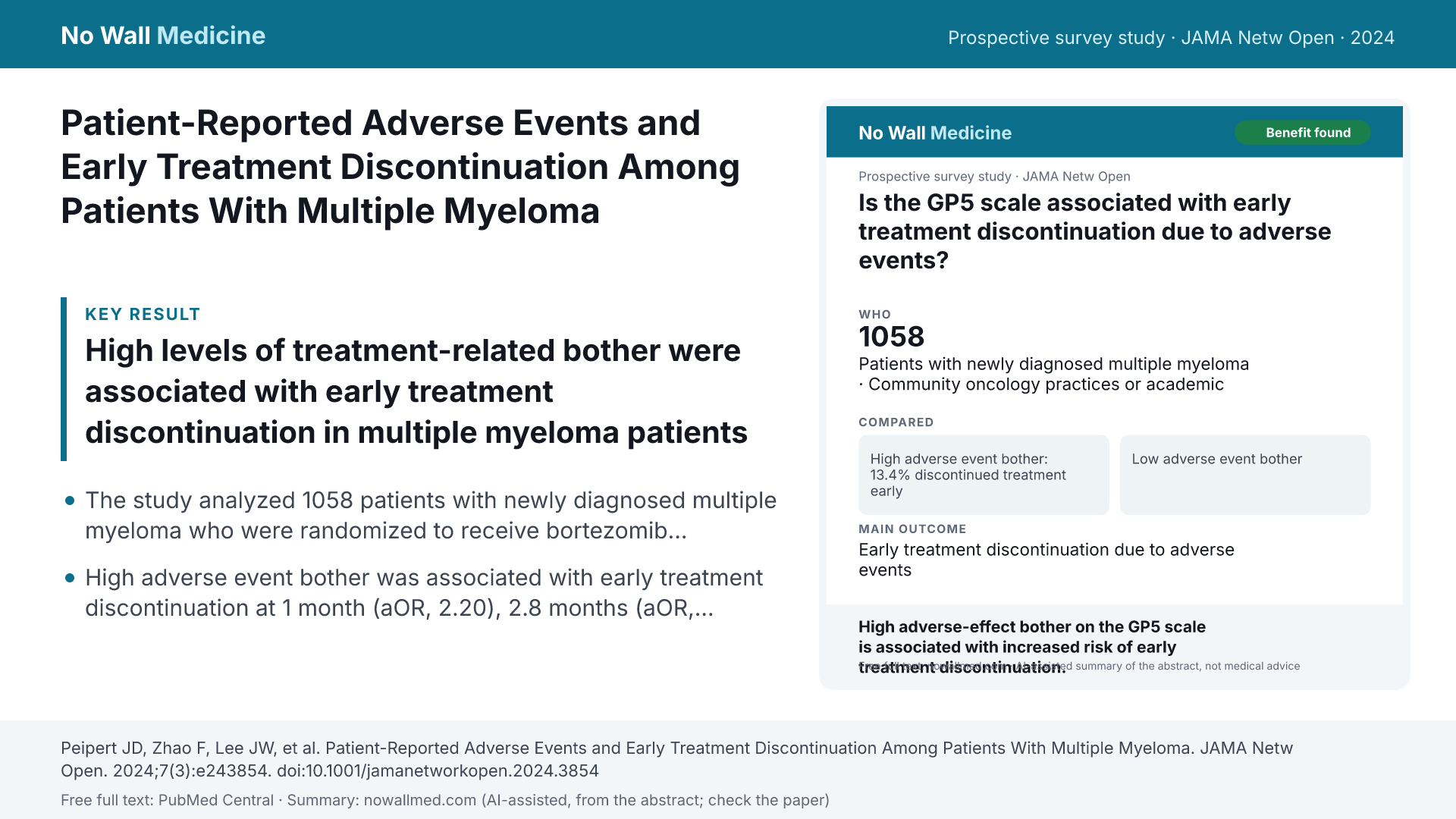
High levels of treatment-related bother were associated with early treatment discontinuation in multiple myeloma patients
Patient-Reported Adverse Events and Early Treatment Discontinuation Among Patients With Multiple Myeloma
Prospective survey studyBenefit found
Is the GP5 scale associated with early treatment discontinuation due to adverse events?
Who
1058
Patients with newly diagnosed multiple myeloma · Community oncology practices or academic medical centers in the US
Compared
High adverse event bother: 13.4% discontinued treatment early
Low adverse event bother
Main outcome
Early treatment discontinuation due to adverse events
Result: adjusted odds ratio 2.20 (95% CI, 1.25-3.89) at 1 month
Bottom line: High adverse-effect bother on the GP5 scale is associated with increased risk of early treatment discontinuation.
JAMA Netw Open · 2024-03-04 · Save PNG
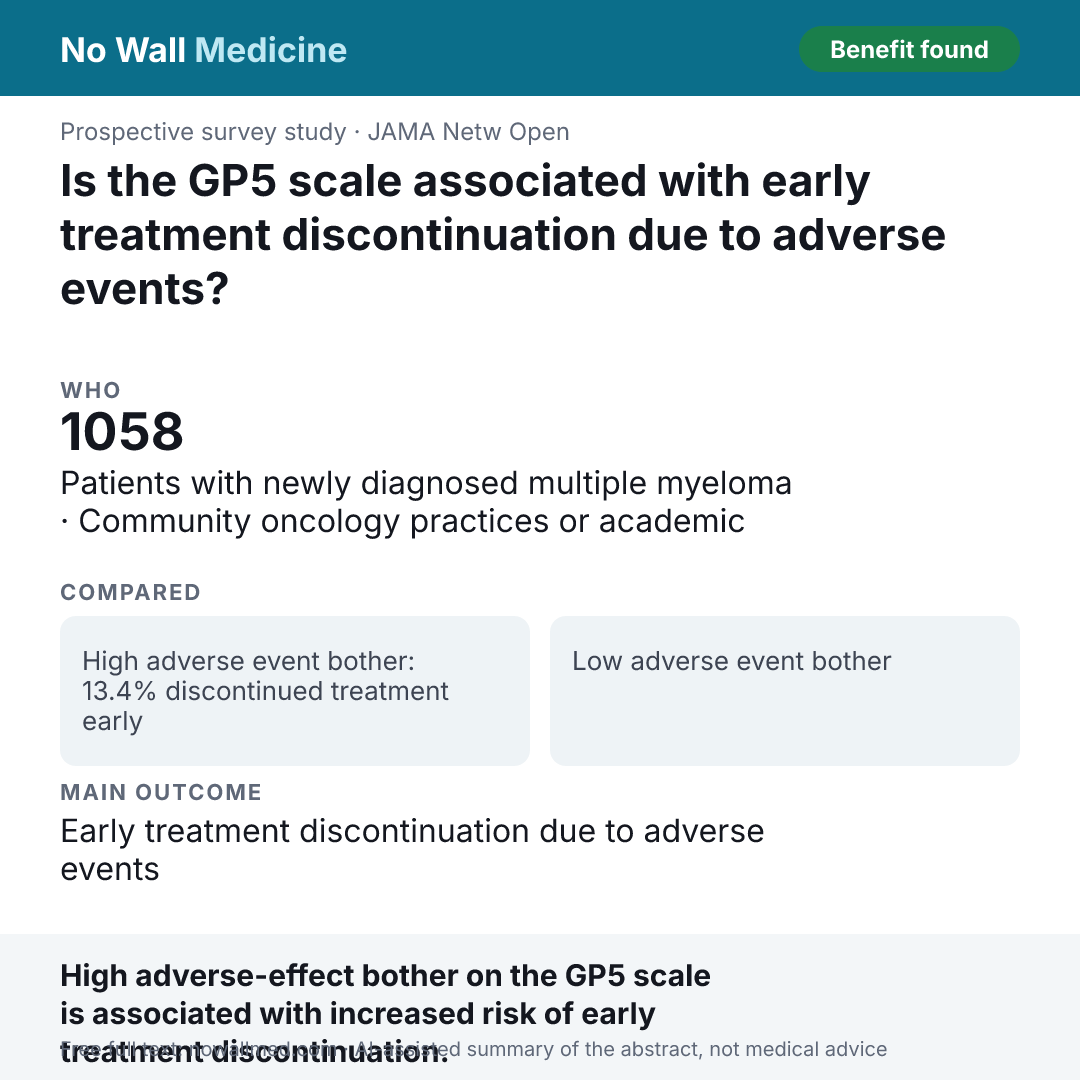
Clinical question: Is the GP5 scale associated with early treatment discontinuation due to adverse events?
Key points
- The study analyzed 1058 patients with newly diagnosed multiple myeloma who were randomized to receive bortezomib or carfilzomib plus lenalidomide and dexamethasone.
- High adverse event bother was associated with early treatment discontinuation at 1 month (aOR, 2.20), 2.8 months (aOR, 3.41), and 5.5 months (aOR, 4.66).
- Worsening by 2 or more response categories on the physical wellbeing scale was associated with early treatment discontinuation at 2.8 months (aOR, 3.02) and 5.5 months (aOR, 5.49).
Headline and key points written with AI from the paper’s abstract, with every number checked against it. Read the paper before relying on them.
Was this summary helpful?
Subject terms
Headline, design, result, key points, caveat and citation as plain text.
Cite this article
Peipert JD, Zhao F, Lee JW, et al. Patient-Reported Adverse Events and Early Treatment Discontinuation Among Patients With Multiple Myeloma. JAMA Netw Open. 2024;7(3):e243854. doi:10.1001/jamanetworkopen.2024.3854
Spotted a mistake? Suggest a correction