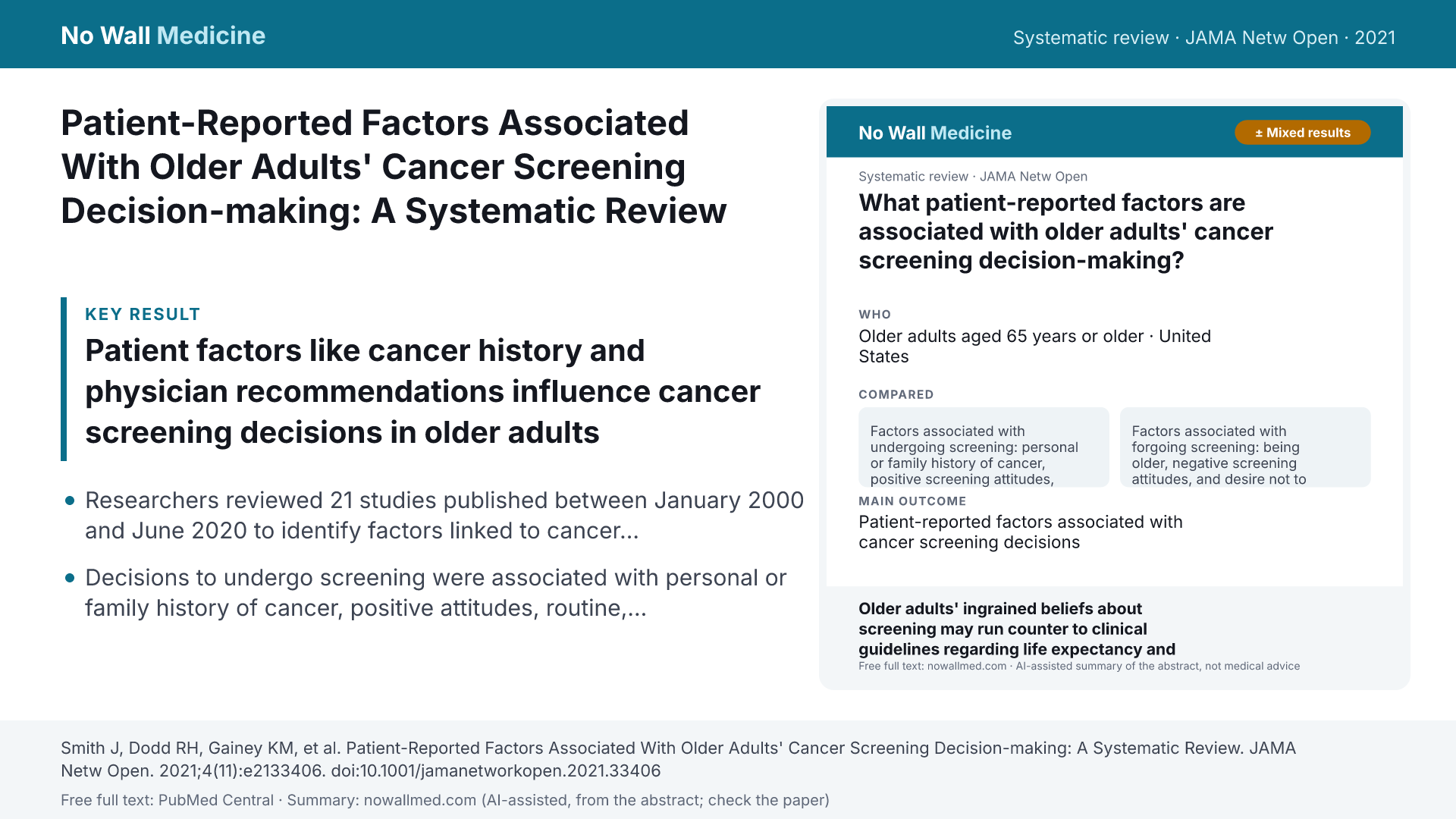
Patient factors like cancer history and physician recommendations influence cancer screening decisions in older adults
Patient-Reported Factors Associated With Older Adults' Cancer Screening Decision-making: A Systematic Review
Systematic reviewMixed results
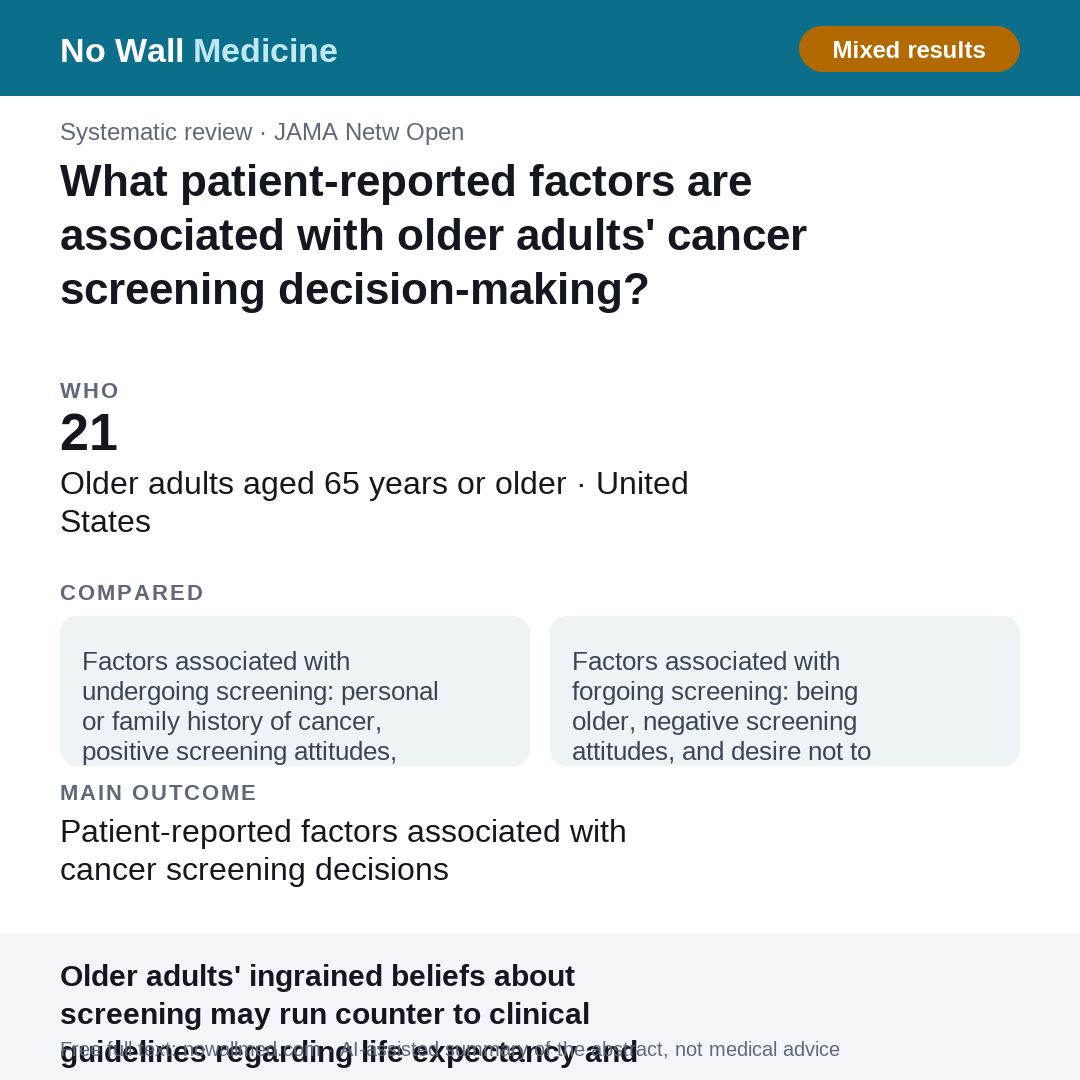
What patient-reported factors are associated with older adults' cancer screening decision-making?
Who
21
Older adults aged 65 years or older · United States
Compared
Factors associated with undergoing screening: personal or family history of cancer, positive screening attitudes, routine or habit, to gain knowledge, friends, and a physician's recommendation
Factors associated with forgoing screening: being older, negative screening attitudes, and desire not to know about cancer
Main outcome
Patient-reported factors associated with cancer screening decisions
Bottom line: Older adults' ingrained beliefs about screening may run counter to clinical guidelines regarding life expectancy and health status.
JAMA Netw Open · 2021-11-01Download image
Clinical question: What patient-reported factors are associated with older adults' cancer screening decision-making?
Why it matters: It is unknown which specific patient-reported factors influence whether older adults choose to continue or stop screening for breast, prostate, colorectal, and cervical cancer.
Key points
- Researchers reviewed 21 studies published between January 2000 and June 2020 to identify factors linked to cancer screening decisions in adults aged 65 years or older.
- Decisions to undergo screening were associated with personal or family history of cancer, positive attitudes, routine, and physician recommendations.
- Decisions to forgo screening were associated with being older, negative attitudes, and a desire not to know about cancer.
Headline and key points written with AI from the paper’s abstract, with every number checked against it. Read the paper before relying on them.
Was this summary helpful?
Subject terms
Cite this article
Smith J, Dodd RH, Gainey KM, et al. Patient-Reported Factors Associated With Older Adults' Cancer Screening Decision-making: A Systematic Review. JAMA Netw Open. 2021. doi:10.1001/jamanetworkopen.2021.33406
Spotted a mistake? Suggest a correction