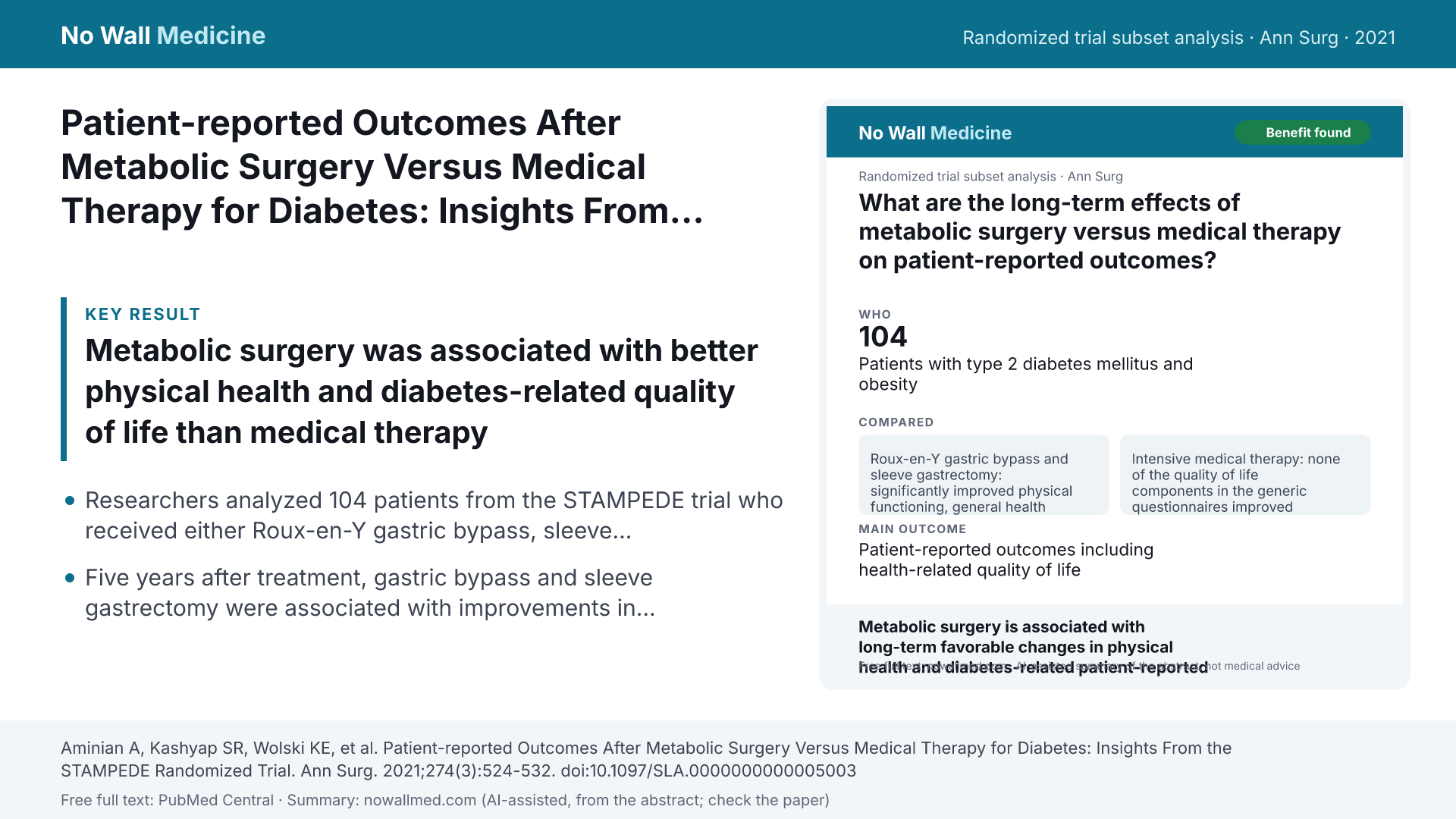
Metabolic surgery was associated with better physical health and diabetes-related quality of life than medical therapy
Patient-reported Outcomes After Metabolic Surgery Versus Medical Therapy for Diabetes: Insights From the STAMPEDE Randomized Trial
Randomized trial subset analysisBenefit found
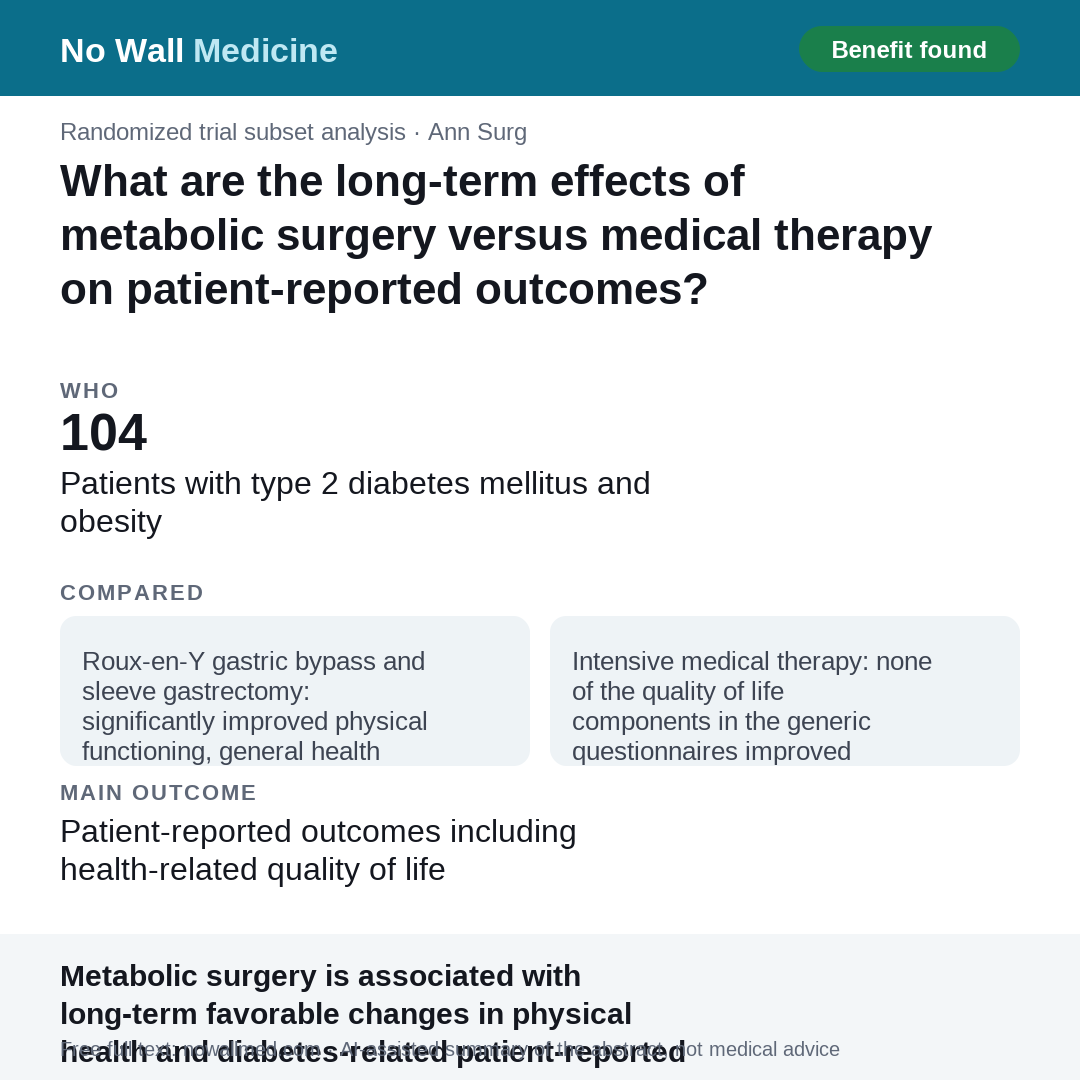
What are the long-term effects of metabolic surgery versus medical therapy on patient-reported outcomes?
Who
104
Patients with type 2 diabetes mellitus and obesity
Compared
Roux-en-Y gastric bypass and sleeve gastrectomy: significantly improved physical functioning, general health perception, energy/fatigue, and diabetes-related quality of life
Intensive medical therapy: none of the quality of life components in the generic questionnaires improved significantly
Main outcome
Patient-reported outcomes including health-related quality of life
Bottom line: Metabolic surgery is associated with long-term favorable changes in physical health and diabetes-related patient-reported outcomes compared to medical therapy.
Ann Surg · 2021-06-17Download image
Clinical question: What are the long-term effects of metabolic surgery versus medical therapy on patient-reported outcomes?
Why it matters: Robust data on patient-reported outcomes from randomized trials comparing medical and surgical treatments for type 2 diabetes are lacking.
Key points
- Researchers analyzed 104 patients from the STAMPEDE trial who received either Roux-en-Y gastric bypass, sleeve gastrectomy, or intensive medical therapy for type 2 diabetes and obesity.
- Five years after treatment, gastric bypass and sleeve gastrectomy were associated with improvements in physical functioning, general health perception, energy/fatigue, and diabetes-related quality of life compared to medical therapy.
- No significant long-term differences were observed between the surgical and medical groups regarding psychological or social aspects of quality of life.
Headline and key points written with AI from the paper’s abstract, with every number checked against it. Read the paper before relying on them.
Was this summary helpful?
Subject terms
Cite this article
Aminian A, Kashyap SR, Wolski KE, et al. Patient-reported Outcomes After Metabolic Surgery Versus Medical Therapy for Diabetes: Insights From the STAMPEDE Randomized Trial. Ann Surg. 2021. doi:10.1097/SLA.0000000000005003
Spotted a mistake? Suggest a correction