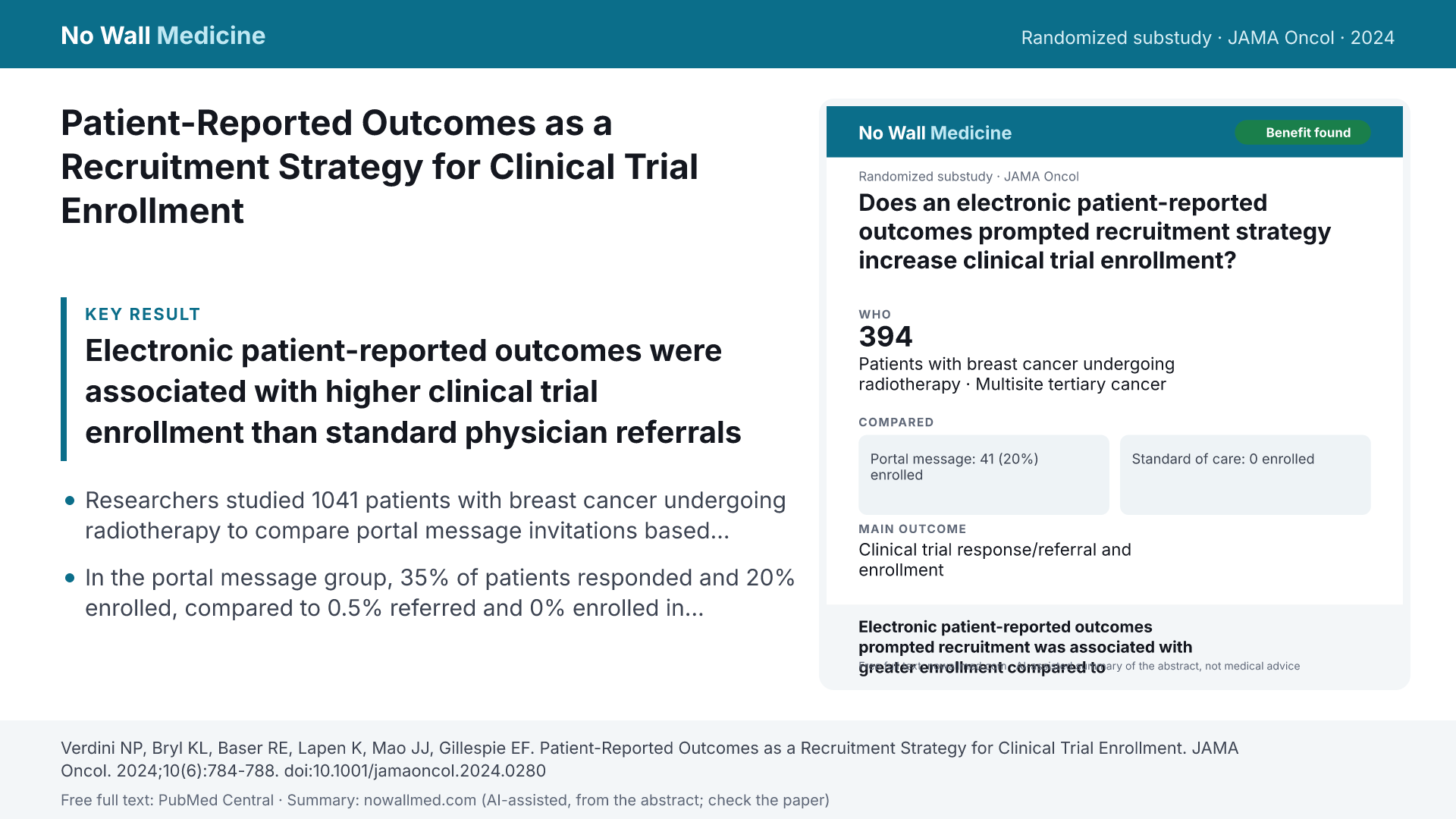
Patient-Reported Outcomes as a Recruitment Strategy for Clinical Trial Enrollment
Key result: Electronic patient-reported outcomes were associated with higher clinical trial enrollment than standard physician referrals
Key points
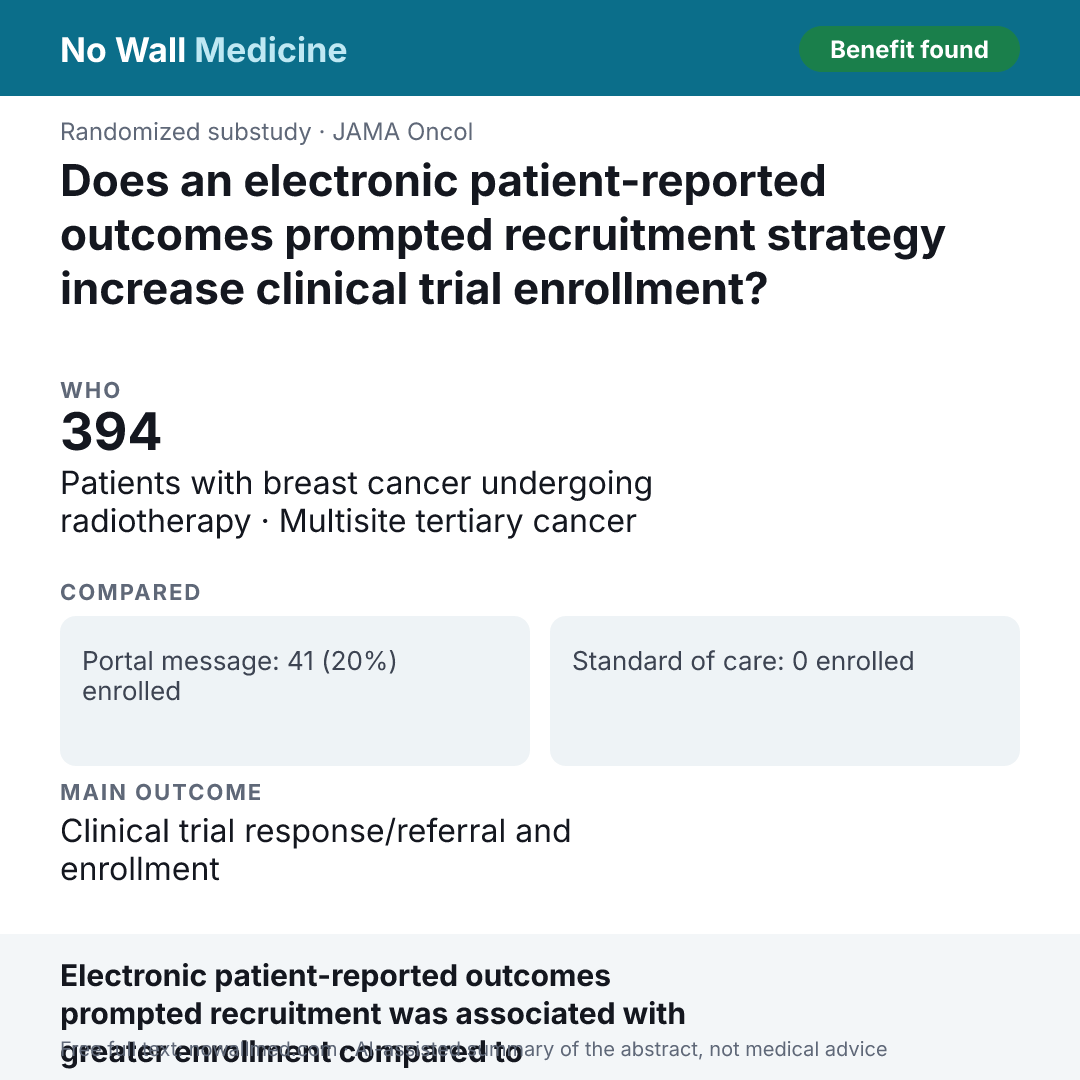
- Researchers studied 1041 patients with breast cancer undergoing radiotherapy to compare portal message invitations based on electronic patient-reported outcomes against standard physician referrals.
- In the portal message group, 35% of patients responded and 20% enrolled, compared to 0.5% referred and 0% enrolled in the standard of care group.
- While response rates favored messages from the referral service over the primary radiation oncology team at 44% versus 26%, there was no significant difference in enrollments between those two message sources.
Why it matters: Only 5% of the adult cancer population participates in clinical trials, and it is unknown if using routine electronic patient-reported outcome data can increase enrollment.
Discussion prompts
- Would these patients look like yours? Who was left out?
- Is the main outcome one that matters to patients?
- Is the difference large enough to change what you do?
Cite: Verdini NP, Bryl KL, Baser RE, Lapen K, Mao JJ, Gillespie EF. Patient-Reported Outcomes as a Recruitment Strategy for Clinical Trial Enrollment. JAMA Oncol. 2024;10(6):784-788. doi:10.1001/jamaoncol.2024.0280
Free full text: PubMed Central · Summary and visual abstract: nowallmed.com/a/patient-reported-outcomes-as-a-recruitment-strategy-for-clinical-sxtejx/ (AI-assisted from the abstract; check the paper before relying on it).