Selpercatinib was associated with better patient-reported tolerability than vandetanib or cabozantinib in thyroid cancer
Patient-Reported Tolerability of Selpercatinib Compared to Cabozantinib/Vandetanib: A Secondary Analysis of the LIBRETTO-531 Randomized-Controlled Trial in RET-Mutant Medullary Thyroid Cancer
Randomized phase 3 trialBenefit found
Is selpercatinib more tolerable than vandetanib/cabozantinib in advanced RET-mutant medullary thyroid cancer?
Who
242
Patients with advanced RET-mutant medullary thyroid cancer
Compared
8%selpercatinib
24%control
Main outcome
proportion of time on treatment with high side-effect burden
Bottom line: Selpercatinib demonstrated superior patient-reported tolerability compared to vandetanib/cabozantinib in patients with advanced RET-mutant medullary thyroid cancer.
Thyroid · 2025-08-18Download image
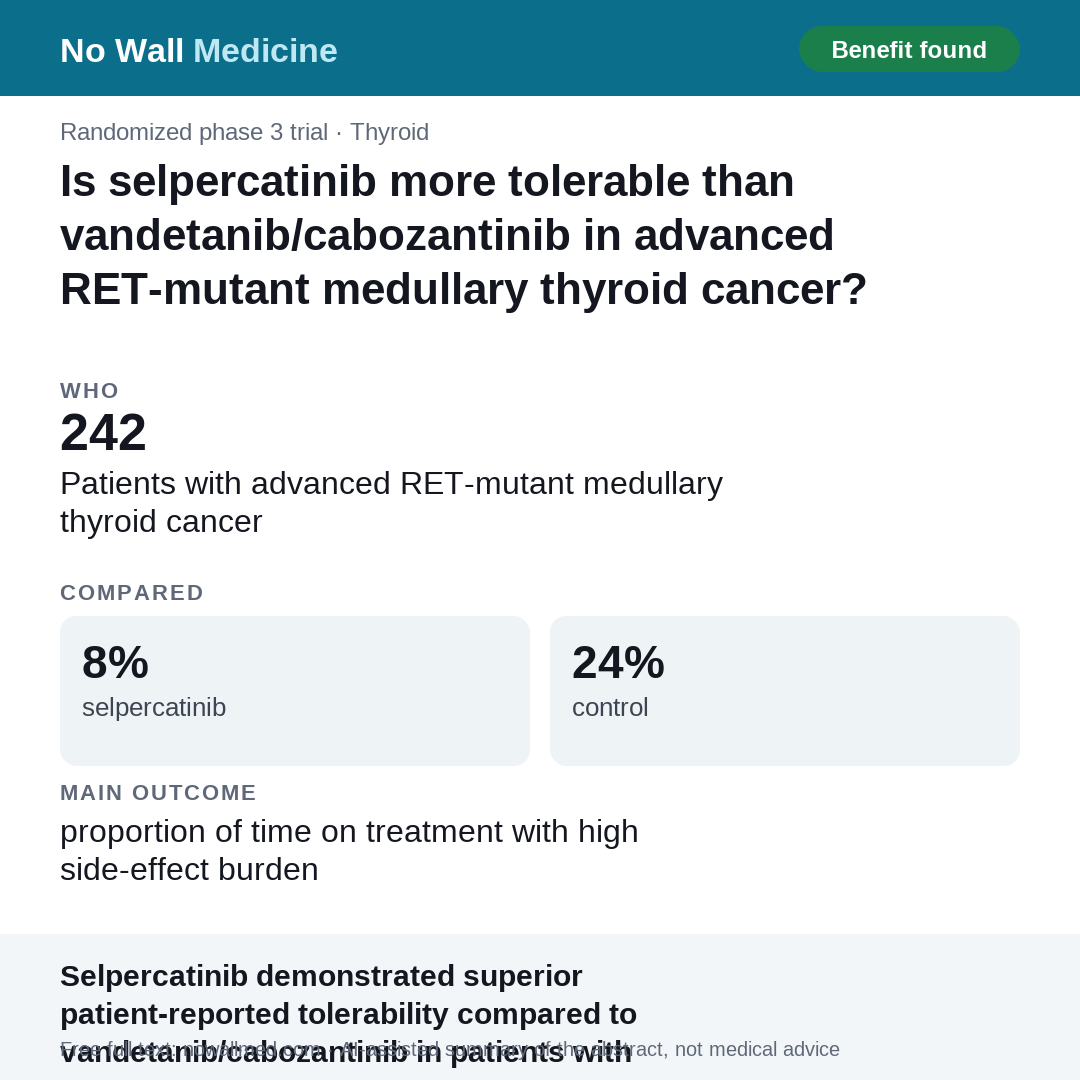
Clinical question: Is selpercatinib more tolerable than vandetanib/cabozantinib in advanced RET-mutant medullary thyroid cancer?
Why it matters: Progression-free survival may not fully capture how treatment impacts patients, necessitating robust measures of patient-reported tolerability to support clinical decision-making.
Key points
- Researchers studied 242 patients with advanced RET-mutant medullary thyroid cancer randomized to receive selpercatinib or a combination of vandetanib and cabozantinib.
- Patients on selpercatinib spent less time with a high side-effect burden compared to the control group at 8% versus 24% (p < 0.0001).
- Selpercatinib was associated with less time experiencing severe diarrhea (5% vs. 38%), fatigue (21% vs. 21%), and taste changes (3% vs. 15%).
Headline and key points written with AI from the paper’s abstract, with every number checked against it. Read the paper before relying on them.
Was this summary helpful?
Subject terms
Cite this article
Elisei R, Wirth LJ, Capdevila J, Hoff AO, Tahara M, Sherman EJ. Patient-Reported Tolerability of Selpercatinib Compared to Cabozantinib/Vandetanib: A Secondary Analysis of the LIBRETTO-531 Randomized-Controlled Trial in RET-Mutant Medullary Thyroid Cancer. Thyroid. 2025. doi:10.1177/10507256251367352
Spotted a mistake? Suggest a correction
Top studies every Monday
The week’s key trials and guidelines in your specialties, plus any topics you follow. By email, free.
Get the weekly digest