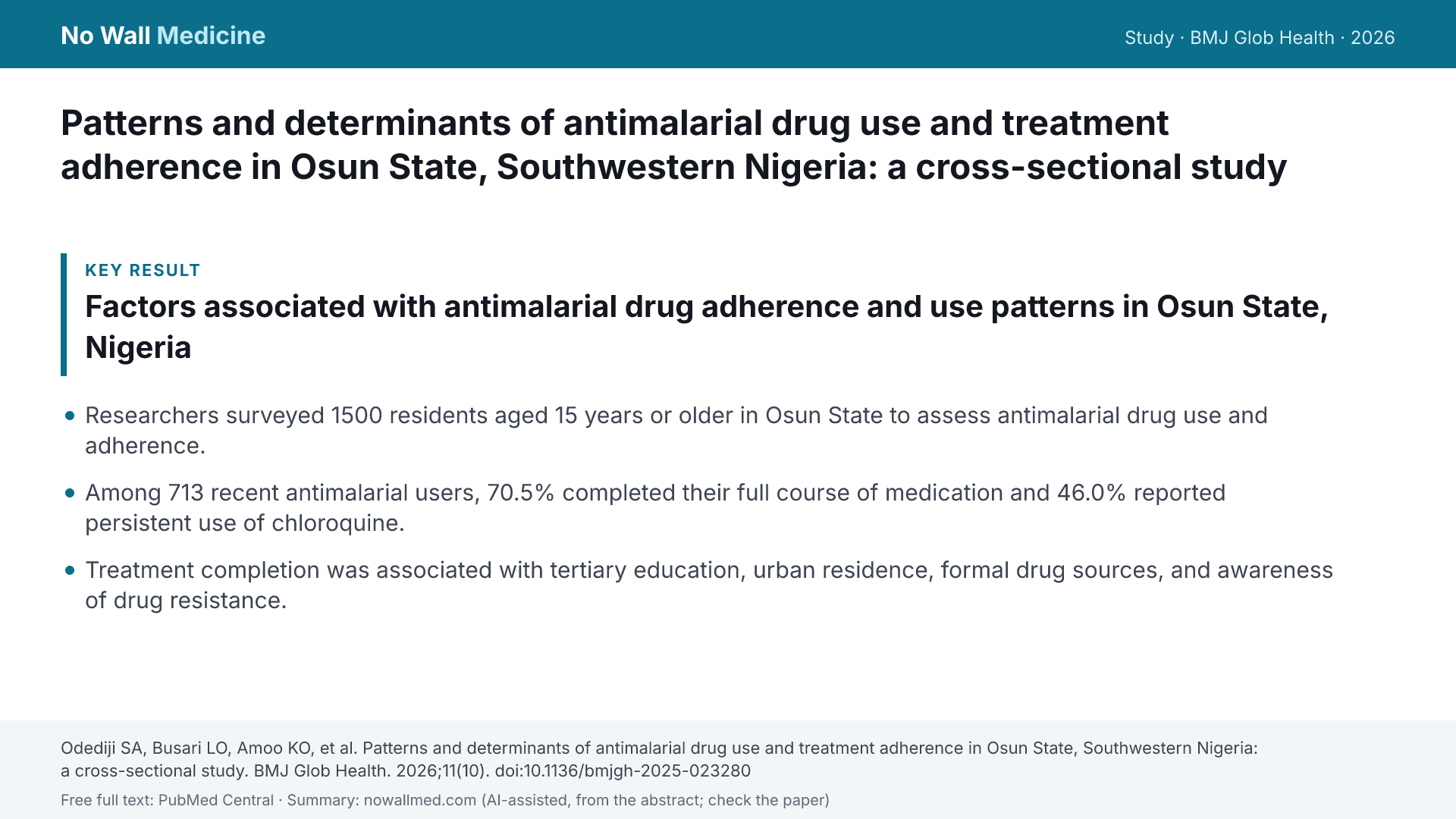
Factors associated with antimalarial drug adherence and use patterns in Osun State, Nigeria
Patterns and determinants of antimalarial drug use and treatment adherence in Osun State, Southwestern Nigeria: a cross-sectional study
Why it matters: Suboptimal adherence to artemisinin-based combination therapies and the use of discontinued drugs may accelerate malaria drug resistance.
Key points
- Researchers surveyed 1500 residents aged 15 years or older in Osun State to assess antimalarial drug use and adherence.
- Among 713 recent antimalarial users, 70.5% completed their full course of medication and 46.0% reported persistent use of chloroquine.
- Treatment completion was associated with tertiary education, urban residence, formal drug sources, and awareness of drug resistance.
Study type: Observational study: it can show a link, but not prove that one thing causes another.
Headline and key points written with AI from the paper’s abstract, with every number checked against it. Read the paper before relying on them.
Was this summary helpful?
Headline, design, result, key points, caveat and citation as plain text.
Cite this article
Odediji SA, Busari LO, Amoo KO, et al. Patterns and determinants of antimalarial drug use and treatment adherence in Osun State, Southwestern Nigeria: a cross-sectional study. BMJ Glob Health. 2026;11(10). doi:10.1136/bmjgh-2025-023280
Spotted a mistake? Suggest a correction