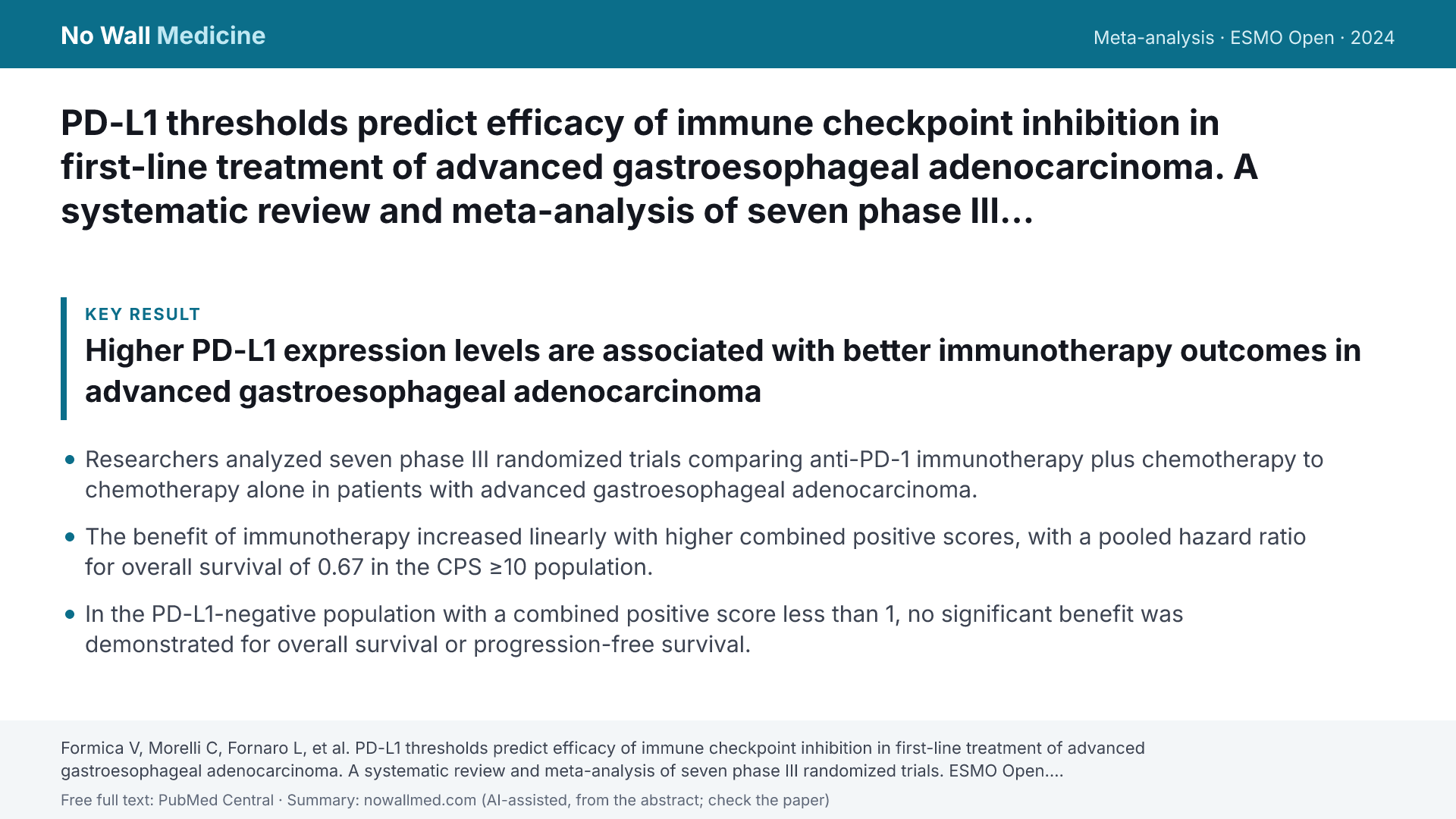
PD-L1 thresholds predict efficacy of immune checkpoint inhibition in first-line treatment of advanced gastroesophageal adenocarcinoma. A systematic review and meta-analysis of seven phase III randomized trials
Key result: Higher PD-L1 expression levels are associated with better immunotherapy outcomes in advanced gastroesophageal adenocarcinoma
Key points
- Researchers analyzed seven phase III randomized trials comparing anti-PD-1 immunotherapy plus chemotherapy to chemotherapy alone in patients with advanced gastroesophageal adenocarcinoma.
- The benefit of immunotherapy increased linearly with higher combined positive scores, with a pooled hazard ratio for overall survival of 0.67 in the CPS ≥10 population.
- In the PD-L1-negative population with a combined positive score less than 1, no significant benefit was demonstrated for overall survival or progression-free survival.
Why it matters: The optimal PD-L1 expression cut-off to predict the effectiveness of immunotherapy in gastroesophageal adenocarcinoma is currently debated.
Discussion prompts
- Would these patients look like yours? Who was left out?
- Is the main outcome one that matters to patients?
- Is the difference large enough to change what you do?
Cite: Formica V, Morelli C, Fornaro L, et al. PD-L1 thresholds predict efficacy of immune checkpoint inhibition in first-line treatment of advanced gastroesophageal adenocarcinoma. A systematic review and meta-analysis of seven phase III randomized trials. ESMO Open. 2024;9(11):103967. doi:10.1016/j.esmoop.2024.103967
Free full text: PubMed Central · Summary and visual abstract: nowallmed.com/a/pd-l1-thresholds-predict-efficacy-of-immune-checkpoint-inhibition-in-mxk22s/ (AI-assisted from the abstract; check the paper before relying on it).