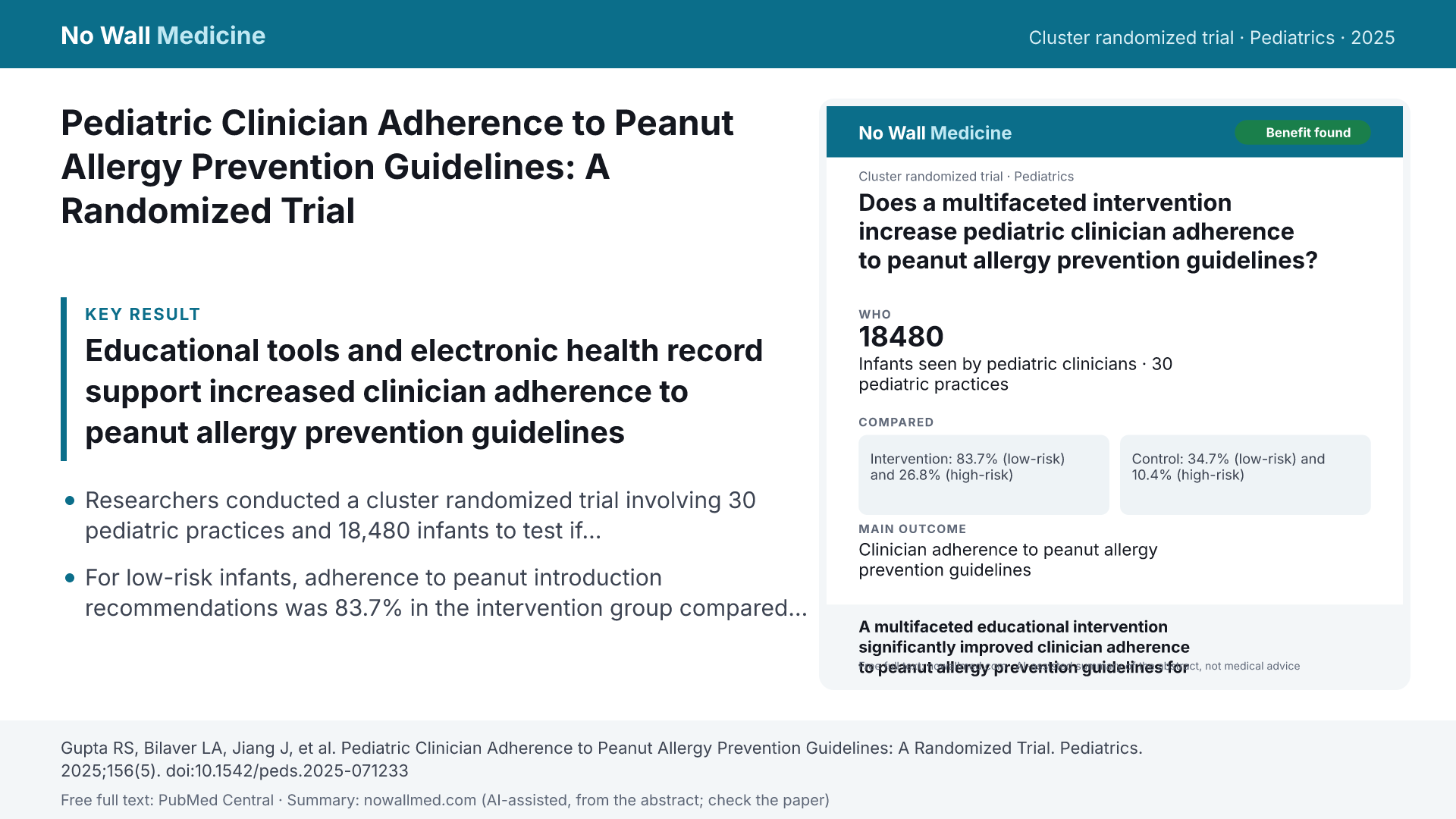
Educational tools and electronic health record support increased clinician adherence to peanut allergy prevention guidelines
Pediatric Clinician Adherence to Peanut Allergy Prevention Guidelines: A Randomized Trial
Cluster randomized trialBenefit found
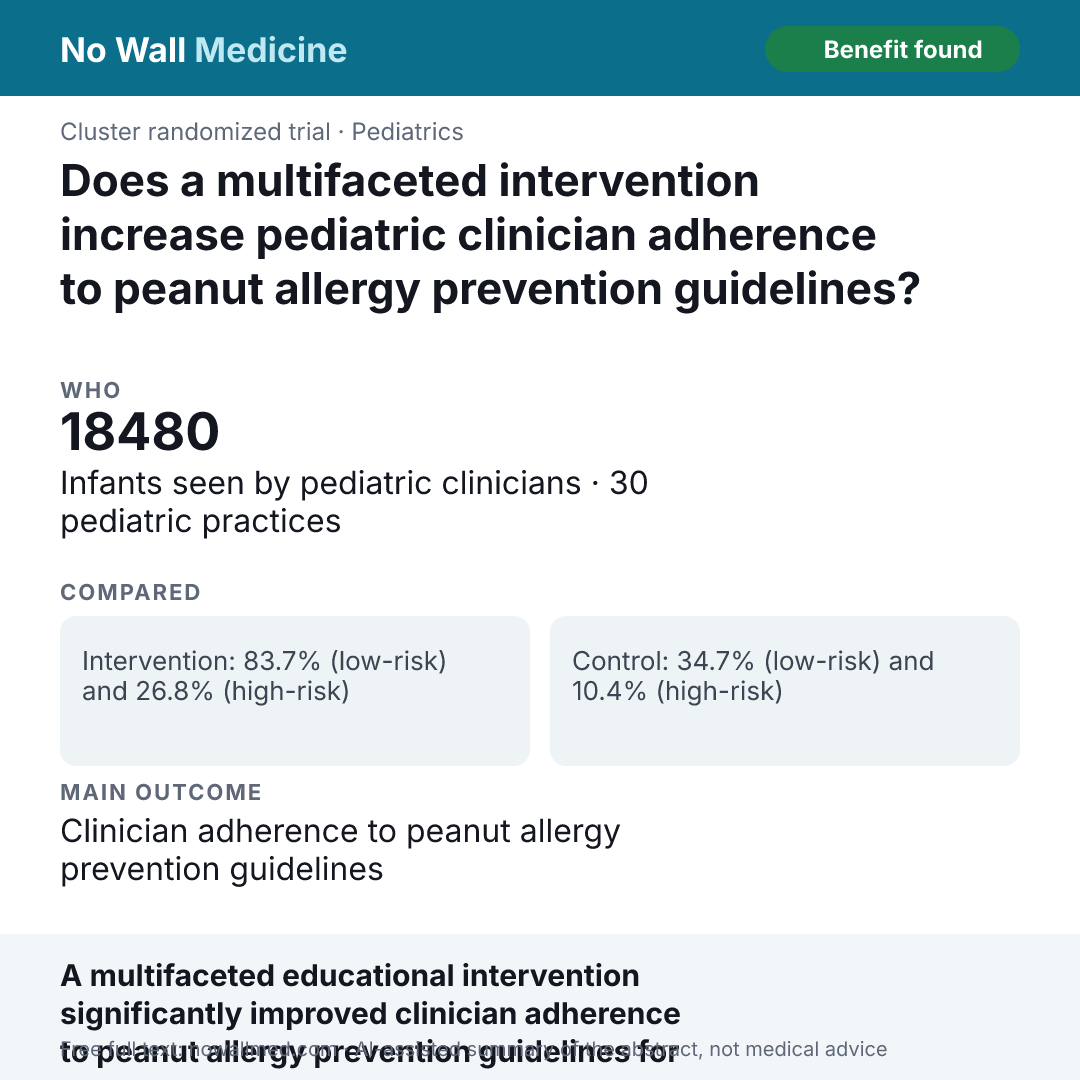
Does a multifaceted intervention increase pediatric clinician adherence to peanut allergy prevention guidelines?
Who
18480
Infants seen by pediatric clinicians · 30 pediatric practices
Compared
Intervention: 83.7% (low-risk) and 26.8% (high-risk)
Control: 34.7% (low-risk) and 10.4% (high-risk)
Main outcome
Clinician adherence to peanut allergy prevention guidelines
Result: odds ratio 14.6 (95% CI, 7.0-30.5) for low-risk infants
Bottom line: A multifaceted educational intervention significantly improved clinician adherence to peanut allergy prevention guidelines for low and high-risk infants.
Pediatrics · 2025-10-06 · Save PNG
Why it matters: Clinician adherence to the 2017 US Addendum Guidelines for the Prevention of Peanut Allergy has been low despite recommendations for early peanut introduction.
Headline and visual abstract written with AI from the paper’s abstract, with every number checked against it. Read the paper before relying on them.
Was this summary helpful?
Subject terms
Headline, design, result, bottom line, caveat and citation as plain text.
Cite this article
Gupta RS, Bilaver LA, Jiang J, et al. Pediatric Clinician Adherence to Peanut Allergy Prevention Guidelines: A Randomized Trial. Pediatrics. 2025;156(5). doi:10.1542/peds.2025-071233
Spotted a mistake? Suggest a correction