Perceived physical health was linked to psychotherapy outcomes in older adults with depression
Perceived Physical Health and Cognitive Behavioral Therapy vs Supportive Psychotherapy Outcomes in Adults With Late-Life Depression: A Secondary Analysis of a Randomized Clinical Trial
Post hoc secondary analysis of a randomized clinical trialMixed results
How do physical diseases and perceived physical health affect psychotherapy outcomes in late-life depression?
Who
229
Adults 60 years or older with moderate to severe depression · 7 psychiatric-psychotherapeutic outpatient trial sites in Germany
Compared
Late-life depression-specific cognitive behavioral therapy
Supportive unspecific intervention
Main outcome
Change in the 30-item Geriatric Depression Scale score
Result: EMMD -6.48 (95% CI -11.31 to -1.64) for low PPH in SUI
Bottom line: Perceived physical health influences psychotherapy outcomes, with different treatments benefiting patients based on their baseline perceived health.
JAMA Netw Open · 2024-04-01Download image
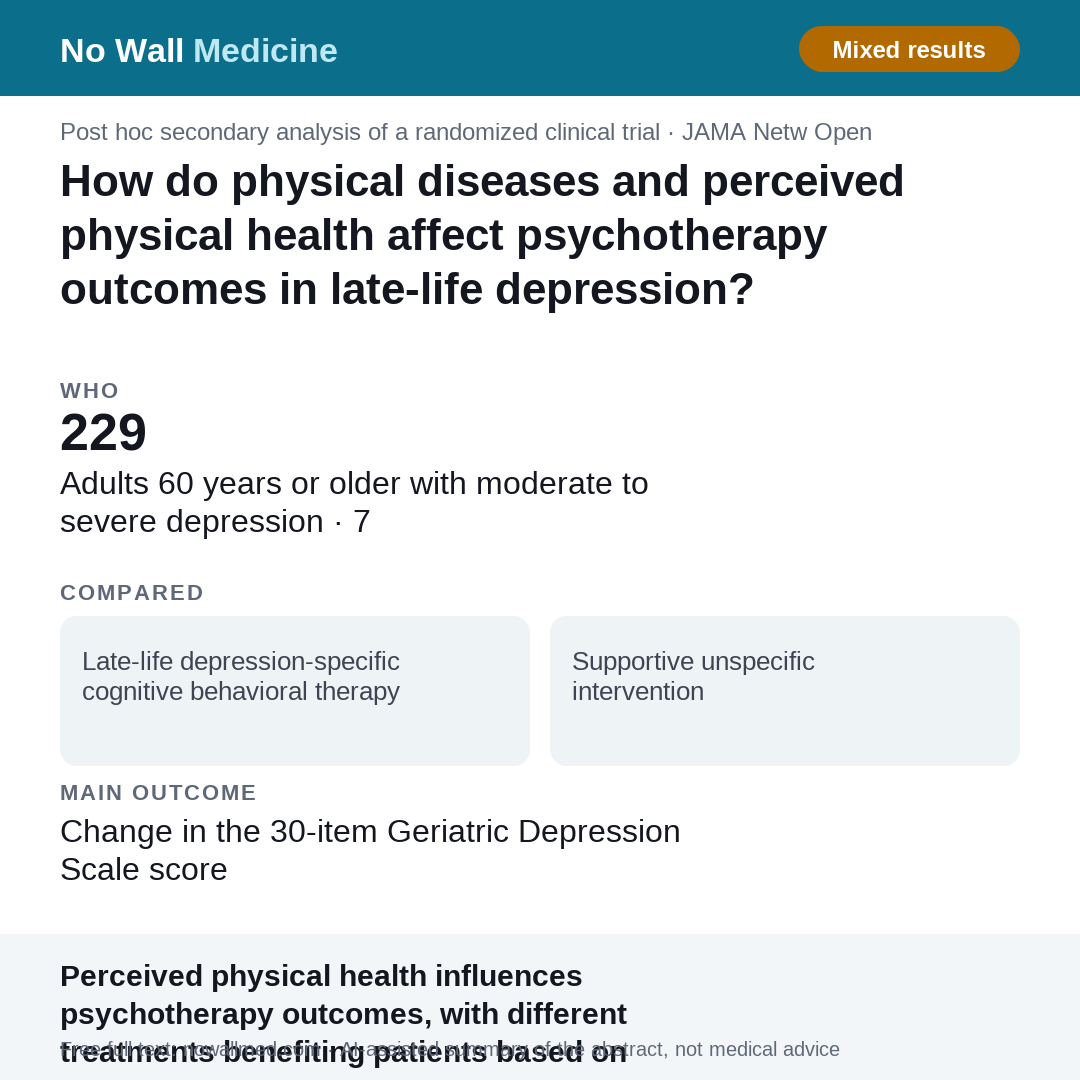
Clinical question: How do physical diseases and perceived physical health affect psychotherapy outcomes in late-life depression?
Why it matters: It is not well understood how physical diseases and the subjective perception of physical health influence treatment outcomes in late-life depression.
Key points
- Researchers analyzed 229 adults aged 60 years or older with moderate to severe depression who received either cognitive behavioral therapy or supportive psychotherapy.
- Higher perceived physical health was associated with a higher likelihood of response (OR, 1.04) and remission (OR, 1.04) at the end of treatment.
- Low perceived physical health was associated with larger reductions in depression scores in the supportive psychotherapy group compared to the cognitive behavioral therapy group.
Headline and key points written with AI from the paper’s abstract, with every number checked against it. Read the paper before relying on them.
Was this summary helpful?
Subject terms
Cite this article
Dafsari FS, Bewernick B, Böhringer S, Domschke K, Elsaesser M, Löbner M. Perceived Physical Health and Cognitive Behavioral Therapy vs Supportive Psychotherapy Outcomes in Adults With Late-Life Depression: A Secondary Analysis of a Randomized Clinical Trial. JAMA Netw Open. 2024. doi:10.1001/jamanetworkopen.2024.5841
Spotted a mistake? Suggest a correction
Top studies every Monday
The week’s key trials and guidelines in your specialties, plus any topics you follow. By email, free.
Get the weekly digest