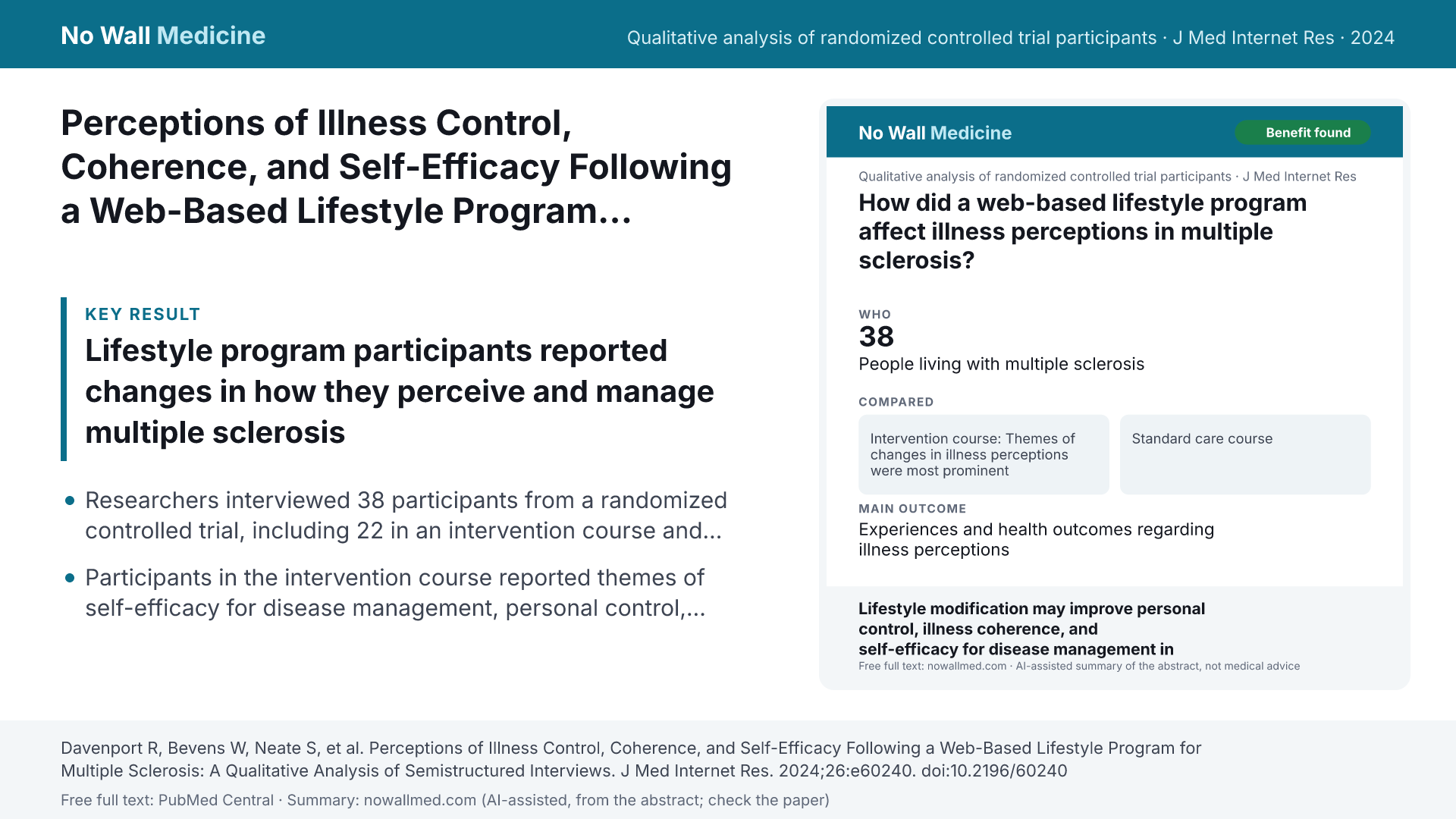
Perceptions of Illness Control, Coherence, and Self-Efficacy Following a Web-Based Lifestyle Program for Multiple Sclerosis: A Qualitative Analysis of Semistructured Interviews
Key result: Lifestyle program participants reported changes in how they perceive and manage multiple sclerosis
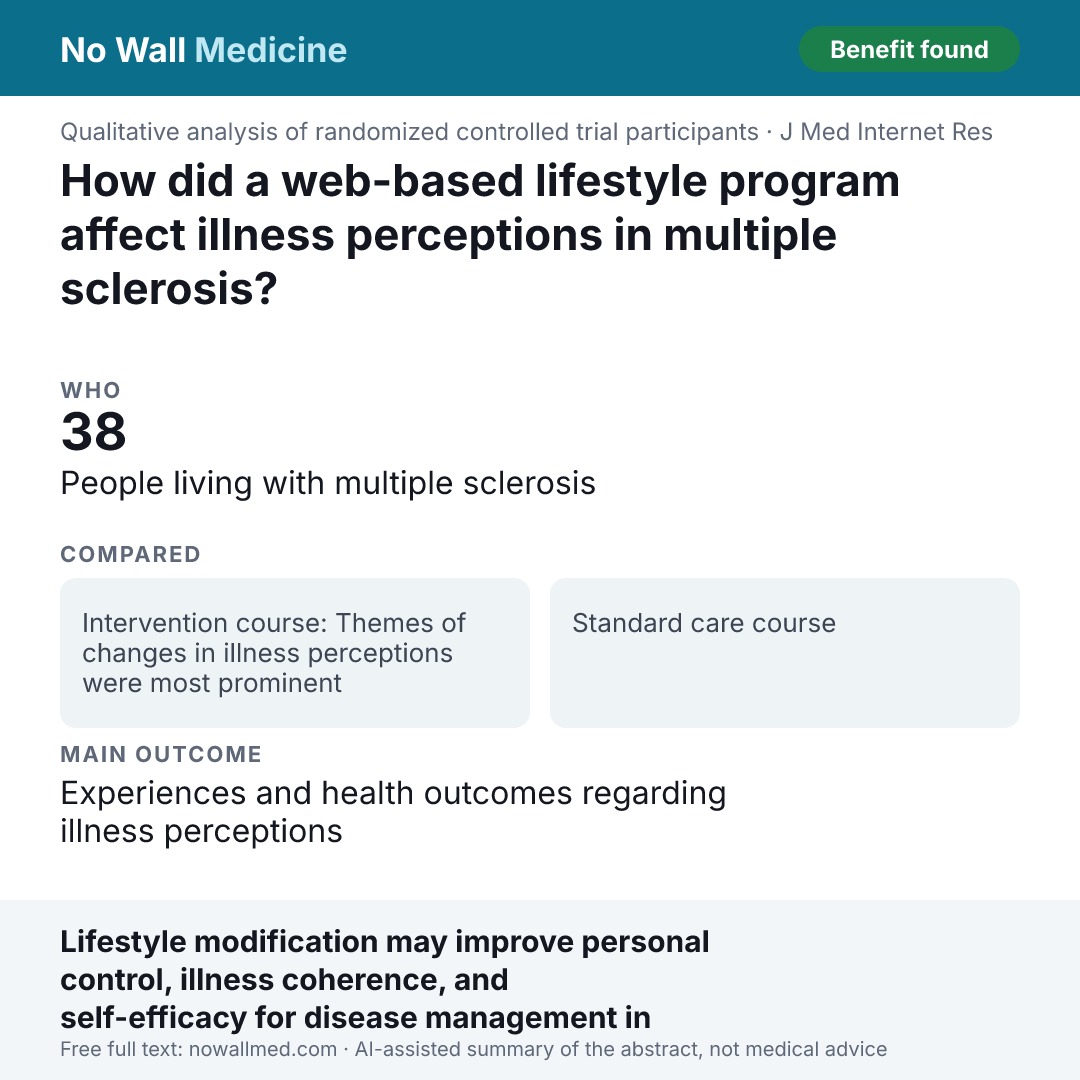
Qualitative analysis of randomized controlled trial participantsBenefit found
How did a web-based lifestyle program affect illness perceptions in multiple sclerosis?
Who
38
People living with multiple sclerosis
Compared
Intervention course: Themes of changes in illness perceptions were most prominent
Standard care course
Main outcome
Experiences and health outcomes regarding illness perceptions
Bottom line: Lifestyle modification may improve personal control, illness coherence, and self-efficacy for disease management in multiple sclerosis.
J Med Internet Res · 2024-11-29 · Save PNG
Key points
- Researchers interviewed 38 participants from a randomized controlled trial, including 22 in an intervention course and 16 in a standard care course.
- Participants in the intervention course reported themes of self-efficacy for disease management, personal control, and illness coherence.
- The qualitative findings suggested that lifestyle modification may be a valuable addition to therapies administered by clinicians.
Discussion prompts
- Would these patients look like yours? Who was left out?
- Is the main outcome one that matters to patients?
- Is the difference large enough to change what you do?
Cite: Davenport R, Bevens W, Neate S, et al. Perceptions of Illness Control, Coherence, and Self-Efficacy Following a Web-Based Lifestyle Program for Multiple Sclerosis: A Qualitative Analysis of Semistructured Interviews. J Med Internet Res. 2024;26:e60240. doi:10.2196/60240
Free full text: PubMed Central · Summary and visual abstract: nowallmed.com/a/perceptions-of-illness-control-coherence-and-self-efficacy-following-2v0t43/ (AI-assisted from the abstract; check the paper before relying on it).