Injecting dexamethasone near nerves lasts longer than intravenous administration for shoulder surgery pain relief
Perineural versus intravenous dexamethasone for single-shot interscalene block in arthroscopic shoulder surgery: a systematic review and meta-analysis of studies published through May 2021
Systematic review and meta-analysisMixed results
Is perineural or intravenous dexamethasone better for single-shot interscalene block in shoulder surgery?
Who
846
Patients undergoing arthroscopic shoulder surgery
Compared
Perineural dexamethasone
Intravenous dexamethasone
Main outcome
Analgesia duration, sensory block duration, and motor block duration
Result: weighted mean difference 1.699 h (95% CI 0.014 to 3.384)
Bottom line: Perineural dexamethasone modestly prolongs analgesia duration, but clinical importance remains uncertain due to small pain score reductions.
Limitation: Reductions in postoperative pain scores are small and unlikely to reach clinically important thresholds.
Perioper Med · 2025-11-18Download image
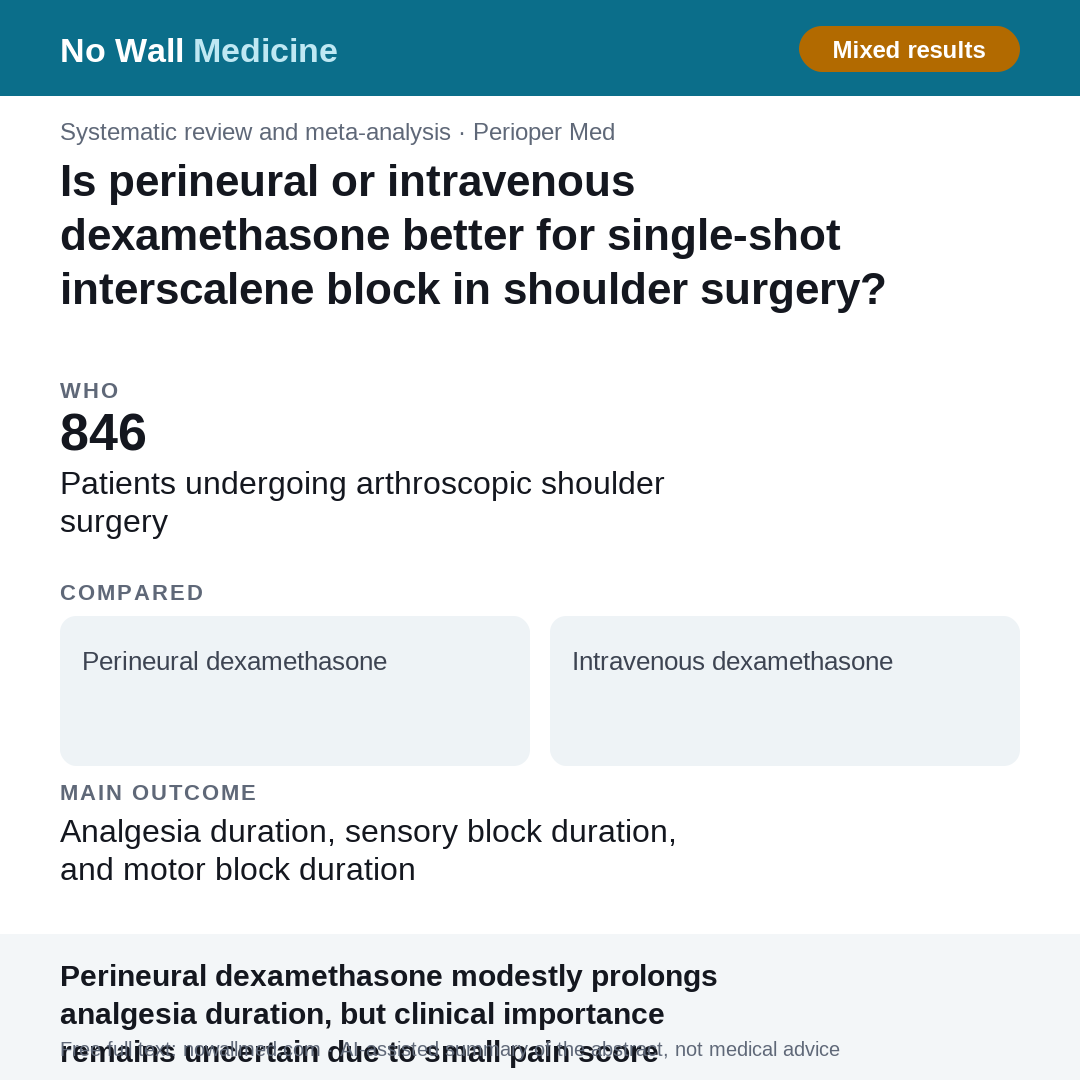
Clinical question: Is perineural or intravenous dexamethasone better for single-shot interscalene block in shoulder surgery?
Why it matters: The optimal route for administering dexamethasone to extend the effects of a single-shot interscalene brachial plexus block remains uncertain.
Key points
- Researchers analyzed seven studies involving 846 patients undergoing arthroscopic shoulder surgery to compare dexamethasone given near nerves versus through an intravenous line.
- Perineural dexamethasone was associated with a longer duration of pain relief by a weighted mean difference of 1.699 h (95% CI: 0.014-3.384; p = 0.048).
- Perineural administration was associated with lower pain scores at 12 h (WMD: -0.652; 95% CI: -1.129 to -0.176; p = 0.007), but no differences were found in motor or sensory block durations.
Limitation the authors note: The associated reductions in postoperative pain scores are small and unlikely to reach commonly cited minimal clinically important difference thresholds.
Headline and key points written with AI from the paper’s abstract, with every number checked against it. Read the paper before relying on them.
Was this summary helpful?
Cite this article
Wu R, Chen Z, Chen G, Sun J, Liu W. Perineural versus intravenous dexamethasone for single-shot interscalene block in arthroscopic shoulder surgery: a systematic review and meta-analysis of studies published through May 2021. Perioper Med. 2025. doi:10.1186/s13741-025-00617-6
Spotted a mistake? Suggest a correction
Top studies every Monday
The week’s key trials and guidelines in your specialties, plus any topics you follow. By email, free.
Get the weekly digest