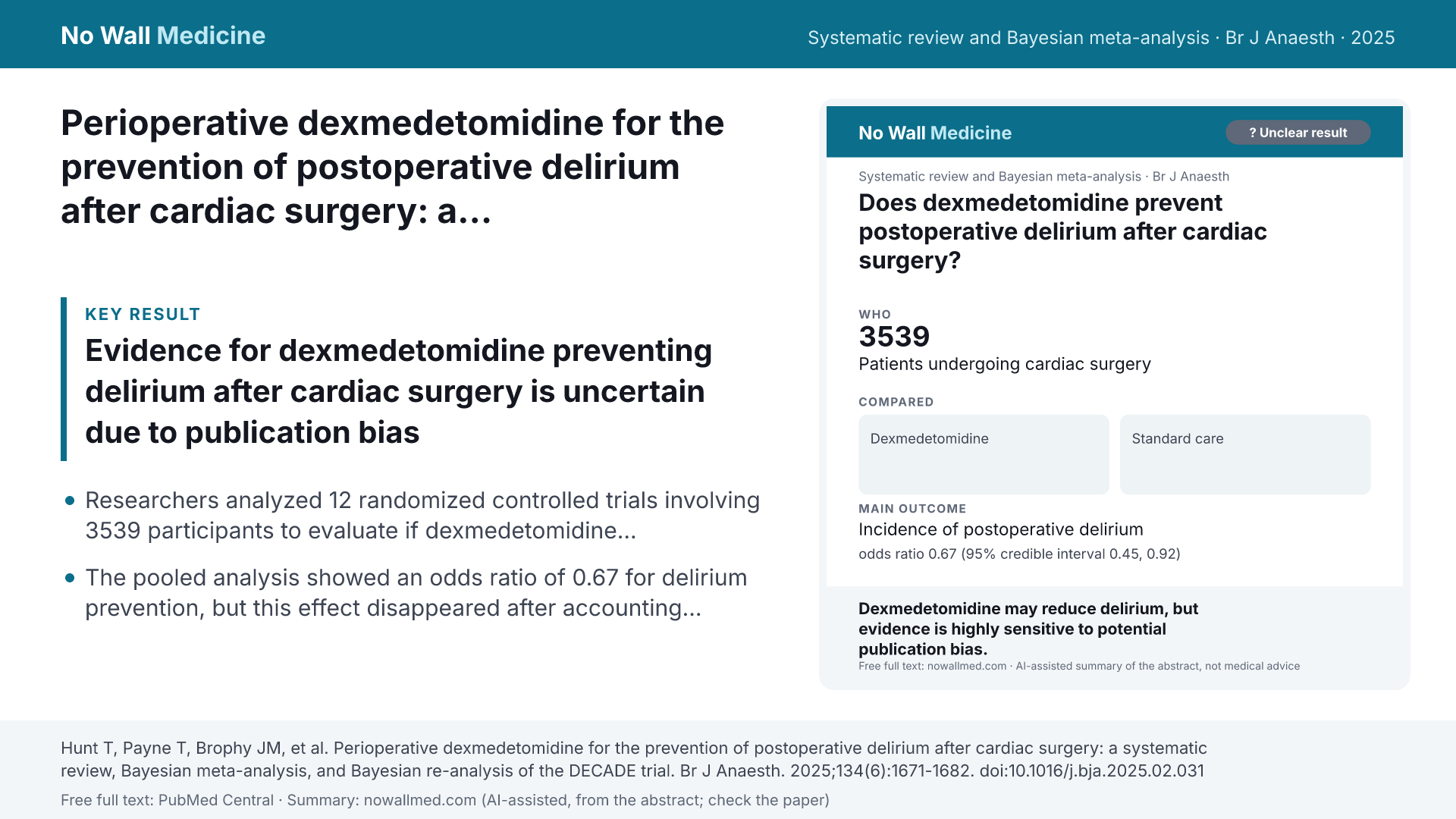
Evidence for dexmedetomidine preventing delirium after cardiac surgery is uncertain due to publication bias
Perioperative dexmedetomidine for the prevention of postoperative delirium after cardiac surgery: a systematic review, Bayesian meta-analysis, and Bayesian re-analysis of the DECADE trial
Systematic review and Bayesian meta-analysisUnclear result
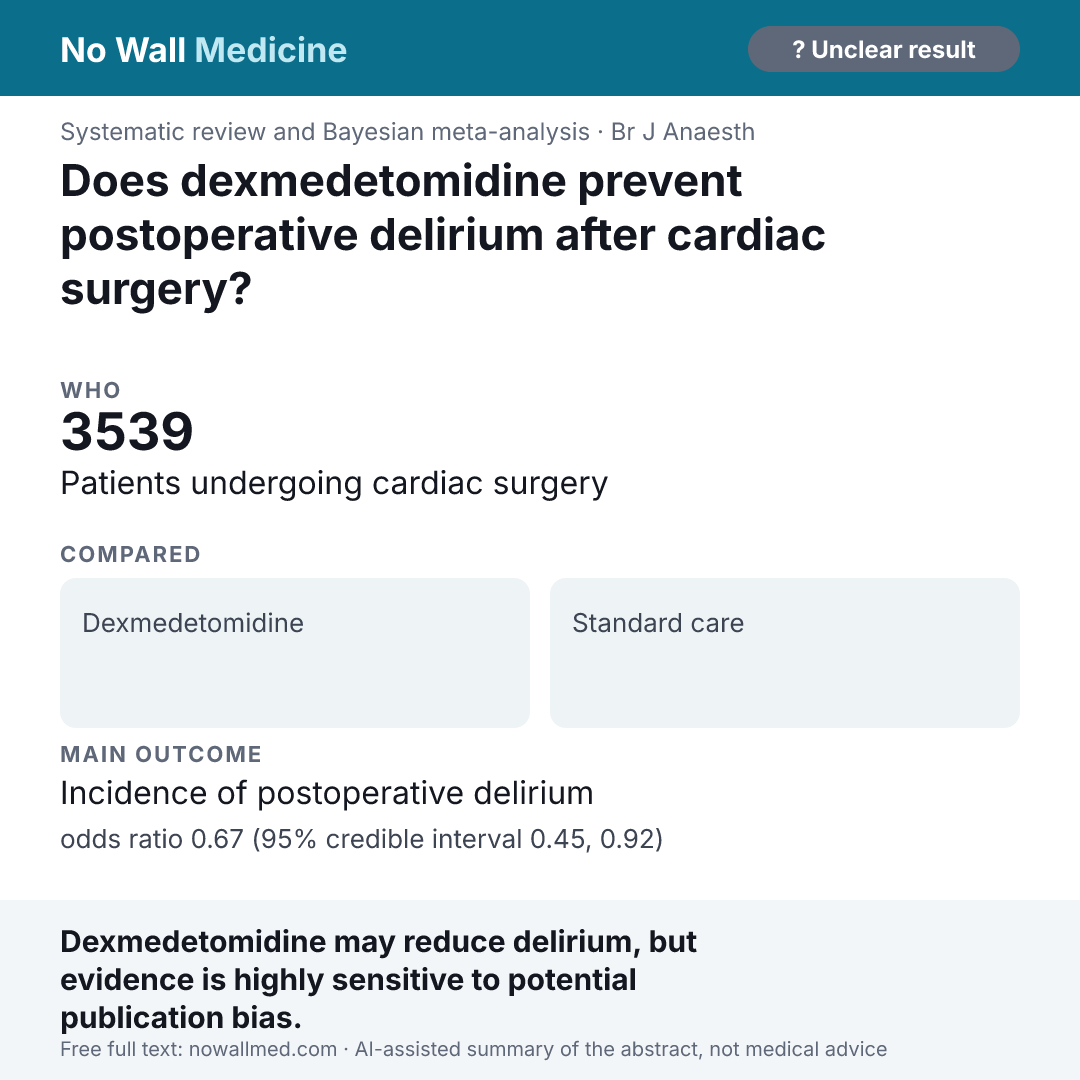
Does dexmedetomidine prevent postoperative delirium after cardiac surgery?
Who
3539
Patients undergoing cardiac surgery
Compared
Dexmedetomidine
Standard care
Main outcome
Incidence of postoperative delirium
Result: odds ratio 0.67 (95% credible interval 0.45, 0.92)
Bottom line: Dexmedetomidine may reduce delirium, but evidence is highly sensitive to potential publication bias.
Limitation: Results are highly sensitive to the possibility of publication bias.
Br J Anaesth · 2025-04-30 · Save PNG
Clinical question: Does dexmedetomidine prevent postoperative delirium after cardiac surgery?
Why it matters: The largest study on dexmedetomidine for delirium prevention suggested an increased risk, creating conflicting evidence regarding its effectiveness after cardiac surgery.
Key points
- Researchers analyzed 12 randomized controlled trials involving 3539 participants to evaluate if dexmedetomidine prevents postoperative delirium after heart surgery.
- The pooled analysis showed an odds ratio of 0.67 for delirium prevention, but this effect disappeared after accounting for publication bias with an odds ratio of 1.15.
- A Bayesian re-analysis of the DECADE trial showed the probability of a clinically important benefit was only 0.1% under a vague prior.
Limitation the authors note: The true benefit of dexmedetomidine cannot be definitively characterized because results are highly sensitive to the possibility of publication bias.
Headline and key points written with AI from the paper’s abstract, with every number checked against it. Read the paper before relying on them.
Was this summary helpful?
Subject terms
Headline, design, result, key points, caveat and citation as plain text.
Cite this article
Hunt T, Payne T, Brophy JM, et al. Perioperative dexmedetomidine for the prevention of postoperative delirium after cardiac surgery: a systematic review, Bayesian meta-analysis, and Bayesian re-analysis of the DECADE trial. Br J Anaesth. 2025;134(6):1671-1682. doi:10.1016/j.bja.2025.02.031
Spotted a mistake? Suggest a correction