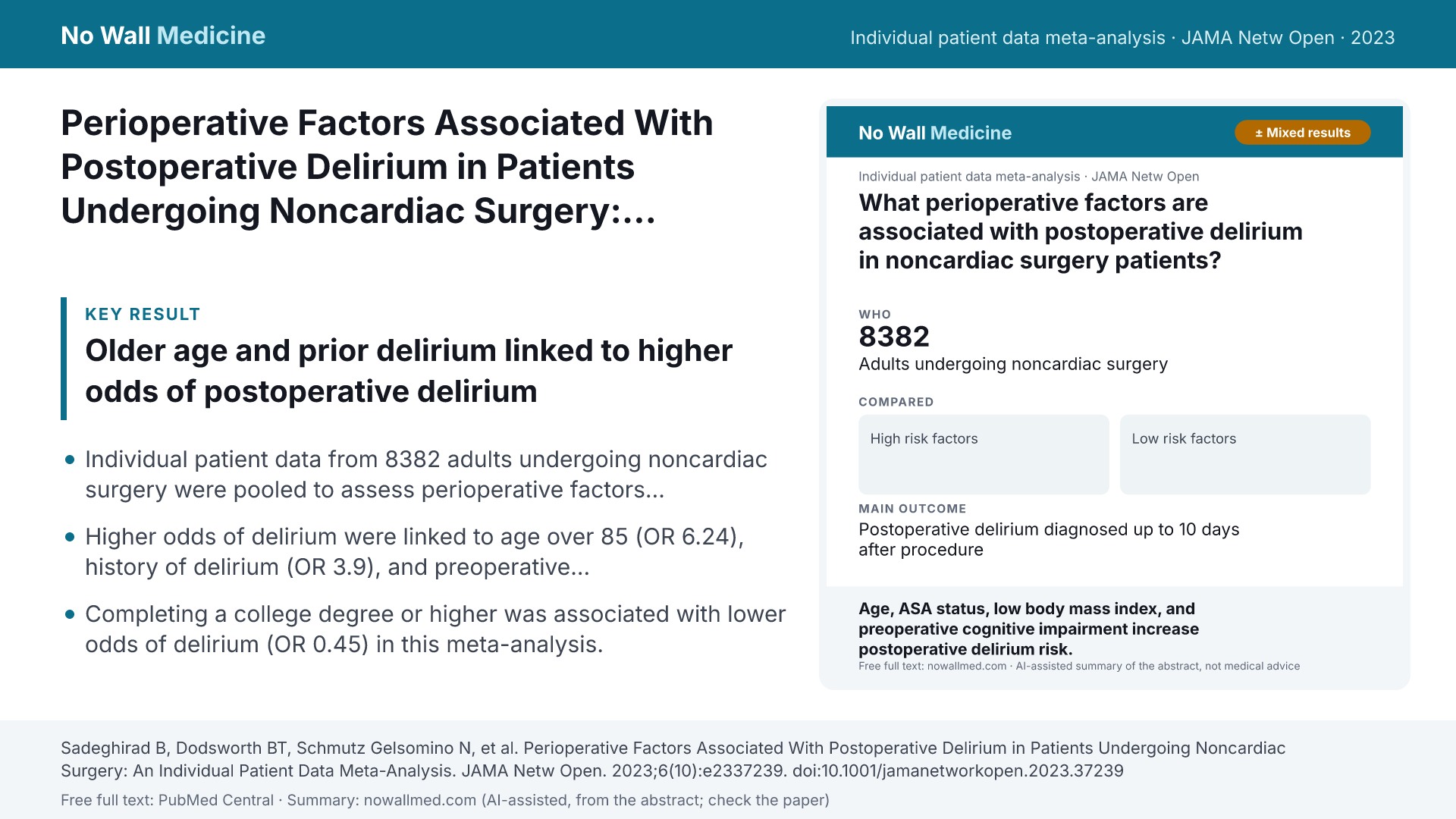
Perioperative Factors Associated With Postoperative Delirium in Patients Undergoing Noncardiac Surgery: An Individual Patient Data Meta-Analysis
Key result: Older age and prior delirium linked to higher odds of postoperative delirium
Key points
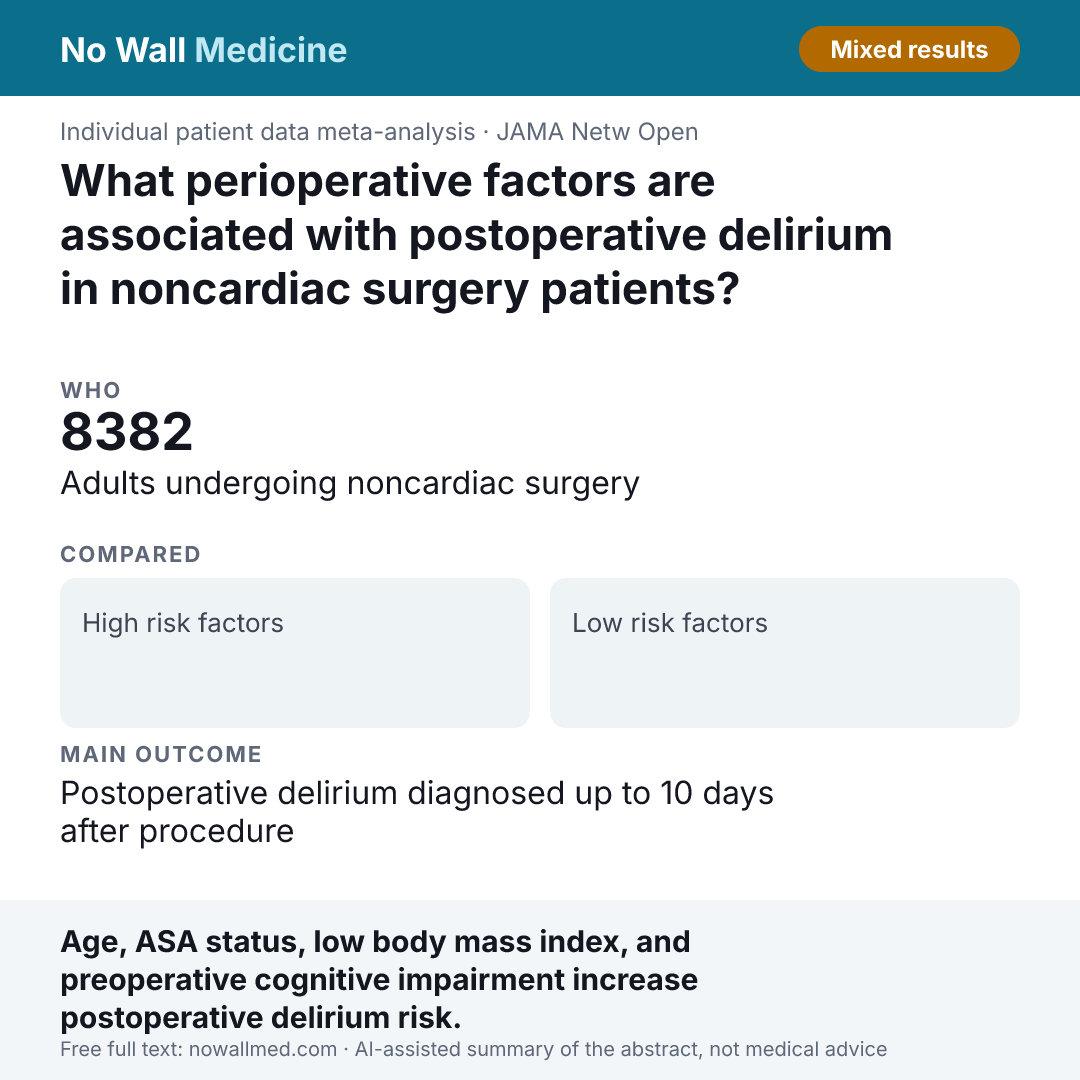
- Individual patient data from 8382 adults undergoing noncardiac surgery were pooled to assess perioperative factors associated with delirium.
- Higher odds of delirium were linked to age over 85 (OR 6.24), history of delirium (OR 3.9), and preoperative cognitive impairment (OR 3.99).
- Completing a college degree or higher was associated with lower odds of delirium (OR 0.45) in this meta-analysis.
Why it matters: Applies to adults undergoing noncardiac surgery; helps identify patients at high risk to inform them and caregivers about expected delirium risk.
Discussion prompts
- Would these patients look like yours? Who was left out?
- Is the main outcome one that matters to patients?
- Is the difference large enough to change what you do?
Cite: Sadeghirad B, Dodsworth BT, Schmutz Gelsomino N, et al. Perioperative Factors Associated With Postoperative Delirium in Patients Undergoing Noncardiac Surgery: An Individual Patient Data Meta-Analysis. JAMA Netw Open. 2023;6(10):e2337239. doi:10.1001/jamanetworkopen.2023.37239
Free full text: PubMed Central · Summary and visual abstract: nowallmed.com/a/perioperative-factors-associated-with-postoperative-delirium-in-1bgt29l/ (AI-assisted from the abstract; check the paper before relying on it).