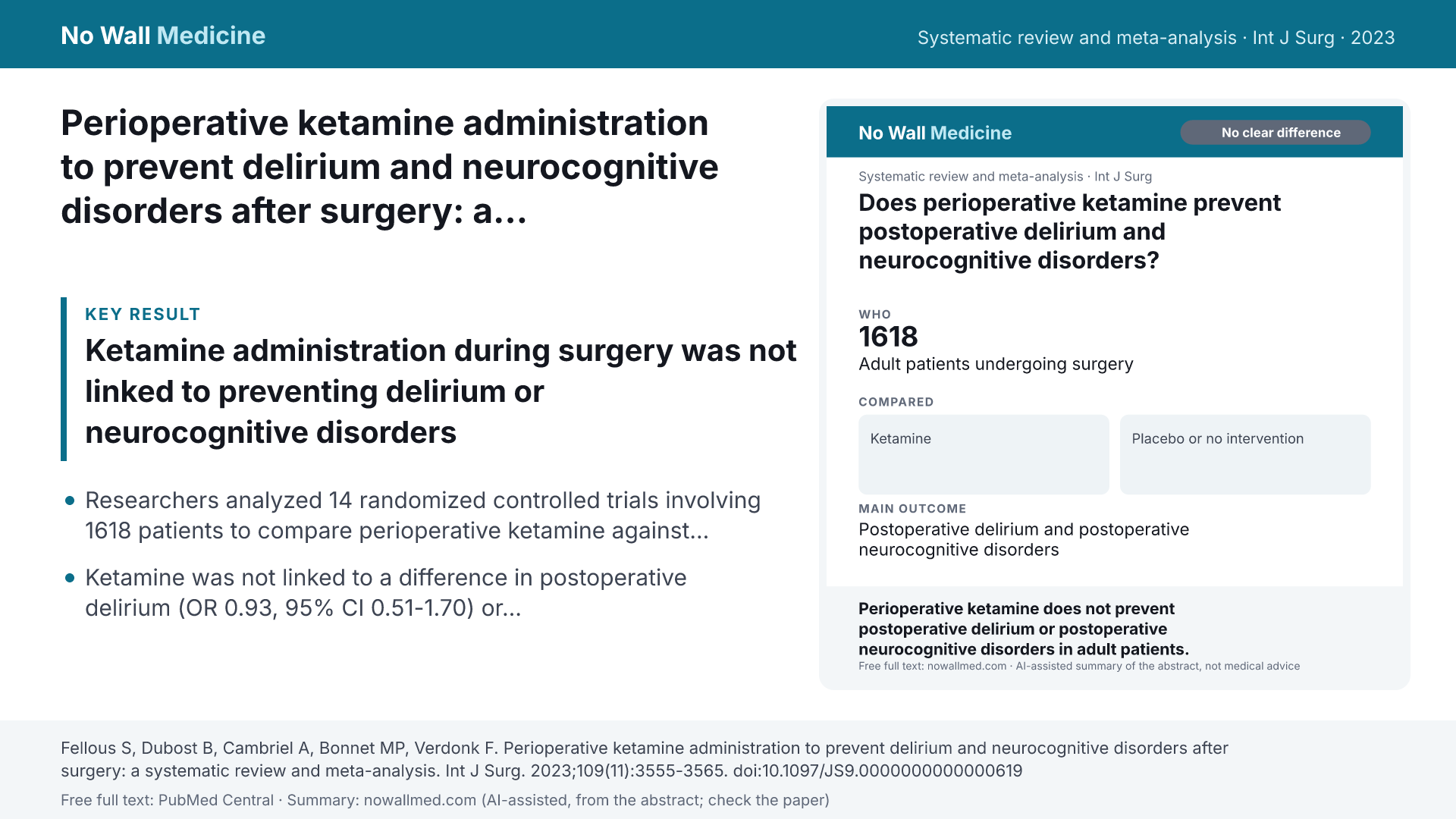
Ketamine administration during surgery was not linked to preventing delirium or neurocognitive disorders
Perioperative ketamine administration to prevent delirium and neurocognitive disorders after surgery: a systematic review and meta-analysis
Systematic review and meta-analysisNo clear difference
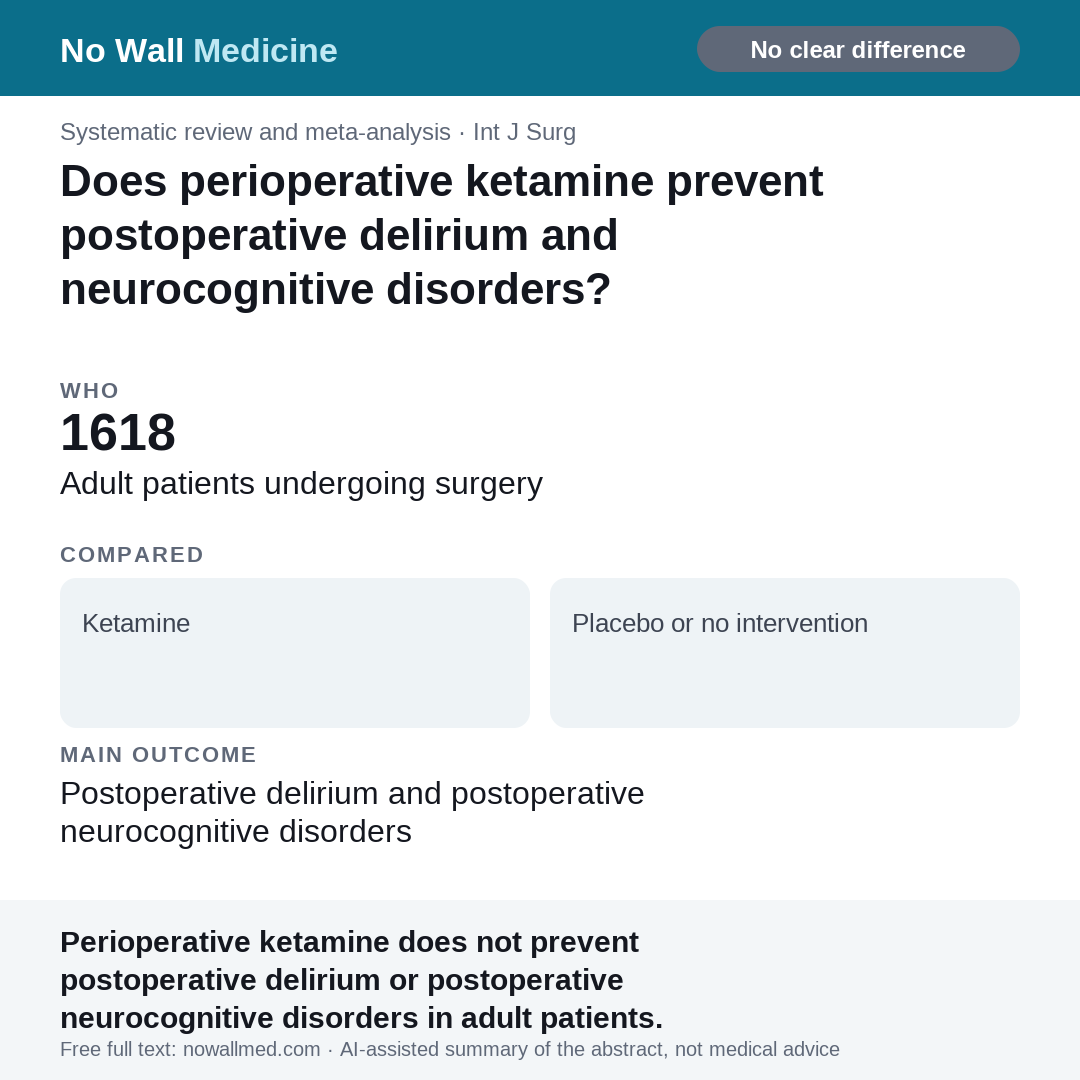
Does perioperative ketamine prevent postoperative delirium and neurocognitive disorders?
Who
1618
Adult patients undergoing surgery
Compared
Ketamine
Placebo or no intervention
Main outcome
Postoperative delirium and postoperative neurocognitive disorders
Result: odds ratio 0.93 (95% CI 0.51-1.70) for delirium; OR 0.52 (95% CI 0.15-1.80) for neurocognitive disorders
Bottom line: Perioperative ketamine does not prevent postoperative delirium or postoperative neurocognitive disorders in adult patients.
Limitation: Significant study heterogeneity and low-moderate risk of bias in half of the trials.
Int J Surg · 2023-11-01Download image
Clinical question: Does perioperative ketamine prevent postoperative delirium and neurocognitive disorders?
Why it matters: The preventive effect of giving ketamine around the time of surgery on postoperative delirium and neurocognitive disorders is currently debated.
Key points
- Researchers analyzed 14 randomized controlled trials involving 1618 patients to compare perioperative ketamine against a placebo or no intervention.
- Ketamine was not linked to a difference in postoperative delirium (OR 0.93, 95% CI 0.51-1.70) or postoperative neurocognitive disorders (OR 0.52, 95% CI 0.15-1.80).
- No significant differences were found regarding psychological adverse effects, pain levels, hospital length of stay, or mortality.
Limitation the authors note: Significant study heterogeneity suggests that standardized measures for neurocognitive disorder assessment and a focus on high-risk patients are needed for future studies.
Headline and key points written with AI from the paper’s abstract, with every number checked against it. Read the paper before relying on them.
Was this summary helpful?
Subject terms
Cite this article
Fellous S, Dubost B, Cambriel A, Bonnet MP, Verdonk F. Perioperative ketamine administration to prevent delirium and neurocognitive disorders after surgery: a systematic review and meta-analysis. Int J Surg. 2023. doi:10.1097/JS9.0000000000000619
Spotted a mistake? Suggest a correction