Perioperative oxygen therapy: an overview of systematic reviews and meta-analyses
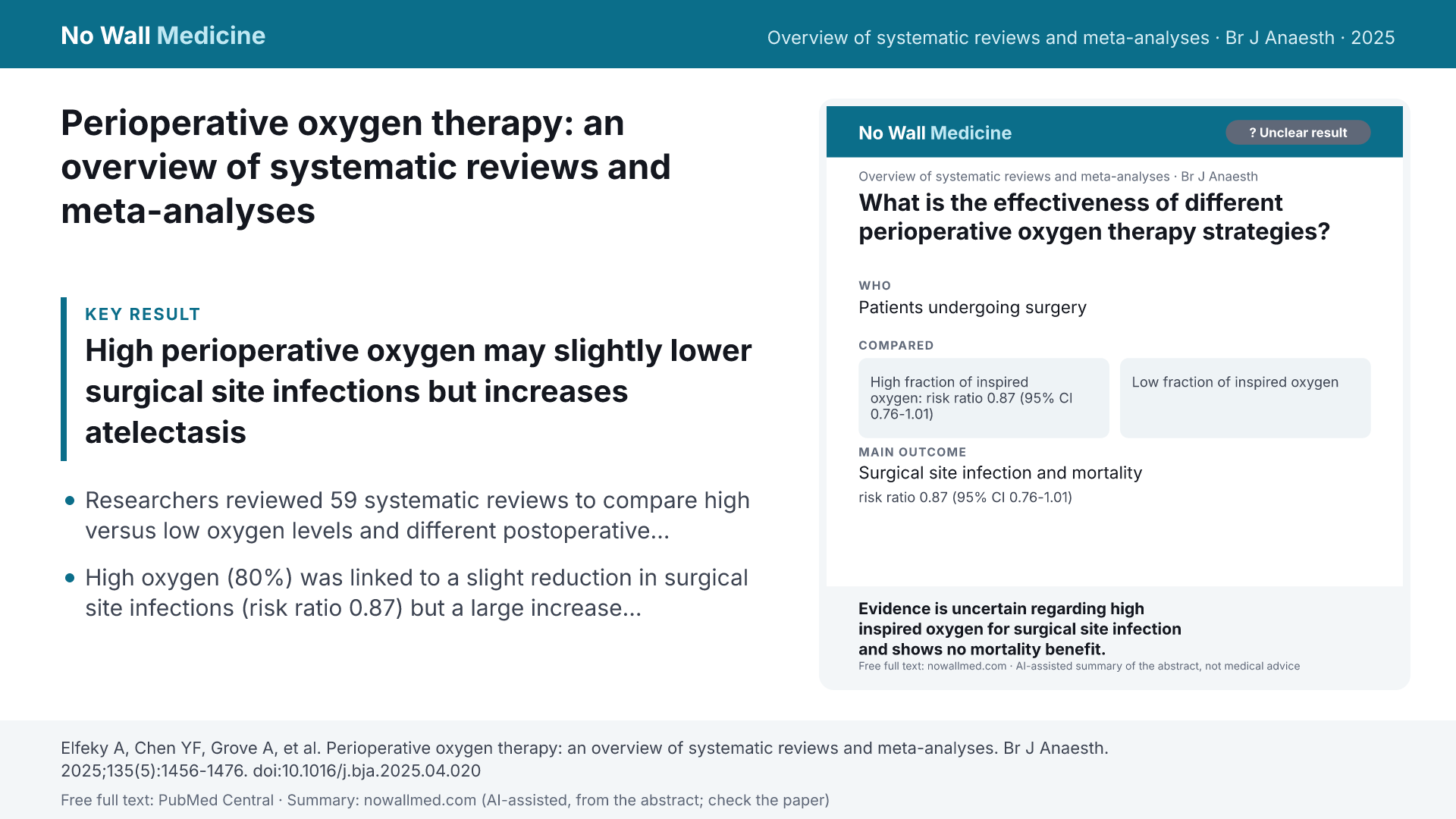
Key result: High perioperative oxygen may slightly lower surgical site infections but increases atelectasis
Key points
- Researchers reviewed 59 systematic reviews to compare high versus low oxygen levels and different postoperative breathing support methods.
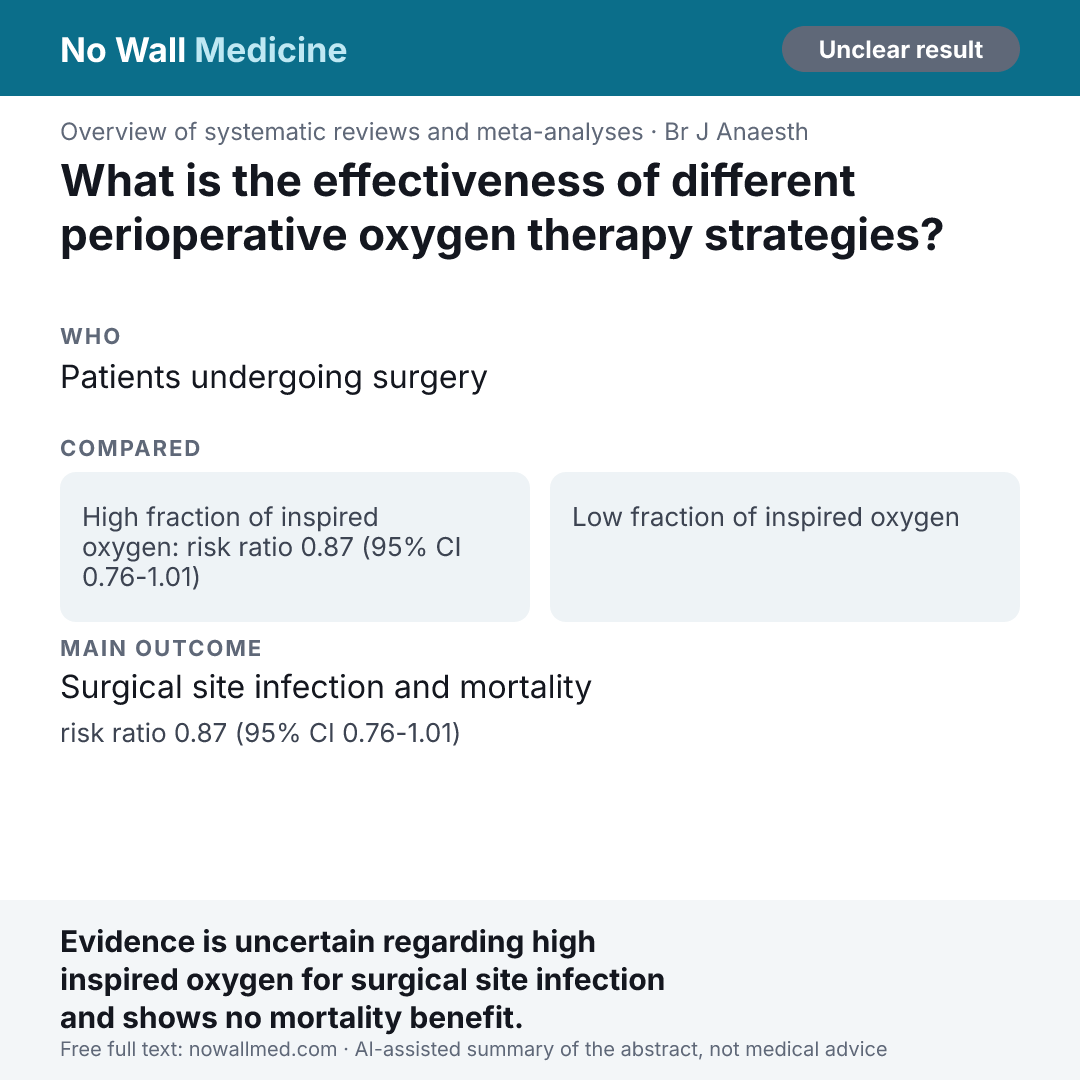
- High oxygen (80%) was linked to a slight reduction in surgical site infections (risk ratio 0.87) but a large increase in atelectasis (risk ratio 1.47).
- Postoperative noninvasive ventilation and high-flow nasal oxygen did not reduce mortality compared with conventional oxygen therapy.
Why it matters: Evidence on the clinical impact of perioperative oxygen remains inconsistent, leading to variable practice among healthcare providers.
Limitation the authors note: The certainty of evidence for most outcomes was low to very low, limiting confidence in the findings.
Discussion prompts
- Would these patients look like yours? Who was left out?
- Is the main outcome one that matters to patients?
- Is the difference large enough to change what you do?
Cite: Elfeky A, Chen YF, Grove A, et al. Perioperative oxygen therapy: an overview of systematic reviews and meta-analyses. Br J Anaesth. 2025;135(5):1456-1476. doi:10.1016/j.bja.2025.04.020
Free full text: PubMed Central · Summary and visual abstract: nowallmed.com/a/perioperative-oxygen-therapy-an-overview-of-systematic-reviews-and-19sdmap/ (AI-assisted from the abstract; check the paper before relying on it).