Remimazolam shows no significant difference in preventing postoperative delirium compared to other sedatives
Perioperative remimazolam administration to prevent delirium and neurocognitive disorders after surgery: a systematic review and meta-analysis
Meta-analysis of 11 studiesNo clear difference
Does remimazolam prevent postoperative delirium and neurocognitive disorders after surgery?
Who
2188
Patients receiving remimazolam or propofol or other sedative medical therapy
Compared
Remimazolam
Control group
Main outcome
Incidence of postoperative delirium
Result: OR = 0.79, 95% CI 0.53-1.17
Bottom line: Remimazolam showed no significant improvement in preventing postoperative delirium compared to control groups.
Limitation: Further prospective studies are needed to confirm effects on postoperative cognitive dysfunction.
Perioper Med · 2025-09-30 · Save PNG
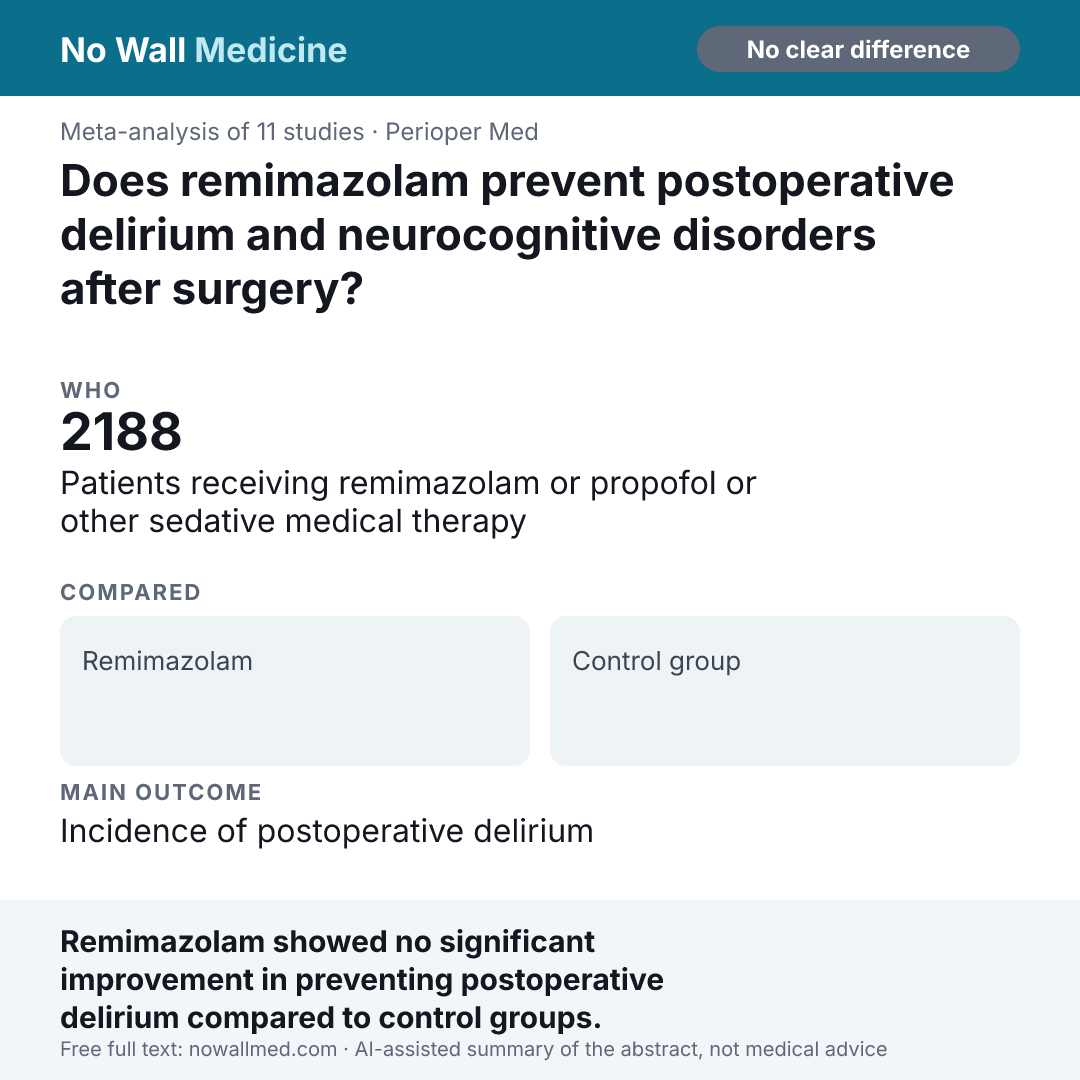
Clinical question: Does remimazolam prevent postoperative delirium and neurocognitive disorders after surgery?
Key points
- Researchers analyzed 11 studies involving 2188 patients to compare remimazolam, an ultra-short-acting intravenous sedative, against propofol or other sedative therapies.
- Remimazolam was not linked to significant changes in postoperative delirium, vomiting, hypoxia, or agitation compared to the control group.
- Remimazolam was associated with a lower incidence of hypotension, which is low blood pressure, and bradycardia, which is a slow heart rate.
Headline and key points written with AI from the paper’s abstract, with every number checked against it. Read the paper before relying on them.
Was this summary helpful?
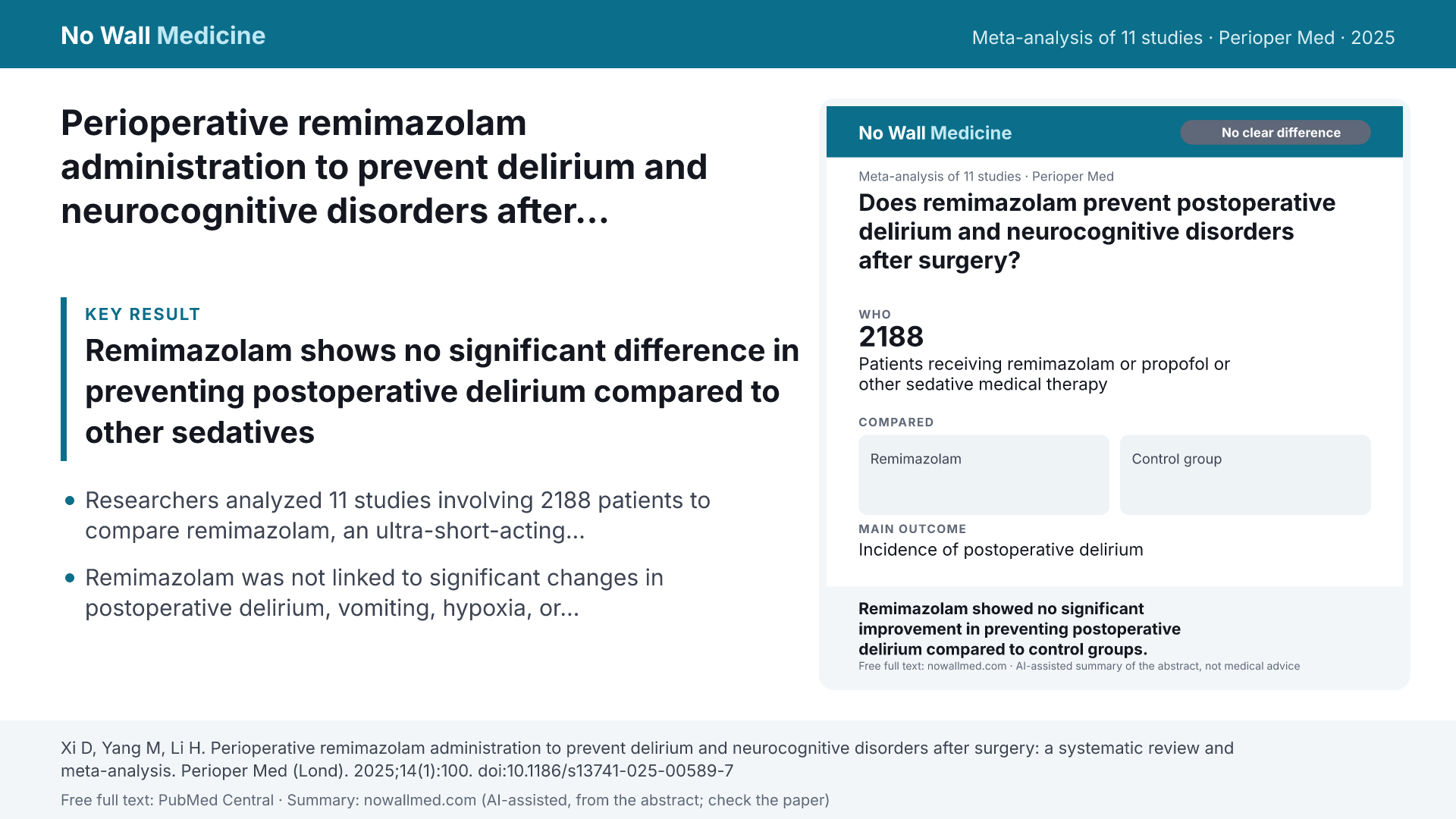
Headline, design, result, key points, caveat and citation as plain text.
Cite this article
Xi D, Yang M, Li H. Perioperative remimazolam administration to prevent delirium and neurocognitive disorders after surgery: a systematic review and meta-analysis. Perioper Med (Lond). 2025;14(1):100. doi:10.1186/s13741-025-00589-7
Spotted a mistake? Suggest a correction